The Impact of Pharmacoequity: How a 7-Year-Old's Malaria Case Revealed Medication Access Issues
October 30, 2025
By Jeffrey G. Edwards, MD, MPH, By Ilan Rozen Eisenberg, By Karina Javalkar

Matthew Morris
Shapiro Center Pharmacy. November 2018.
Pharmacoequity means that every person—regardless of race, ethnicity, income, or background—should have timely access to the medications that best manage their health needs. What happens when that is not the case?
It was just past 1 a.m. when a 7-year-old girl arrived at an emergency department with high fever, dry cough, and abdominal pain. Because she had recently returned from visiting family in Sierra Leone, her symptoms immediately raised alarm bells for malaria—a disease that demands rapid diagnosis followed by immediate treatment.
A few hours later, the diagnosis was confirmed once malaria parasites were detected on a blood smear. Infectious disease physicians recommended treating her with Coartem, the brand name for artemether-lumefantrine, which is the preferred therapy for treating a milder case. However, the hospital did not have Coartem in stock at the time.
Doctors administered second-line treatments as clinicians and pharmacists worked hurriedly and diligently to secure the medication from another hospital system. Despite their best efforts, the patient’s condition worsened. Her parasite count went from a mild infection to severe malaria with a 15% parasite load—meaning her risk of death sharply increased. Eventually, the clinical team secured the Coartem and administered it to the young patient. But by that time, with her condition worsening, infectious disease clinicians recommended another treatment: intravenous (IV) artesunate, the first-line lifesaving medication for severe malaria.

Just like with the Coartem, the hospital did not have IV artesunate in stock.
In the U.S., there is a commercially available version of that medication, but if a hospital doesn’t have it in stock, the pharmacy can attempt to obtain it emergently from the distributor. If this also is not possible—which was the case for this patient, in the middle of the night on a weekend—an investigational medication version can be given through emergency CDC approval and consent from the family.
In this case, eventually, with that special CDC emergency approval, the antimalarial was administered. The patient’s parasite load began to rapidly decline, and after days in the pediatric ICU, she was discharged without additional complications. While this was a good outcome for the patient, the already substantial risk of morbidity and mortality would have increased even more if access to the medication had been delayed any further.
Pharmacoequity, a term coined by physician advocate Dr. Utibe Essien, means that every person—regardless of race, ethnicity, income, or background—should have timely access to the medications that best manage their health needs.
This harrowing story is not just a clinical cautionary tale—it exemplifies the impact of systems without pharmacoequity, where access to essential medicines varies starkly by race, socioeconomic status, and geography.
VPR travelers and the face of travel medicine
The majority of U.S. cases of malaria come from “visiting friends and relatives” (VFR) travelers. According to the CDC, a VFR is an adult or child who currently lives in a higher-income country who returns to their former home in a lower-income country for the purpose of visiting friends and/or family members. VFR are predominantly immigrant families and their children who face multiple access barriers—and the inequities revealed by the pediatric malaria case reflects a broader pattern.
These families often have lower rates of health insurance coverage, may find that there is limited access to preventative travel medicine programs, and could have providers who are less culturally sensitive and knowledgeable about specific travel risks in certain areas.
The patchwork U.S. pharmaceutical supply chain
The journey from drug discovery to patient care is maze-like and uneven.
Pharmaceutical manufacturers distribute medications to wholesalers and government agencies, which then supply hospitals, clinics, and pharmacies. Pharmacy benefit managers work as “middle men” between insurers and providers, and they control formularies—essentially, a list of prescription medications that are covered by a health insurance plan, whether it’s Medicare, Medicaid, or private coverage. These formularies are dynamic, frequently reviewed for safety, efficacy, and cost-effectiveness, including generic versions, and they dictate medication availability and their cost to the patient. In addition to managing formularies, pharmacy benefit managers process pharmacy claims, design drug benefits, and evaluate the medical necessity of a medication for a patient, including the process of prior authorizations.
Each link can act as a bottleneck, disproportionately affecting less profitable drugs that treat rarer conditions or, often, diseases like severe malaria that disproportionately impact underserved communities, immigrants, or people of color.

For example, although IV artesunate was FDA approved in 2020 as the first-line treatment for severe malaria, economic factors and low demand mean many hospitals do not stock it. Consequently, patients face longer, riskier waits to access lifesaving medicines, as the 7-year-old patient experienced.
Yes, malaria is a rare condition in the U.S. with approximately 2,000 cases per year. However, tuberculosis is also a rare condition with only 8,000 cases per year, and medications for that rare infectious disease are far better stocked throughout the country.
The cost disparity among countries for certain medications highlights these systemic prioritization gaps. A course of artemisinin-based antimalarial therapy costs approximately $0.66 in Kenya but can exceed $129 in the U.S.—a nearly 200-times difference. The administrative burdens and restrictions from some pharmacy benefit managers can contribute to this increased cost and cause a delay in access to costly but vital medications.
Drug shortages and absent stock are not rare occurrences. Even when lifesaving therapies have FDA approval—as IV artesunate for severe malaria finally did in 2020—a complex chain of logistics, cost, and policy can leave hospitals without immediate access. The disjointed supply chain leaves clinicians and patients vulnerable, forced to navigate emergency procedures that delay treatment, as happened with the pediatric patient.
Pharmacy deserts and pharmacoequity beyond malaria
Outside of hospital walls, challenges to accessing medications persist. “Pharmacy deserts”—communities where residents must travel extended distances to get medications—exist disproportionately in low-income, racially segregated neighborhoods.
A new report by the Massachusetts Health Policy Commission found that one in seven Massachusetts residents live in a pharmacy desert or are at risk of being in one. This means that over half a million residents live in areas without any drug stores, and another half million live in an area with only one operational pharmacy that if closed, would create another desert.
In Boston alone, 21% of predominantly Black neighborhoods qualify as pharmacy deserts, compared to just 4.7% of predominantly white neighborhoods. Pharmacies in these areas often stock fewer essential and specialty medications, increasing delays and barriers for vulnerable patients requiring timely treatment for malaria and other conditions.
Beyond the state of Massachusetts, pharmacy deserts have multiplied in many U.S. cities, almost always overlapping with Black, Latine, and immigrant neighborhoods. These areas are not only less likely to have pharmacies nearby, but those that remain are less likely to stock common and specialty medications. Across 30 major U.S. cities, segregated Black and Hispanic neighborhoods face far higher odds of lacking pharmacy access.

Trouble accessing medications goes far beyond malaria. Conditions that disproportionately affect people of color or other underserved communities often receive less research funding, slower medication development, and less timely and equitable access to breakthrough therapies. For example, funding for cystic fibrosis dwarfs funding for sickle cell disease. It begins a cycle, perpetuating a lack of medication access for those who are most in need.
High costs, shortages, and insurance gaps can all push patients to stop taking necessary medications, worsening health outcomes and increasing hospitalizations.
Moving toward a future of pharmacoequity
Boston Medical Center and other travel medicine clinics are striving to close the gaps, especially for VFR families. Primary care providers are encouraged to ask about travel plans during routine visits, focusing on early intervention and preventative care to prevent crises. Community health centers are stepping in where chain pharmacies have exited, providing critical support directly in the neighborhoods that need it.
But achieving real pharmacoequity means coordinated and committed change, investment, and advocacy. The Boston Medical Center Health Equity Rounds team advocates for national essential medicine lists based on population needs, ensuring hospitals and clinics can stock first-line medications for rare illnesses, removing administrative barriers for pharmaceutical insurance, and investing in research that helps develop treatments for conditions affecting underserved communities.
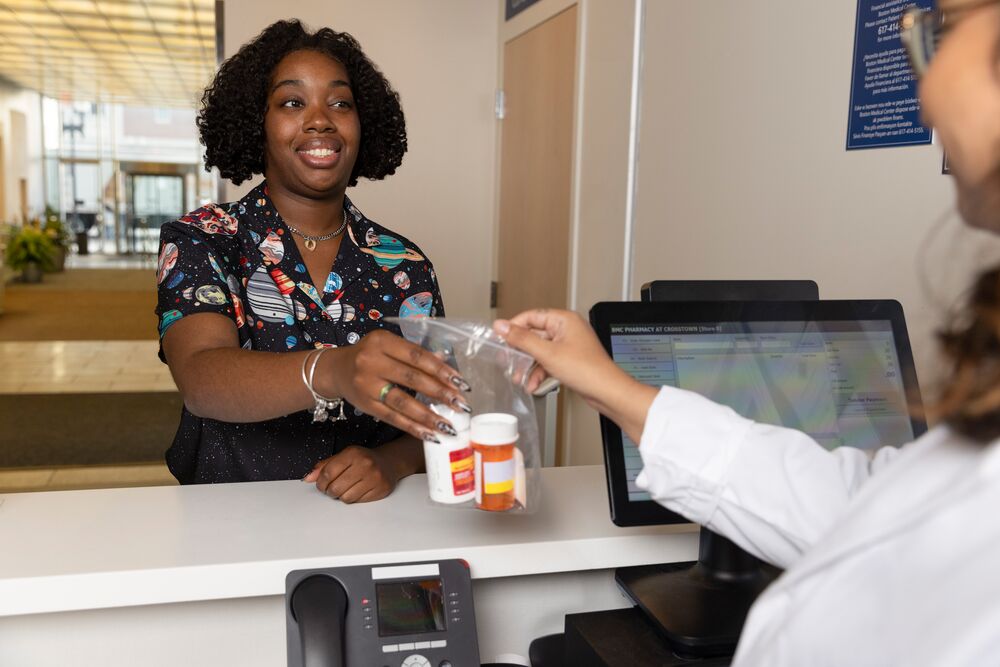
On a neighborhood level, community health centers—especially those in pharmacy deserts—are pivotal as the first line of access to preventative care for VFR travelers and beyond.
In the end, the pediatric malaria patient recovered, thanks to the dedication of a team that pushed past systemic barriers. But her case is not unique—and the solutions must be systemic, sustained, and rooted in empowering all patients to thrive.
This story has been created from a longer presentation by Boston Medical Center’s Heath Equity Rounds team.
About the Author
Jeffrey G. Edwards, MD, MPH
Dr. Edwards completed his pediatric residency in the Leadership in Equity and Advocacy (LEAD) track of the Boston Combined Residency Program at Boston Medical Center and Boston Children's Hospital. He is a former Chief Resident in Pediatrics at Boston Medical Center and a current Pediatric Hematology-Oncology fellow at St. Jude's Children's Research Hospital.

Ilan Rozen Eisenberg
Dr. Rozen completed his pediatric infectious diseases fellowship at Boston Medical Center and is now a second-year resident in the Boston Combined Residency Program.

Karina Javalkar
Dr. Javalkar completed her pediatric residency in the Boston Combined Residency Program at Boston Medical Center and Boston Children's Hospital. She is a current Pediatric Cardiology Imaging fellow at Boston Children's Hospital.
Share on Social

Health equity news from Boston Medical Center
HealthCity is dedicated to sharing the most cutting-edge ideas for advancing health justice through inspiring stories, in-depth Q&As with equity pioneers, research news that could change the medical landscape, and more.