Sophie Claudel Is Redefining How We Understand Heart and Kidney Disease
November 6, 2025
By Gina Mantica, By Nina Ng
Bruno Debas
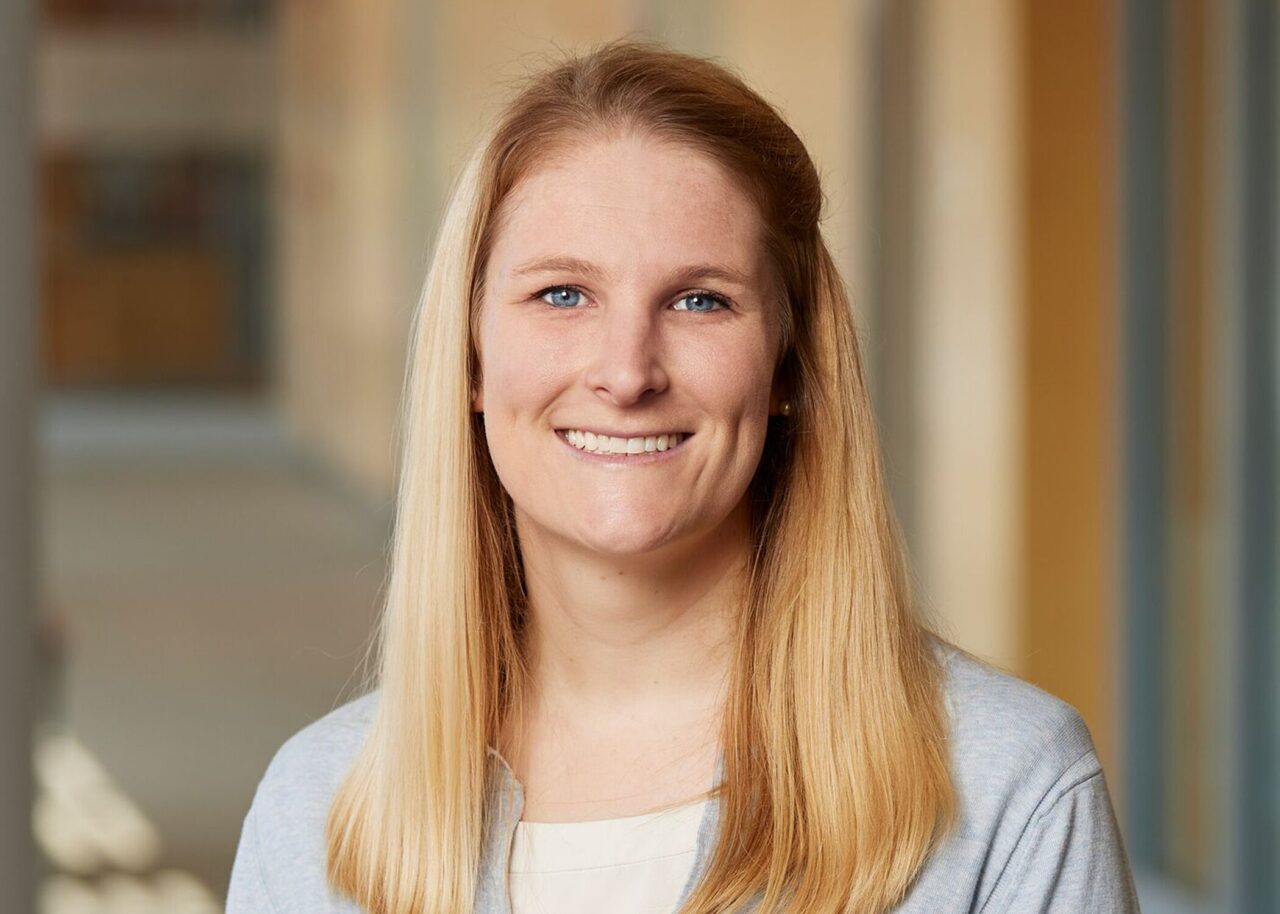
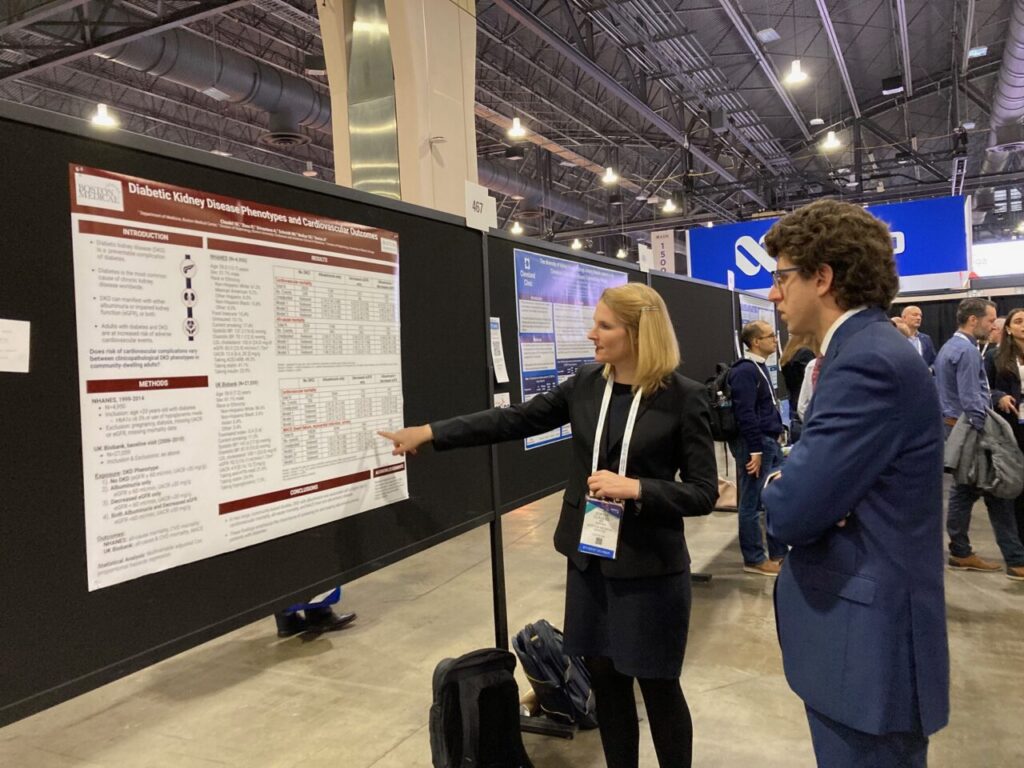
Pictured in Sophie Claudel, MD.
The STAT Wunderkind is using data to validate a new way of predicting and preventing cardiovascular deaths.
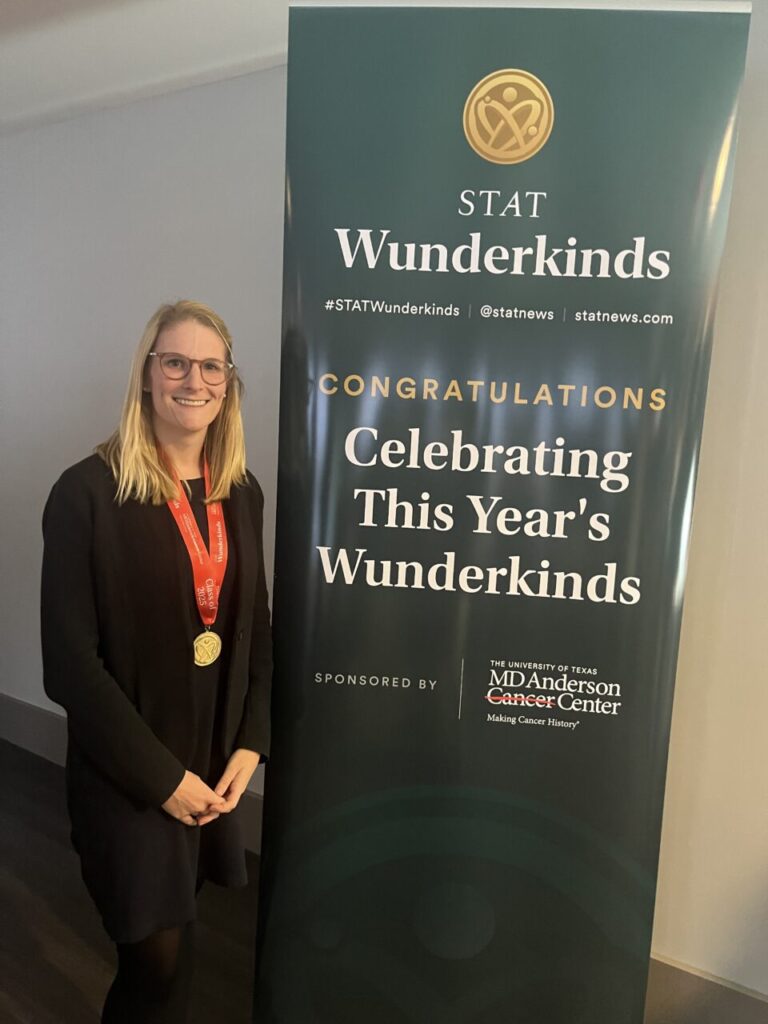
When Sophie Claudel, MD, first came across a new American Heart Association (AHA) advisory describing something called cardiovascular-kidney-metabolic (CKM) syndrome, she saw a box of unknowns that she could help fill in. Claudel’s research validating the AHA’s CKM syndrome staging system earned her national recognition as one of STAT’s 2025 Wunderkinds, an award that honors early-career researchers who are shaping the future of medicine.
CKM syndrome is a new way of thinking about the connection between cardiovascular disease, kidney disease, and metabolic disorders, such as diabetes and obesity, within one classification system. “The idea is that these conditions do not exist in isolation. As one organ system declines, it can accelerate dysfunction in the others,” explains Claudel, a nephrology fellow at Boston Medical Center (BMC).
The framework outlines five stages, ranging from stage 0, which represents health, to stage 4, which represents advanced disease. It is designed to help clinicians identify cardiovascular mortality risk earlier and intervene more effectively. But when it was introduced, the system was theoretical, developed by expert consensus rather than data. Claudel wanted to know if it actually predicted outcomes and for whom.
Using data collected from the National Health and Nutrition Examination Survey (NHANES), Claudel, her mentor Ashish Verma, MBBS, Assistant Professor of Medicine in the Section of Nephrology at Boston University Chobanian & Avedisian School of Medicine, and her collaborators tested whether CKM stage could predict cardiovascular mortality. The results were striking: As CKM stage increased, so did the risk of dying from cardiovascular disease. Importantly, this relationship did not appear for other causes of death.
“That told us there is something specific about how these organ systems interact,” explains Claudel, who is also a clinical instructor at Boston University Chobanian & Avedisian School of Medicine. “Progressing through CKM stages is not just a sign of general illness, it is tied to cardiovascular risk in a meaningful way.” The team also found that the staging system performed equally well for men and women, suggesting that it could serve as a reliable clinical tool.
Preventing progression in patients with CKM syndrome
Claudel’s work also explored another critical dimension: social determinants of health. “We see in clinical practice that patients who face systemic barriers, such as limited access to care or healthy food, tend to move through CKM stages faster,” she says. “We controlled for those factors in our analysis, and the staging system still predicted outcomes accurately. But we cannot separate biology from environment.”
At BMC, where addressing social needs is central to the mission, this insight translates directly into patient care. Claudel emphasizes the importance of early-stage intervention, especially for patients in stage 1, when risk is still relatively low, but a patient’s motivation for change can be high. “That is where education, nutrition counseling, and community programs can have the biggest impact,” she says. “If we can reach people early, we can change the trajectory.”
Preventing CKM stage progression involves a holistic approach focused both on lifestyle and medical management. Encouraging regular physical activity, eliminating sugar-laden beverages, and stopping tobacco use can significantly reduce metabolic and cardiovascular strain.
At BMC, programs that provide kidney health education in culturally and language-appropriate formats empower patients to make informed choices and be collaborators on their healthcare journeys. To support long-term disease prevention and progression, patients are encouraged to participate in supplement programming, such as like attending the cardiac rehabilitation program or getting healthy foods from the hospital’s Preventative Food Pantry.
Looking to the future: understanding molecular interactions
For Claudel, the goal of her work is both practical and scientific: to help clinicians and patients understand risk in a way that motivates action. “When patients can understand how their risk changes across stages and what they can do to stop it, or even reverse it, they become active participants in their health,” she says.
Her research is laying the groundwork for a future in which cardiovascular, kidney, and metabolic diseases are treated not as separate problems but as highly interconnected threads in a single story, one that begins long before serious illness and where prevention is possible.
“Understanding how these organs talk to each other is not just an academic question. It is how we help everyone live longer, healthier lives.”
Sophie Claudel, MD, Nephrology Fellow, Boston Medical Center,
Clinical INstructor, Boston University Chobanian & Avedisian School of Medicine
While new treatments are showing promise for both kidney and heart disease, the ways in which they work remain unclear. Claudel’s next phase of research will look deeper, exploring how patterns in protein expression may signal early disease and drive CKM progression. Identifying these proteins will give researchers the ability to trace them back to the genetic factors that would allow clinicians to predict who faces the highest risk and prevent progression before it starts.
“Understanding how these organs talk to each other,” Claudel says, “is not just an academic question. It is how we help everyone live longer, healthier lives.”
About the Author
Gina Mantica
Gina Mantica is the Senior Research Communications Manager at BMC.
Nina Ng
Nina Ng is the Communications Manager at BMC.
Share on Social

Health equity news from Boston Medical Center
HealthCity is dedicated to sharing the most cutting-edge ideas for advancing health justice through inspiring stories, in-depth Q&As with equity pioneers, research news that could change the medical landscape, and more.