Two Patients, One System: Why Research in Family Medicine Matters for Mothers and Babies
January 27, 2026
By Gina Mantica

Getty Images
By studying breastfeeding and substance use recovery through the mother–baby pair, a family medicine researcher is reshaping how care is delivered in the fourth trimester.
In family medicine, care rarely fits neatly into silos. A parent’s health shapes a child’s health, and a newborn’s needs can profoundly affect a parent’s physical and emotional well-being. For Kate Standish, MD, MS, that connection is central to both her clinical work and her research.
Dr. Standish, who is a board-certified physician in family medicine and breastfeeding medicine at Boston Medical Center (BMC), cares for parents and infants together, often seeing them in the same office visit. This dyadic approach recognizes the parent and baby as deeply connected, particularly during the “fourth trimester,” the critical months after birth.
“We’re really looking at two patients at the same time,” Standish said. “And thinking about how they interact with each other.”
Breastfeeding as part of reproductive health
Dr. Standish approaches breastfeeding as a key component of reproductive health that deserves thoughtful clinical care, research, and system-level support.
“Breastfeeding is part of reproduction,” she said. “Supporting people’s breastfeeding intentions matters.”
Her research focuses on understanding how health systems can better support breastfeeding parents, especially those facing medical, social, or structural barriers. This includes parents with conditions that can make breastfeeding more challenging, such as obesity, polycystic ovary syndrome, diabetes, epilepsy, or the need for medications that may affect milk production or sleep. It also includes families navigating housing instability, transportation challenges, or limited social support, which can make attending multiple appointments on different days difficult.
“Because we take care of moms and babies together, we can reduce some of that burden,” Standish said. “They are linked, and their care should be, too.”
For each dyad, the clinical picture is complex. A baby’s growth pattern may relate to a metabolic issue, a parent’s milk production, or a combination of both. Caring for one patient requires understanding the health of the other. For example, when an infant is not gaining enough weight, families may be advised to supplement with formula. However, they need clear guidance on how to maintain breastmilk production and return to exclusive breastfeeding if and when they can.
“This is a two-person organ system,” said Dr. Standish. “You cannot really take care of one without thinking about the other. However, physicians are not taught enough about breastfeeding, and the breast is rarely taught among the other organ systems covered in medical school curricula.”
Studying breastfeeding and recovery from addiction
A major focus of Dr. Standish’s work is supporting parents with opioid use disorder who want to breastfeed. Through a National Institute on Drug Abuse–funded project, she is helping develop an intervention that uses peer lactation support for these families.
Evidence shows that breastfeeding can provide important benefits in this setting. For infants exposed to opioids during pregnancy, breastfeeding is associated with less severe withdrawal symptoms, reduced risk of sudden infant death syndrome, and improved overall outcomes. For parents, breastfeeding is linked to stronger attachment and lower rates of postpartum mental health challenges.
“[Breastfeeding parents and babies are] a two-person organ system. You cannot really take care of one without thinking about the other. However, physicians are not taught enough about breastfeeding, and the breast is rarely taught among the other organ systems covered in medical school curricula.”
KATE STANDISH, Co-founder of the Breastfeeding & Lactation Medicine Center at BMC
Dr. Standish’s research also explores whether a sustained, positive breastfeeding experience may support long-term recovery from addiction. Other researchers in the field are even looking at oxytocin, a hormone released at high levels during breastfeeding, as a potential treatment for substance use disorder.
A growing field and a personal mission
Dr. Standish is part of a growing movement within medicine. According to her recent study published in the journal Breastfeeding Medicine, interest in breastfeeding medicine has increased significantly in the U.S., with more clinicians pursuing formal training, fellowships, and board certification. The field itself is relatively young, and Dr. Standish has a personal connection to its early development.
Her mother, a pediatrician, was present at the founding of the Academy of Breastfeeding Medicine. So, from an early age, Dr. Standish understood both the importance of breastfeeding medicine and how undervalued it has been within the health system.
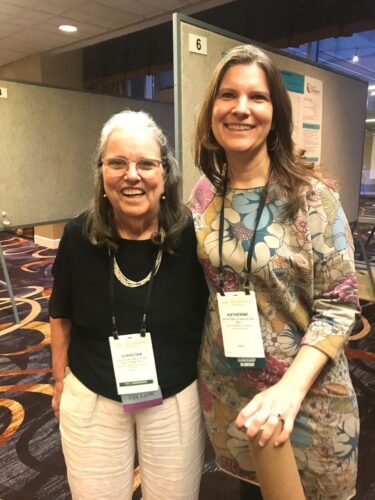
That understanding deepened when Dr. Standish had her own son, who was born at 28 weeks and spent two months in the neonatal intensive care unit. During that time, she saw stark disparities in families’ access to lactation support.
“My mom came in and helped make sure I made enough milk,” she said. “I realized that should not be the only reason I was able to do this.”
That experience continues to shape her work, driving her commitment to building systems where high-quality breastfeeding support is available to all families, not just those with access to specialized knowledge or resources.
Dr. Standish emphasizes that breastfeeding is not the right choice for every family. For some dyads, breastfeeding may not be possible or may not be the best option.
What matters most, she said, is informed, compassionate support that respects parents’ goals and circumstances.
“There is a lack of vision for what the health system could be doing,” said Dr. Standish. “Family medicine research helps us see the whole picture and design care that actually works for families.”
By studying breastfeeding, substance use recovery, and the mother–baby dyad together, Dr. Standish is helping advance a more integrated and equitable model of care that recognizes two patients as one connected system.
About the Author

Gina Mantica
Gina Mantica is the Senior Research Communications Manager at BMC.
Share on Social

Health equity news from Boston Medical Center
HealthCity is dedicated to sharing the most cutting-edge ideas for advancing health justice through inspiring stories, in-depth Q&As with equity pioneers, research news that could change the medical landscape, and more.