How BMC-Led Global Tuberculosis Research Is Advancing Care in Boston
February 26, 2026
By Gina Mantica, By Nina Ng
Karen Jacobsen
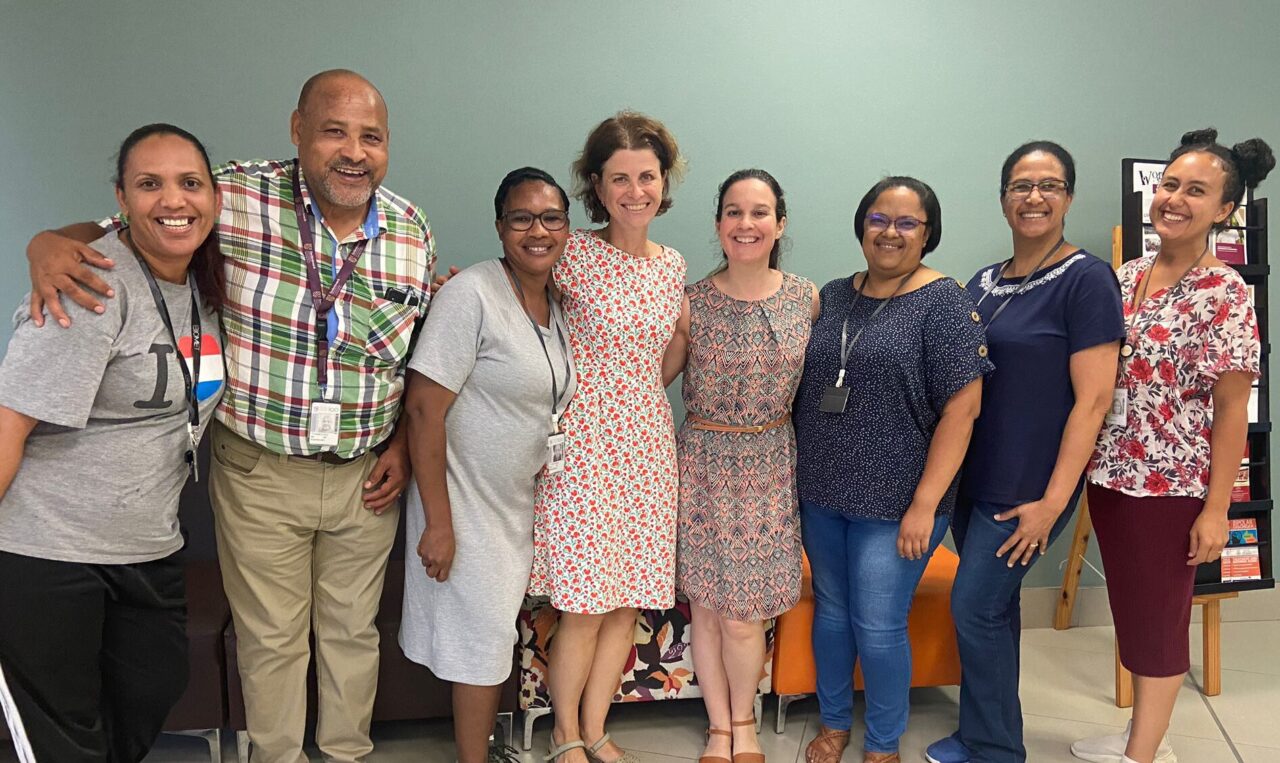
Members of the global tuberculosis research teams pose for the camera in Worcester, South Africa. From left to right: Florenza Kriel, Besley Peterson, Connie Ramokhele, Dr. Karen Jacobson, Dr. Tara Carney, Alison Pienaar, Frances Ratangee, Judy-Lynn Horsemend.
In a globalized world, diseases don’t respect borders, explains Karen Jacobson, MD, medical director of the BMC Tuberculosis Clinic. Learn more about how she sees BMC’s dedicated care in India, South Africa, and beyond impacting patients who pass through her doors.
Outside of healthcare, today, tuberculosis (TB) is commonly seen as a disease of the past, or a problem that exists far from the U.S. However, TB is a daily reality, with the World Health Organization estimating that one in four people worldwide have been infected with TB bacteria and another 10 million will become sick with TB disease each year. In Massachusetts, recent incidence rates of TB are higher than the national average, 3.2 per 100,000 residents, compared to 2.9.
Global TB research plays a critical role in improving outcomes for patients in Boston and beyond. Boston Medical Center (BMC) is home to the largest TB center in the Northeast, serving patients from across New England, and the center’s global health researchers are working to develop better ways to diagnose, treat, and prevent TB worldwide, while directly informing care at home.
“TB shows us why global health matters locally,” says Karen Jacobson, MD, medical director of the BMC Tuberculosis Clinic. “In a globalized world, diseases don’t respect borders. What we learn internationally helps us care for people here.”
Why TB research goes global
Around the world, TB remains one of the world’s deadliest infectious diseases. While TB is curable for most people, treatment is long, often lasting at least six months, and medications can be difficult to tolerate.
“TB shows us why global health matters locally. In a globalized world, diseases don’t respect borders. What we learn internationally helps us care for people here.”
Karen Jacobson, MD, medical director of the BMC Tuberculosis Clinic.
In the U.S., TB cases are relatively rare. While that reflects decades of public health success, it also limits the ability to study new diagnostics, vaccines, and prevention strategies at home.
“We don’t see enough patients locally to answer some of the biggest questions,” Dr. Jacobson says. “Higher-burden settings give us the opportunity to test new approaches that we can then bring back to Boston to help our patients.”
Bringing TB care into the community
Since 2009, Dr. Jacobson has worked in Worcester, South Africa, studying how TB spreads through communities and how to reach people who may be hesitant to seek care on their own. Core to her research is building trust with communities and engaging historically excluded populations. Leveraging existing social networks, her research utilizes peer recruitment, sometimes called “snowballing,” asking existing patients to help build connections with their communities. Long-term, this approach could help to improve health outcomes for people with TB or other infectious diseases and prevent future transmission.
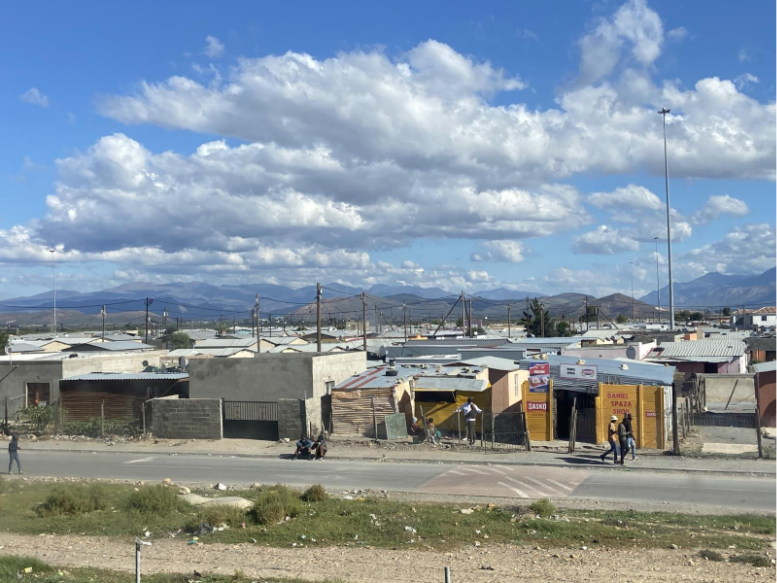
Her team hopes to evaluate new tools designed to make TB diagnosis faster and more accessible outside traditional clinics, including AI-assisted chest X-rays, induced sputum testing, and novel tongue swabs.
Dr. Jacobson’s work also looks at TB and HIV infections among people who use drugs, a group often excluded from research despite being at higher risk for both infections. Her recent study published in the International Journal of Tuberculosis and Lung Disease found that when TB and HIV services are integrated in the community and supported by peer engagement, people who use drugs can successfully link to and remain in care.
“One of BMC’s strengths is focusing on the person, not the behavior,” Dr. Jacobson says. “Our research shows that when care is respectful and accessible, people want to engage.”
Nutrition: A missing piece in TB prevention
For Pranay Sinha, MD, an infectious disease physician at BMC, global TB research has helped highlight another critical, but overlooked, factor: nutrition.
“The leading driver of TB worldwide is undernutrition,” Dr. Sinha says. “Food is essential to immune function, and people who are undernourished are much more likely to develop TB.”
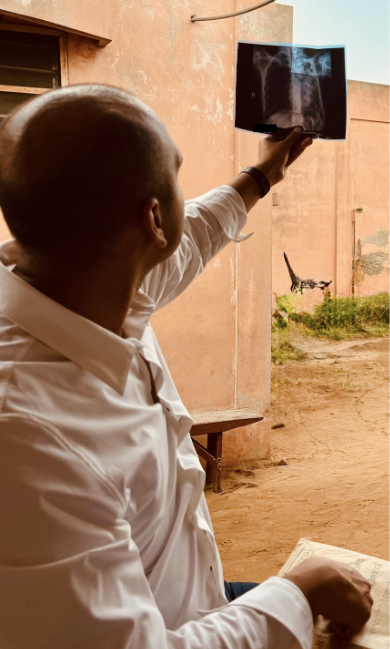
Weight, a clinically meaningful and cost-effective biomarker
“Weight is a simple but powerful tool,” he says. “If someone isn’t gaining weight early in treatment, it warns us that our treatment isn’t working and should prompt us to explore why.”
Measuring weight can be done anywhere around the world, is not resource or time intensive, and is one of the most effective ways clinicians can evaluate treatment for patients with TB. Dr. Sinha served as a technical expert for the World Health Organization guidelines that now recommends nutritional assessment, support, and counseling for persons with TB and their families.
Dr. Sinha’s research in India has direct implications for care at BMC, where patients facing economic hardship receive grocery support and referrals to the hospital’s Preventative Food Pantry. Dr. Sinha is now focused on developing evidence-based nutritional standards for TB care in the U.S., particularly for people experiencing homelessness or food insecurity. Across BMC, faculty are using global research like this to strengthen TB care locally.
“TB isn’t just something from the past or somewhere else,” Dr. Jacobson says. “Our global health work helps us better understand our patients and deliver better care here in Boston.”
About the Author
Gina Mantica
Gina Mantica is the Senior Research Communications Manager at BMC.
Nina Ng
Nina Ng is the Communications Manager at BMC.
Share on Social

Health equity news from Boston Medical Center
HealthCity is dedicated to sharing the most cutting-edge ideas for advancing health justice through inspiring stories, in-depth Q&As with equity pioneers, research news that could change the medical landscape, and more.