Getty Images
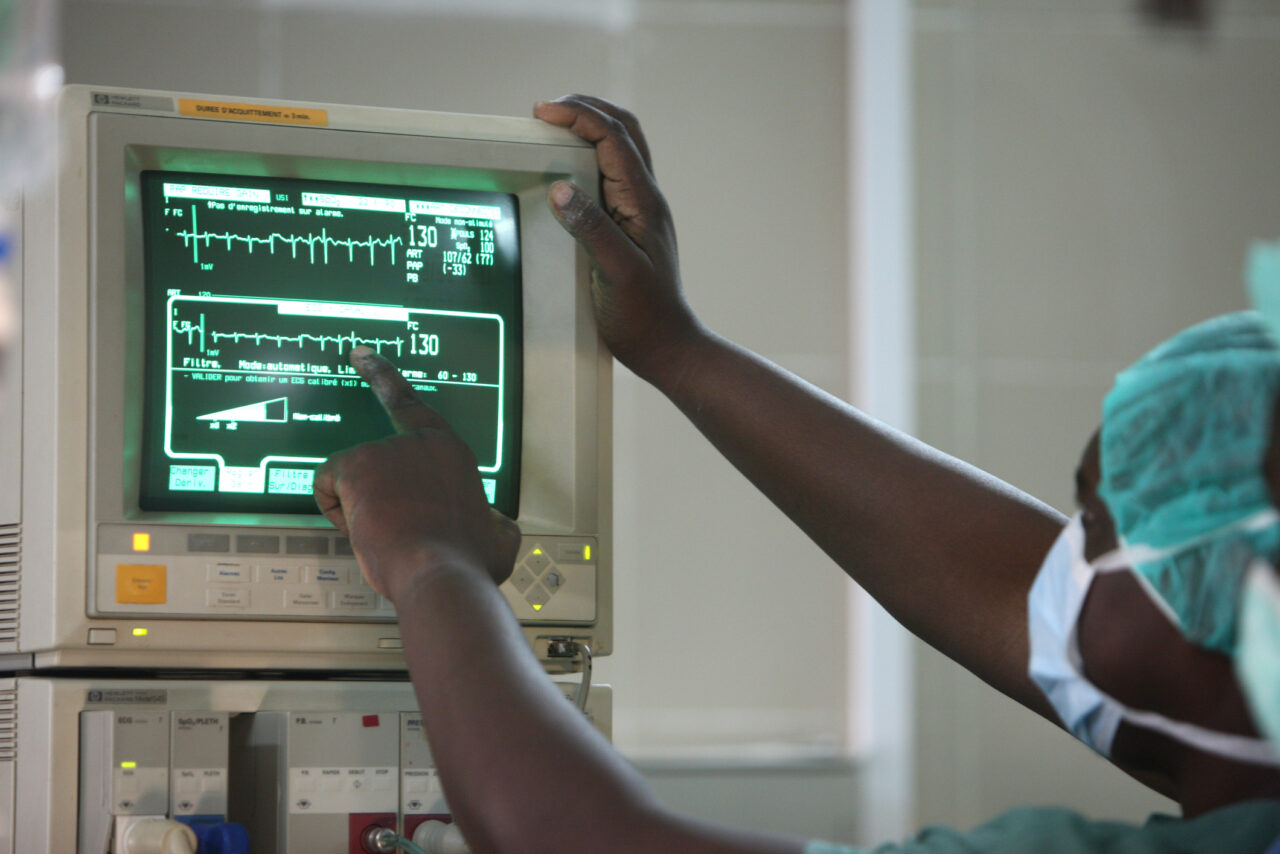
Pictured is a provider in a cardiac surgery ward, displaying an echocardiogram.
Cardiologist Gene Kwan, MD, MPH, studies how training, community support, and emerging technologies can help more patients receive timely care for cardiovascular disease.
In many parts of the world, patients with cardiovascular disease face a major barrier to care — there simply aren’t enough cardiologists. Gene Kwan, MD, MPH, a cardiologist and researcher at Boston Medical Center (BMC), is working to close that gap. Through global partnerships and the use of emerging technologies, Dr. Kwan’s research aims to expand access to life-saving care in communities that lack access to trained specialists.
HealthCity recently spoke with Dr. Kwan on his work to help nurses and general physicians learn how to diagnose and treat cardiovascular disease — including heart failure, hypertension, and stroke — both abroad and in the Boston area.
HealthCity: What inspired you to pursue global cardiology research?
Gene Kwan, MD, MPH: My mom was a nurse, so I always knew I wanted to work in healthcare. When I was in college, I became fascinated by the heart — it’s a physical pump that moves blood around the body, which just made sense to me.
Later in medical school, I became interested in global health. My family is from the Philippines, and I saw how common cardiovascular disease, specifically heart disease, was there. I also saw clinicians relying heavily on textbooks to guide care because there weren’t enough specialists to train them. That gap in access to cardiovascular knowledge and care pushed me toward my current research.
HC: What is the goal of your global cardiology research?
GK: The goal of my work is to expand access to heart care in places where there are very few cardiologists. In countries like Rwanda, Haiti, and Liberia, specialists are extremely limited, so we focus on training nurses and other clinicians to diagnose cardiovascular disease, to optimize medications for heart failure, and to refer patients to specialists when needed. Much of this work is done with the nonprofit Partners In Health. In Rwanda, for example, we’ve helped build community-based systems across all 44 districts so providers can care for patients with chronic conditions, like heart failure.
“Ultimately, whether the work is happening in Boston or abroad, the goal is the same: helping more patients get the care they need, sooner.”
Gene Kwan, MD, MPH, a cardiologist and researcher at Boston Medical Center
We’re also exploring how innovative tools like simulation training and artificial intelligence (AI) could help non-specialists learn cardiology skills and adjust medications safely. Increasing access to care and decreasing delays to see a specialist can help all patients start appropriate medications earlier, even in the Boston area, which can improve their quality of life or even slow the progression of their disease.
HC: How does your global cardiology research impact patients?
GK: My ultimate goal is helping patients feel better and stay out of the hospital. We’ve shown that patients with heart failure are more likely to return for follow-up care when they’re paired with a community health worker and nurses who provide guidance and support. We’re also testing technologies that could expand screening and diagnosis in cardiology care. For example, we’re studying the effectiveness of AI-enabled tools that analyze heart images to help nurses detect heart failure earlier in rural communities.
Some of these ideas are also shaping care here at BMC. For the past several years, we’ve worked with clinical pharmacists to help patients optimize heart failure medications. Ultimately, whether the work is happening in Boston or abroad, the goal is the same: helping more patients get the care they need, sooner.
This interview has been edited and condensed for length and clarity.
About the Author
Gina Mantica
Gina Mantica is the Senior Research Communications Manager at BMC.
Share on Social

Health equity news from Boston Medical Center
HealthCity is dedicated to sharing the most cutting-edge ideas for advancing health justice through inspiring stories, in-depth Q&As with equity pioneers, research news that could change the medical landscape, and more.