BMC Researcher Aims to Build More Options, Access for Sickle Cell Disease Treatment
May 1, 2026
By Gina Mantica
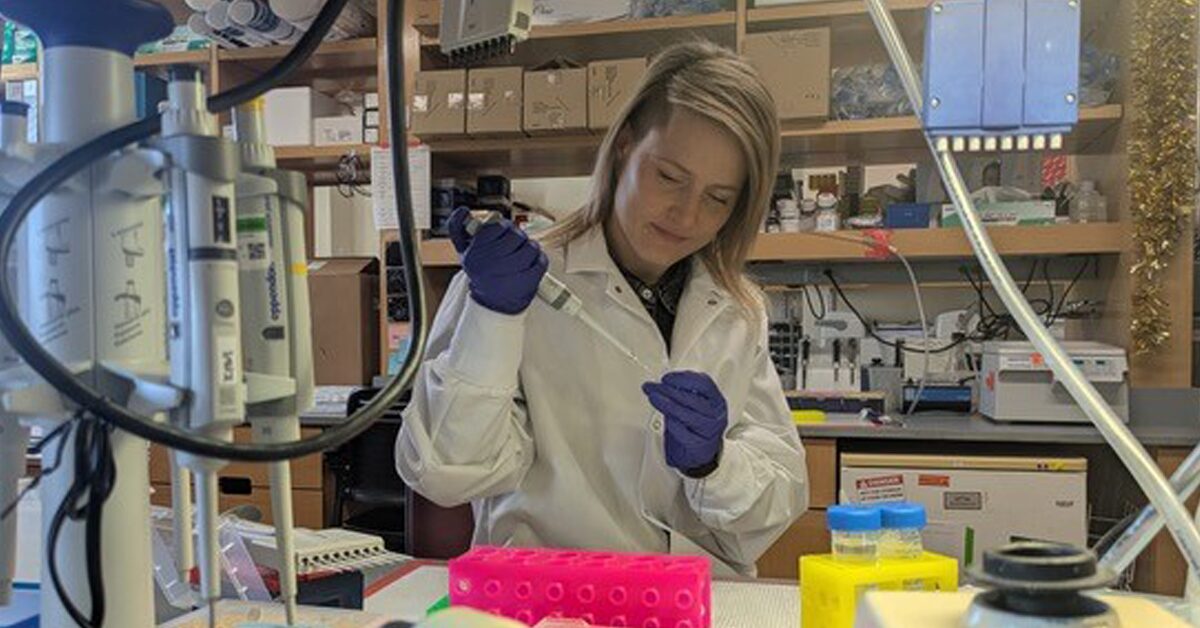
Courtesy of Kim Vanuytsel, PhD
Kim Vanuytsel, PhD, a biologist in Boston Medical Center (BMC) and Boston University’s (BU) Center for Regenerative Medicine (CReM), studies stem cells from sickle cell disease patients to refine available therapies and find alternatives for patients who don’t respond to common therapeutics like hydroxyurea.
Kim Vanuytsel's work with patient-derived stem cells is reshaping how clinicians think about sickle cell treatment — moving from a narrow set of options toward care that is tailored, safer, and more widely accessible.
Sickle cell disease (SCD) is one of the most common inherited blood disorders worldwide, impacting millions of people globally and most commonly affecting individuals of African, Mediterranean, Middle Eastern, and Indian descent. Despite its prevalence, SCD has historically received less research funding and therefore fewer treatment advances compared to other genetic conditions, contributing to longstanding disparities in care and outcomes.
SCD affects red blood cells, causing them to become rigid and “sickle”-shaped. These cells can block blood flow, leading to severe pain episodes, organ damage, and reduced life expectancy. One of the most widely used medications, hydroxyurea, helps the body produce more fetal hemoglobin—a form of hemoglobin that prevents red blood cells from sickling—but it does not work for everyone.
More recently, gene therapies have marked a major step forward to treating patients with SCD. While promising, these therapies remain complex, resource-intensive, and not yet accessible to all patients. HealthCity recently spoke with Kim Vanuytsel, PhD, a biologist in Boston Medical Center (BMC) and Boston University’s (BU) Center for Regenerative Medicine (CReM), about her work to help make therapies for SCD safer, more effective, and more accessible for every patient.
HealthCity: What is the goal of your sickle cell disease research?
Kim Vanuytsel, PhD: I want my work to help clinicians make more informed, personalized decisions and ensure that more patients can benefit from advances in SCD treatment.
A key part of my work involves leveraging a comprehensive library of induced pluripotent stem cells, or iPSCs, for SCD. These cells are derived from donated adult blood cells and, with the reactivation of four genes, are reprogrammed back to an embryonic stem cell-like state. In the embryonic stem cell-like state, the cells are capable of being formed into differentiated cells, serving as a limitless source of patient-specific red blood cells. This iPSC library, rich in genetic diversity, can help us better understand how genetic background influences the way someone responds to a particular treatment. Today, many therapies are tested in a relatively small sample population, and we know that not all patients respond the same way. Using patient-derived cells, from a larger sample population made possible by the library, we can begin to identify alternative options, like small molecule drugs, for patients who don’t respond to common therapeutics like hydroxyurea.
Another major focus of my research is improving gene therapy and stem cell transplantation strategies. These treatments involve collecting a patient’s blood stem cells, modifying them outside the body, and then returning them to the patient. In SCD, this process can be especially complex because the bone marrow is often inflamed, which affects how stem cells function. We are working to better understand differences in the stem cells of individuals with SCD so we can improve how they are collected, supported, and expanded in the lab while maintaining their ability to function effectively.
HC: What inspired you to pursue sickle cell disease research?
KV: I’ve always been drawn to challenging problems, and science (especially in areas like blood disorders) really keeps you on your toes. I started my training in bioengineering, and during my master’s program, iPSCs were just emerging. I remember working to reprogram cells back into a pluripotent state, and it was an amazing experience to see what was scientifically possible.
Ultimately, our goal is to translate what we learn in the lab into better care—reducing the burden of treatment today and expanding options for future patients and families living with SCD.
Kim Vanuytsel, PhD, Boston Medical Center (BMC), Boston University’s (BU) Center for Regenerative Medicine (CReM)
In that same lab, I tried to use this technology to create a disease model for Fanconi anemia. It didn’t work as we had hoped, but that experience showed me how complex these diseases are and how much more we need to understand.
That curiosity led me into my postdoctoral work, where I focused more deeply on blood cells, their development, and what goes wrong in disease. From there, I became especially interested in SCD because it sits at the intersection of stem cell biology, cell therapy, and real-world patient impact. It’s a field where advances in science can directly translate into better treatments, and that continues to motivate my work today.
HC: How does your sickle cell disease research impact patients and families?
KV: Today, gene therapies for sickle cell disease are transformative, but they are still complex and invasive procedures. At our Center of Excellence in Sickle Cell Disease, the largest center in New England dedicated to sickle cell care, we take a multidisciplinary approach. We’re able to offer these advanced therapies to patients now, while also conducting research to make them safer, more effective, and more accessible in the future.
We have a unique opportunity to learn directly from the patients we treat. With their consent, we use leftover materials from the gene therapy process, like leftover blood from stem cell collection procedures, to pilot new ideas. This can help us improve how we collect and handle our own patients’ cells, which can be especially important for individuals with more advanced disease, where the process can be more challenging and may require multiple collection attempts.
My work to identify how blood stem cells in people with SCD differ from healthy stem cells could help improve how their cells are handled outside the body in existing gene therapy procedures—what we call ex vivo treatments—and pave the way for less invasive approaches down the line, including potential in vivo therapies, which involve delivering treatment directly inside the body.
Ultimately, our goal is to translate what we learn in the lab into better care—reducing the burden of treatment today and expanding options for future patients and families living with SCD.
This interview has been edited and condensed for length and clarity.
About the Author
Gina Mantica
Gina Mantica is the Senior Research Communications Manager at BMC.
Share on Social

Health equity news from Boston Medical Center
HealthCity is dedicated to sharing the most cutting-edge ideas for advancing health justice through inspiring stories, in-depth Q&As with equity pioneers, research news that could change the medical landscape, and more.