BMC’s Healing Pups Program Prescribes Dogs as Part of Integrative Medicine
August 26, 2025
Boston Medical Center
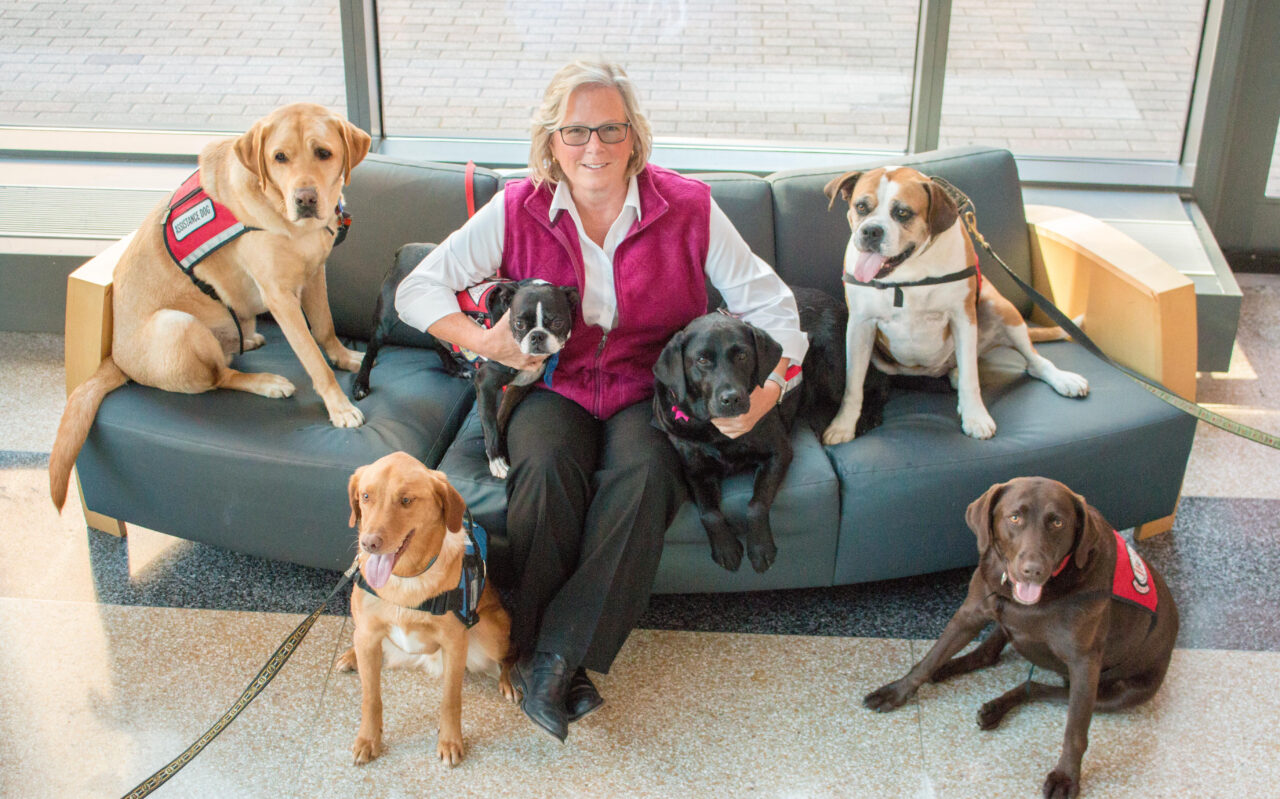
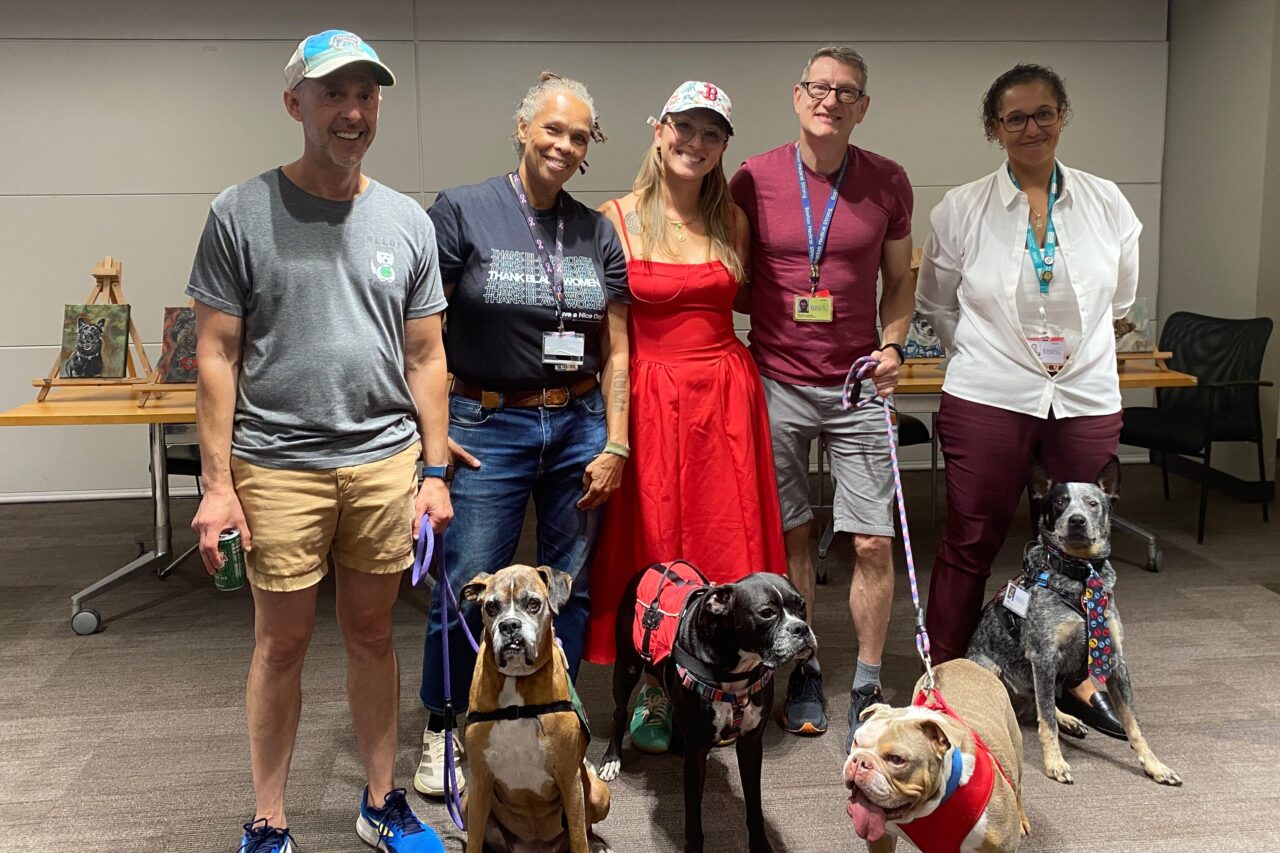
Geralyn Saunders, Chief Nursing Information Officer at Boston Medical Center, poses with the hospital's Healing Pups therapy dogs (2018).
The impact of service animals and therapy dogs continue to be measured by scientific evidence, showing the value of hospitals investing in programs akin to BMC’s Healing Pups.
The hospital room was quiet except for the steady rhythm of medical equipment. Mike Hurley and his now-late boxer, Dexter, had received an urgent referral—a patient was nearing the end of life, and the family had requested the comfort of the Healing Pups program. As they entered the room, Mike noticed something unusual. Dexter, typically an affectionate dog who preferred gentle nudges rather than licking, walked directly to the bedside. He positioned himself carefully beside the patient and began gently licking their hand. For nearly two hours, the dog maintained this vigil. It was behavior Dexter had never exhibited before—and never again displayed.
“The dogs just seem to innately know what to do in certain situations,” reflects Sheryl Katzanek, Director of Patient Advocacy and co-founder of the Healing Pups program at Boston Medical Center (BMC). “Many handlers can tell stories of behaviors that they just can’t explain.”
But the impact of service animals and therapy dogs continue to be measured by scientific evidence, showing the value of hospitals investing in programs akin to BMC’s Healing Pups.
The growth of BMC’s Healing Pups program
The Healing Pups program at BMC is a team of certified therapy dogs and their handlers, who work on a volunteer basis. The dogs are one of BMC’s non-pharmacological, integrative therapy options that a clinician can prescribe to a patient, in addition to mindfulness, meditation, Reiki, and more. The handlers and dogs respond to requests across the hospital. Some are assigned to specific areas of BMC’s campus, while others “float” based on patient requests.
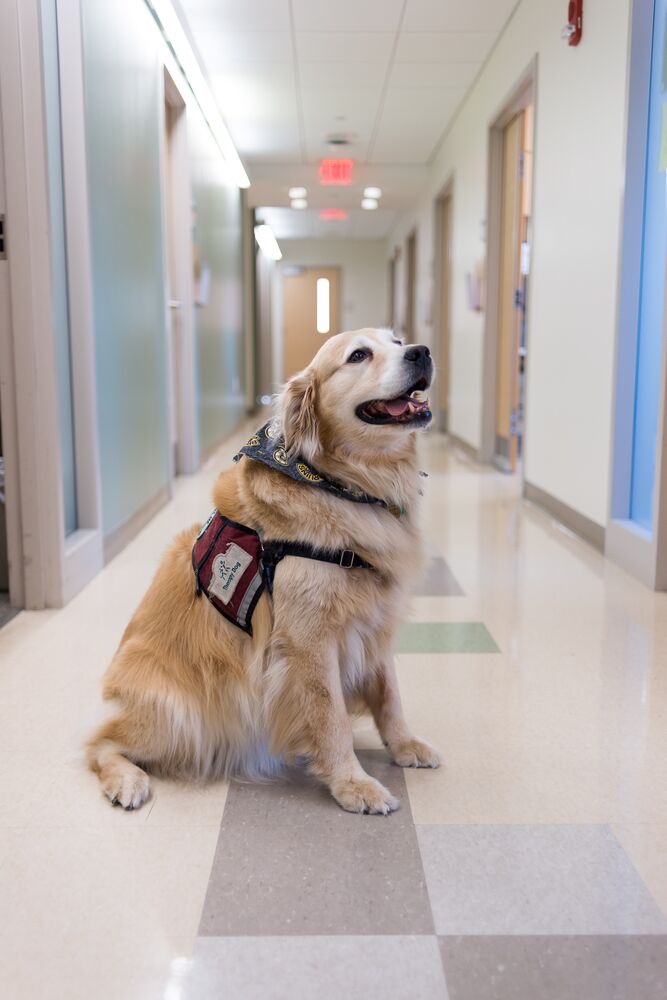
Healing Pups was co-founded by Katzanek and Dexter’s human Hurley, formerly a clinical engineer at BMC. (Mike’s last day was August 25.) The program started in late 2012 with just a few dogs. Then, in the wake of the Boston Marathon bombing on April 15, 2013, the Healing Pups visited the Surgery Intensive Care Unit (SICU) Family Waiting Room at BMC. The dogs ended up visiting family, patients, and staff members every day for weeks. Seeing the immediate impact of the dogs on the families amid trauma, grief, and stress, the co-founders knew that the program needed to expand.
“We started the program just thinking it would be a nice thing. We never really fully anticipated, naively, the wide-ranging impact that the dogs would have.” says Katzanek.
After witnessing the impact of the therapy dogs firsthand, many of the program’s current handlers rescued their dogs with the intention of training them specifically to join the Healing Pups. Like Katzanek and Hurley, almost all of the dog handlers are BMC employees or former employees—nurse practitioners, doctors, social workers, marketing and communications team members, and even a chaplain.
Now, the program has a roster of 17 dogs, and there’s a waiting list for new enrollees.
The science behind therapy dogs as a hospital program
Dexter’s instinctive response at the bedside of a patient at the end of life wasn’t just touching, it was biologically measurable.
Research shows that simply petting a dog lowers the stress hormone cortisol and promotes the release of serotonin, prolactin, and oxytocin — all hormones that play a role in elevating moods. One study demonstrated that human-dog interaction increases oxytocin levels by 300% in humans and 57.2% in dogs.
The physiological benefits extend far beyond hormone regulation. Multiple studies show that therapy dog interactions can reduce blood pressure by an average of 10%, decrease stress hormones epinephrine and norepinephrine by up to 17%, and lower heart rate by 10 to 15 beats per minute. A 2020 systematic review in the International Journal of Environmental Research and Public Health found that animal-assisted or service animal therapy increased serotonin levels by 21% and dopamine by 18% in hospital patients.
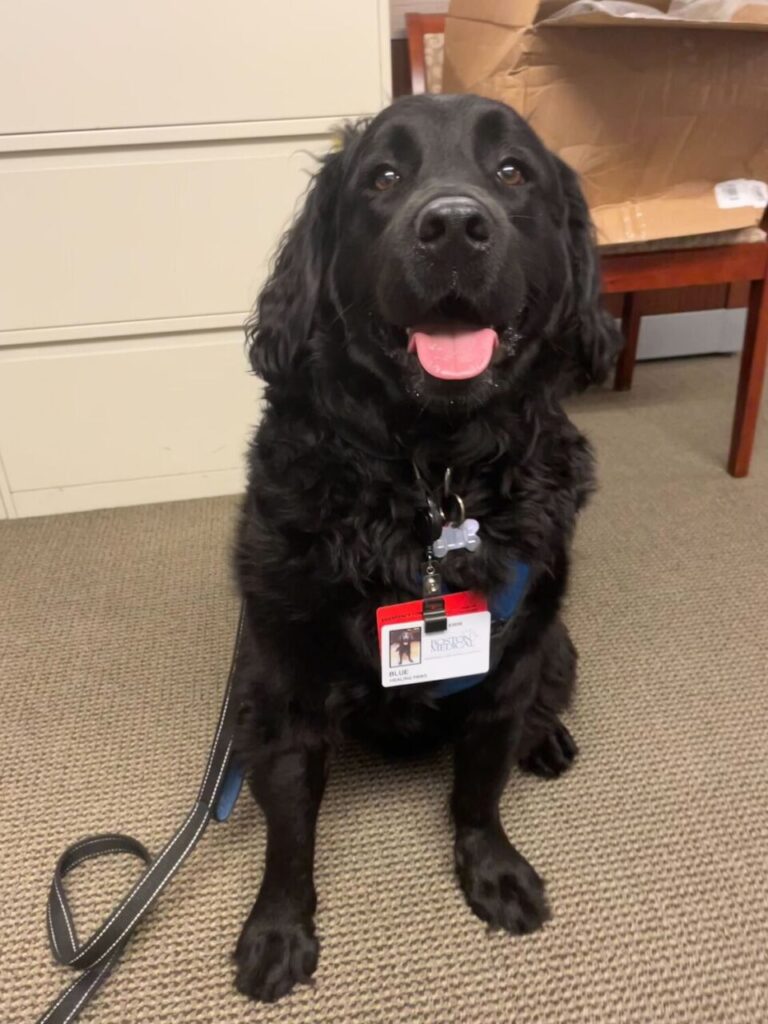
For trauma patients specifically, the data is particularly compelling. A randomized controlled trial published in the Journal of Emergency Nursing showed that patients who interacted with therapy dogs during emergency department visits reported 37% less anxiety and 23% less pain compared to control groups. The effect was comparable to anxiolytics, medications for anxiety, but without side effects.
Therapy dogs’ benefits for hospital staff
It’s not just patients who feel the impact of therapy dogs at the hospital. A 2023 study at The Ohio State University showed healthcare workers experienced a 71% reduction in emotional exhaustion after therapy dog interactions.
“One of the biggest bangs for our buck that we did not foresee was the impact of the dogs on staff.” says Katzanek.
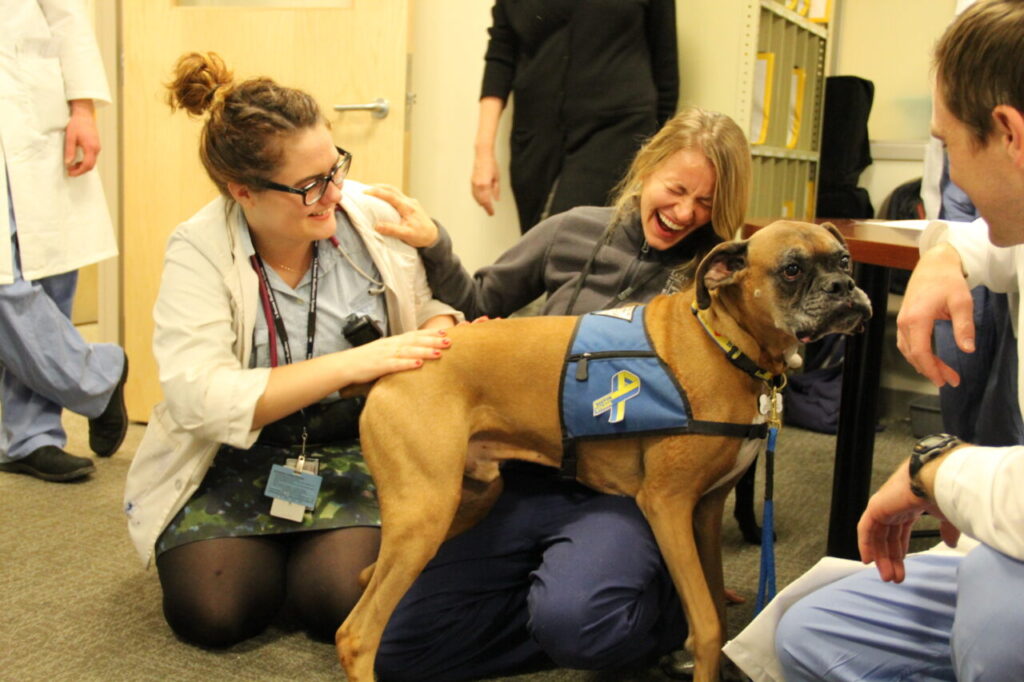
There are myriad examples of how the dogs contribute to the hospital’s morale. For one, Healing Pups are often present for clinical incident briefings, which are structured information-sharing sessions held after or amid a significant clinical event to provide essential information to healthcare teams that help ensure patient safety and facilitate learning. Katzanek says they allow the staff to decompress, debrief, and work through the stress of serious case. On Christmas morning, the dogs go into BMC to visit everyone who is working on the holiday.
“They are a part of the fabric of the hospital, which I am so proud of, and the way they are embraced is just kind of remarkable,” she says. “Public Safety keeps treats for them, and nearly every unit is stocked with treats at the nurses’ station.”
“The dogs know it, too,” she adds with a laugh.

Service animals’ immeasurable impact
The scientific evidence supporting animal-assisted therapy continues to grow. Yet for those who witness the Healing Pups in action, the measurable outcomes tell only part of the story.
A core group of Healing Pups visit Boston Health Care for the Homeless Program every Thursday. Often patients take Polaroid photos with the dogs—keepsakes that can become treasured possessions, according to Katzanek, who used to visit with her black lab Rylie.
“I can’t tell you how many times I was waiting with Rylie for the bus, and somebody would come up to me and show me the Polaroid of them and Rylie,” she says. “I’ve always said that dogs help to humanize people. They are a wonderful entrée into people’s stories.”
“I think this is a population where a lot of people don’t stop and ask about their stories,” she echoed in a CBS News segment on the Healing Pups at BHCHP.
That sentiment is clear talking to patients who come specifically for Thursday’s Healing Pup visits.
“It puts you in a whole other world because they’re so friendly,” said Nick, a BHCHP patient who lost his own 14-year-old dog recently. “They make you forget what else is going on in your life, like your sickness, or your illness. They’re just there for you, they’re loyal.”
Even chance encounters show the lasting significance of the therapy dogs. During a walk with Dexter, Hurley was approached by a man who asked if the dog was indeed Dexter. “When I was at Boston Medical Center,” the man shared, “Dexter was the only visitor I had.”
Whether it’s Dexter’s unprecedented vigil at a patient’s bedside, a Polaroid photo treasured by someone experiencing homelessness, or staff finding a moment of peace during a difficult shift, the program’s impact transcends traditional metrics.
“I have come to believe that these dogs heal in a different way,” Katzanek reflects. “They just kind of heal the soul.”
Isabella Bachman, Manager of Content Strategy, contributed to this story.
About the Author

Caitlin White
Caitlin White is the Senior Manager of Content Strategy at Boston Medical Center Health System.
Share on Social

Health equity news from Boston Medical Center
HealthCity is dedicated to sharing the most cutting-edge ideas for advancing health justice through inspiring stories, in-depth Q&As with equity pioneers, research news that could change the medical landscape, and more.