CEOs Unite at Union Chapel to Explore How Wealth and Health Shape Your Legacy
September 3, 2025
Piper Brown Photography
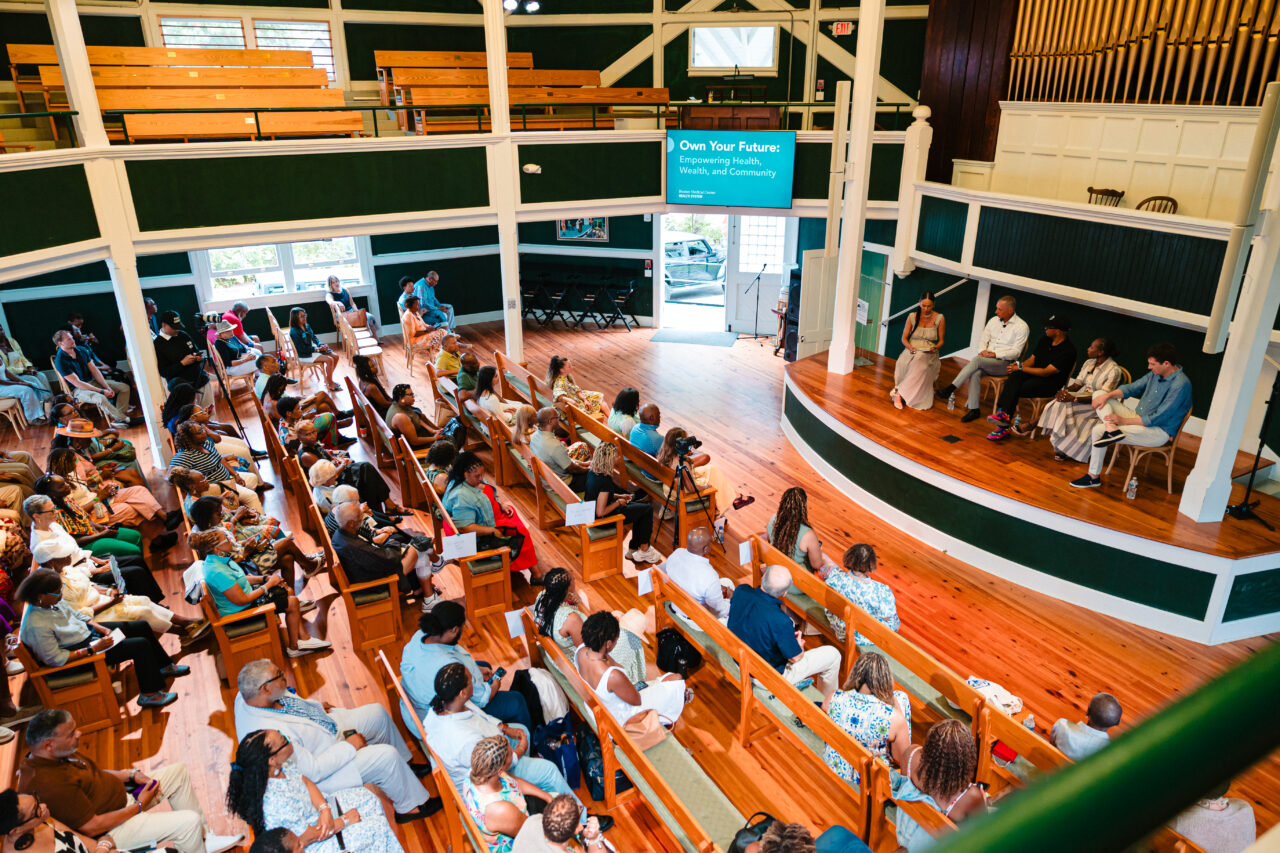
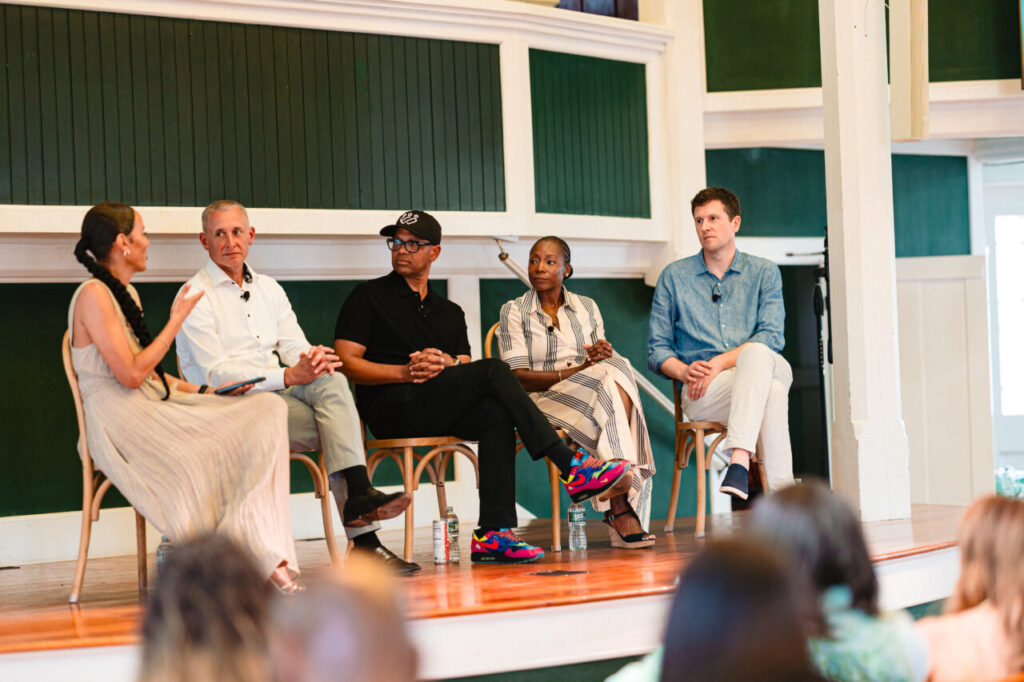
Boston Medical Center Health System hosts a panel discussion at Union Chapel in Oak Bluffs, Martha’s Vineyard.
With its own rich legacy, the historic church was an apt location to host an acclaimed panel of leaders to speak about building a life that allows you, and the generations that come after you, to thrive.
Legacy is important in a place like Union Chapel. The non-denominational community church in Oak Bluffs, Martha’s Vineyard, opened for its first service in 1871 and has been a hub of worship, music, community gatherings, and civil rights ever since. It’s deeply intentional that Boston Medical Center (BMC) Health System, under the leadership of Petrina Martin Cherry, Vice President of Community Engagement and External Affairs, has added its voice to the conversations at Union Chapel every August for the past five years. This year, BMC Health System joined the Charles Ogletree Public Forum Series with a convening of CEOs and leaders on aging and building a legacy for yourself and your family.
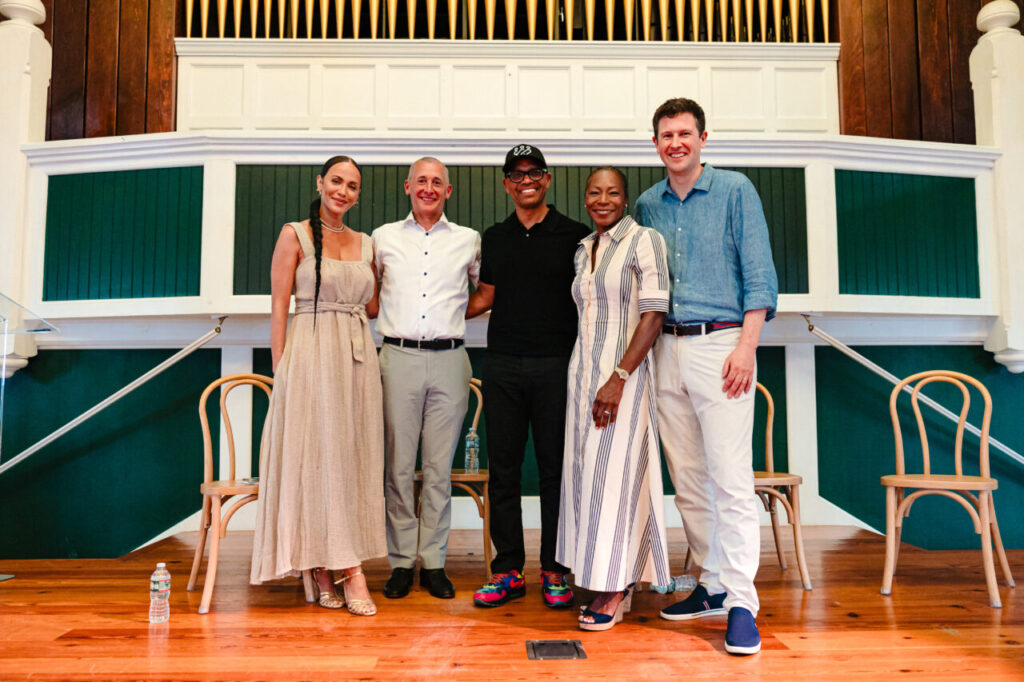
The panel, called “Own Your Future: Empowering Health, Wealth, and Community,” featured BMC Health System’s president and CEO Dr. Alastair Bell, AARP CEO Dr. Myechia Minter-Jordan, WellWithAll CEO Demond Martin, and M&T Bank CEO René Jones. It was moderated by acclaimed actress, model, and entrepreneur Nicole Ari Parker.
It became apparent just minutes into the panel that all panelists regarded health and wealth, especially as we age, to be inextricably intertwined.
“Health is wealth. And when we think about investing in our health, that allows us to be able to do the work, to find our passion, to contribute that, and to build our financial wealth,” said Dr. Minter-Jordan, from the stage at Union Chapel.
Taking the steps toward building wealth
Understanding how vital economic wellness is to overall health and wellness, Jones, one of only four Black CEOs currently leading a Fortune 500 company, talked about the role financial institutions, like M&T Bank and others, have in supporting Black families bridge the racial health gap. He talked about “conscious capitalism”—a business philosophy that emphasizes the wellbeing of customers, employees, and communities, instead of just shareholders.
“My predecessor, 42 years ago, decided that essentially our job was to make a difference in people’s lives. It was not about opening that checking account,” Jones said, speaking about M&T Bank and its former CEO Robert G. Wilmers, who was in the position from the early 1980s until 2017. “Our approach now is how can we be that small bit of glue that connects the church or the religious institutions, the healthcare systems, the universities, the government and municipalities. How could we be the force that connected people, capital, and ideas?”
But financial institutions can’t be the only ones helping close the wealth gap. Other systems, like health systems, need to take a leadership role in emphasizing economic mobility as a key part in overall health and wellness. He believes that means building trust with communities and helping patients and community members start with a stable foundation, such as opening 529 accounts for their children and effectively filing their taxes for the breaks they have earned—both strategies StreetCred, the health system’s economic resources hub, provides assistance with. It’s a sentiment that Martin echoed, offering advice for anyone who is starting to get a handle on their finances—and for the leaders who are working with people in that position.
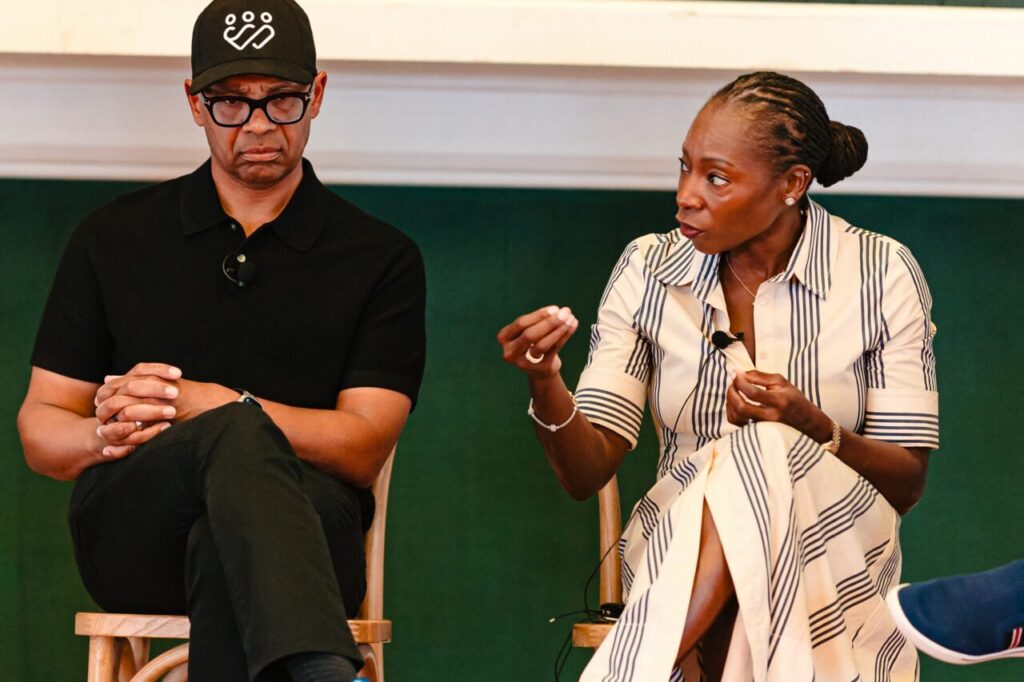
“If you think about a problem these incredible folks are attacking on a daily basis, they’re not trying to solve the problem in a single day,” said Martin. “If you’re able to take one step, you can take another step, and you can take another step, and you can take another step, and you build momentum. Then, you bring other people around you that are also taking the steps and you encourage each other, which brings more momentum.”
Dr. Bell offered a way that systems and companies dedicated to their communities could help people take those first steps. He spoke about how BMC Health System has been serving as a model across the U.S. in building and scaling programming that helps build career paths and, in turn, economic opportunity.
“Hospitals are anchor employers,” Dr. Bell said. “It creates entry points for employment, but it’s also about progression and advancement. So how you go about employing from the community is really a way of circulating wealth back into that very same community. But it’s also how you help people build pathways—how people can start in one place and build a very different wealth trajectory.
He used the example of BMC Health System’s Brockton Behavioral Health Center. The health center engaged and trained people of color from the community and surrounding areas who do may not have formal college education, but who do have interest in the mental health field. Upon acceptance into the program, community members were trained to become certified behavioral health technicians, then hired as mental health specialists, allowing individuals to continue growing and developing their careers. Now, 65% of Brockton Behavioral Health Center employees are from neighboring communities, and 55% identify as people of color.
“There’s an economy around healthcare. How can you have the community both benefit from the care and participate in the economy?” Bell said.
Aging, generational wealth, and a community legacy
The idea of economic mobility, not just for yourself, but for building generational wealth for your family as you age is only becoming more resonant. Every day in the U.S., 10,000 people reach the age of 65. This is expected to continue until 2024. And by 2035, there will be more people over 65 than under the age of 18. People are living longer lives—but what does this “silver tsunami” demographic shift really mean in terms of longevity and thriving, both from a health and wealth perspective?
“We know that people are living longer, but are they living healthier? There’s a 13-year gap between how long you live and how long you live in a healthy way,” Dr. Minter-Jordan said. “If you’re not healthy, you’re going to spend all your dollars, if you’ve been able to save, on your health as you get older.”
In Massachusetts, residents in Boston’s Back Bay have a life expectancy of about 92 years, one of the highest in the city, while residents in Roxbury, just two miles away—where many of BMC’s patients live—have an average life expectancy of just under 69 years, the lowest in Boston. This stark inequality highlights persistent disparities affecting health and wealth in the city.
Dr. Bell and Dr. Minter-Jordan agreed: Partnering with the communities that are directly impacted by these disparities is a key way to build a legacy of health and wealth moving forward.
“What I loved about working in Roxbury is this beautiful resiliency there. We don’t often tap into the people who are the survivors, the people who have taken charge of their health. How do we ensure that we’re scaling and building those programs in the community? How are we just making sure that, as a community, we are tapping into that resiliency and spreading knowledge?” she asks. “We have it. We’re not coming from a place of less than. We have amazing strength and resiliency that we need to continue to build in our communities.”
What true legacy and longevity means
As panelists discussed aging, they came back to the idea that longevity isn’t just about the number years, but the quality of life in those years. And many of the CEOs noted, social isolation and loneliness is a critical health issue as we age, diminishing that quality of life.
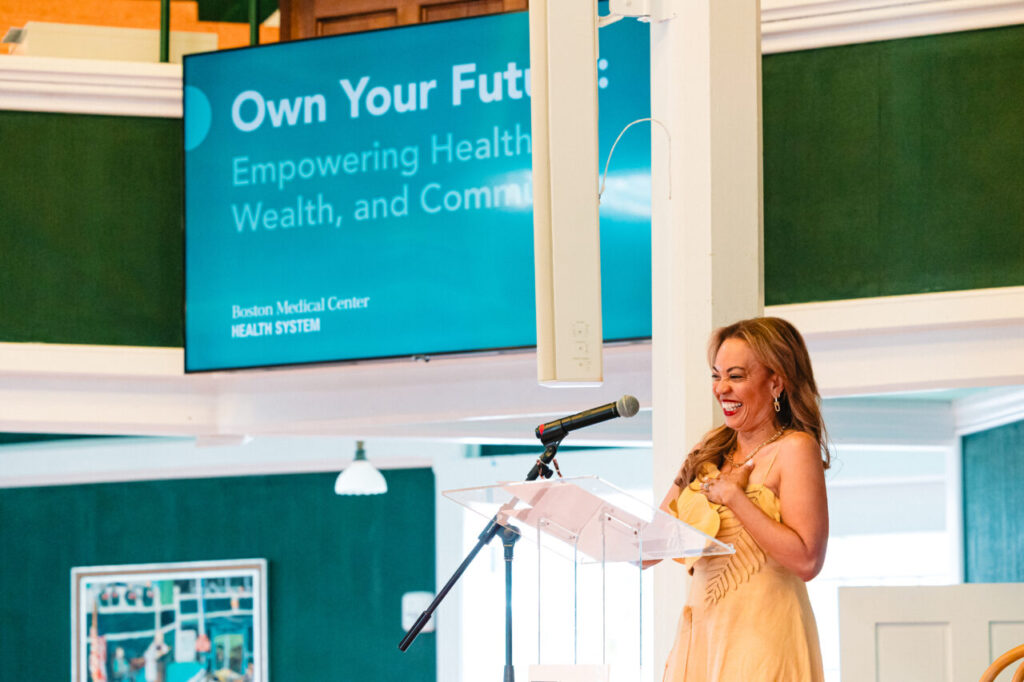
“I remember my dad saying that, ‘You know what Nikki, it isn’t old age that kills you, it’s the loneliness,” Parker shared, recalling how her dad had these friends who would call him over to play spade or penuckle, and he remembered every single one.
Dr. Minter-Jordan opened up about how AARP works to combat the social isolation, building community through programs like Sisters, which helps people in their 40s, 50s, and 60s tap into opportunities to connect with others.
“I cannot stress community enough,” Minter-Jordan said, likening the importance of true connection to what she and others have felt in this time in Oak Bluffs on Martha’s Vineyard. “As soon as you get on that ferry, you’re going to be part of this community. You feel the weight coming off of your shoulders, you’re coming to a place that’s safe where you feel welcome and that’s how we should continue to think about the places where we live day to day to create that level of community.”
It resonated with Martin, who recently released a documentary with his company WellWithAll called Black Longevity, which highlights the stories and wisdom of Black elders—who they call “our unsung heroes”—whose lives can build a legacy, illuminating pathways to health, resilience, and lasting impact. “One of the greatest outcomes we found about the driver of longevity was friendship, was love in the house,” Martin said. “Regardless of how much they had, they had that love, they had that community—and that was the driver of joy and purpose.”
About the Author
Caitlin White
Caitlin White is the Senior Manager of Content Strategy at Boston Medical Center Health System.
Share on Social

Health equity news from Boston Medical Center
HealthCity is dedicated to sharing the most cutting-edge ideas for advancing health justice through inspiring stories, in-depth Q&As with equity pioneers, research news that could change the medical landscape, and more.