Fighting Back Against Addiction Care Stigma Starts Close to Home
May 14, 2026
Bruno Debas, Boston Medical Center
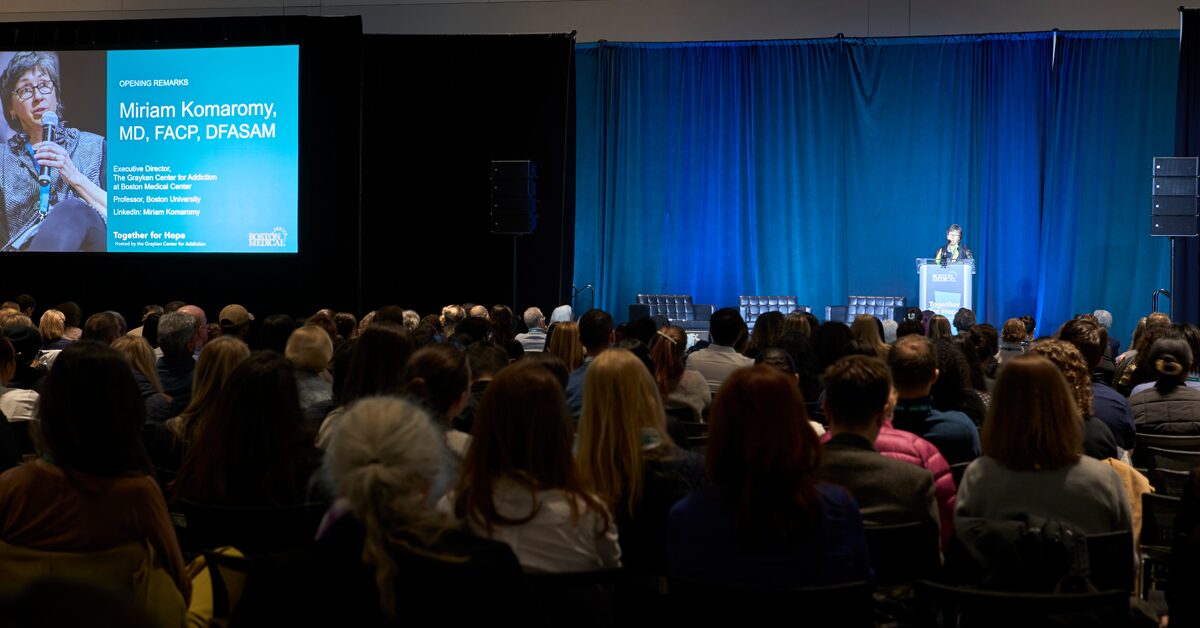
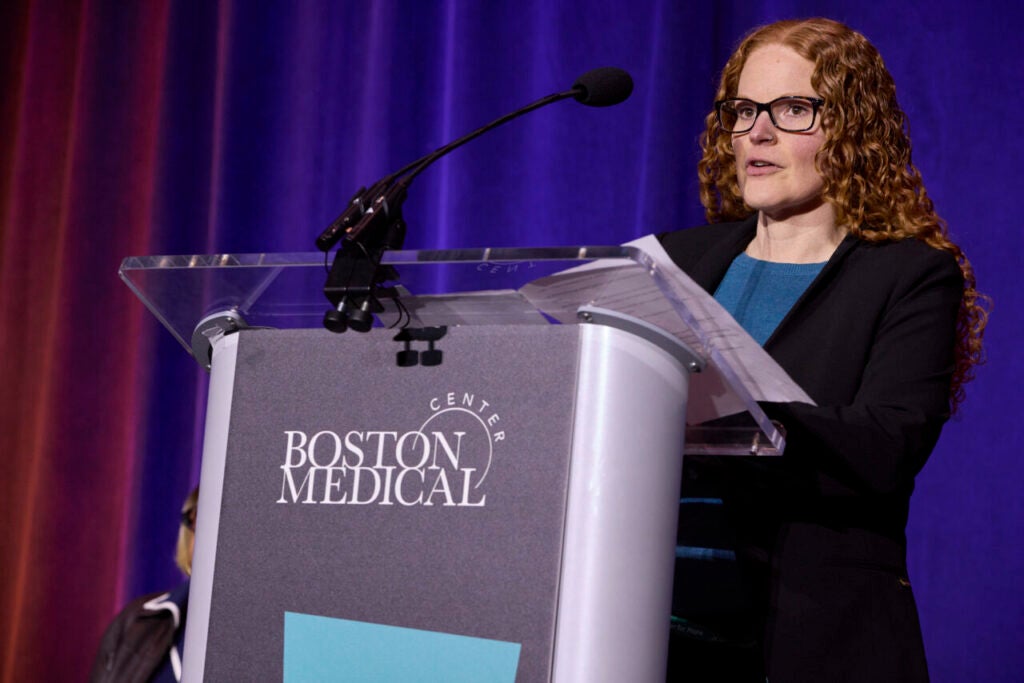
Miriam Komaromy, MD, FACP, DFASAM, executive director of the Grayken Center for Addiction at Boston Medical Center takes the stage at the team's annual two-day conference, Together for Hope.
Everyone is watching Washington. But the threats to addiction care progress may be happening somewhere much closer. Experts at the annual Together for Hope conference provide pathways to change.
For most of the past decade, there was reason for real optimism in addiction care. The language has shifted — from “addict” to person with a substance use disorder, from moral failing to medical condition. A growing share of the public came to understand it that way. Harm reduction moved from the margins toward the mainstream. The hard work of changing minds, one conversation at a time, was producing results.
Then the COVID-19 pandemic arrived. It didn’t just disrupt care, it disrupted the social fabric that care depends on. Communities fractured. Isolation deepened. The informal networks of trust that practitioners had spent years building — with patients, with neighborhoods, with families — were strained or severed. When people emerged, something had shifted. The progress on reducing stigma, on making it acceptable to seek help, on building the 1:1 human relationships at the heart of recovery, had quietly slipped backward. People with substance use disorders became more hidden, more fearful, less willing to be seen.
Now, as every eye in the addiction care field is fixed on federal policy, Dr. Kiame Mahaniah, Massachusetts Secretary of Health and Human Services, is raising a different concern. The federal threats are real, he acknowledges. But they may not be the most dangerous ones.
“We have been here before”: Fighting stigma on a local level
Speaking at Together for Hope, Boston Medical Center’s Grayken Center for Addiction’s annual convening, Mahaniah put it plainly: “I think our biggest battle is actually within our social circles. Because what I really see that’s scaring me is not what the administration does. What I see that scares me is what local municipalities are adopting.”
Massachusetts has built policy infrastructure for addiction care measurably ahead of the national curve, integrating substance use disorder care into primary care and maintaining harm reduction infrastructure even as federal support grows less reliable. That architecture matters. But Mahaniah argues that federal-level battles are, in a sense, the easier ones because they are explicit. When a regulation changes, you can litigate it, he said during his opening keynote panel with Executive Director of the Grayken Center Miriam Komaromy, MD. What you cannot legislate against is what your neighbor now believes.
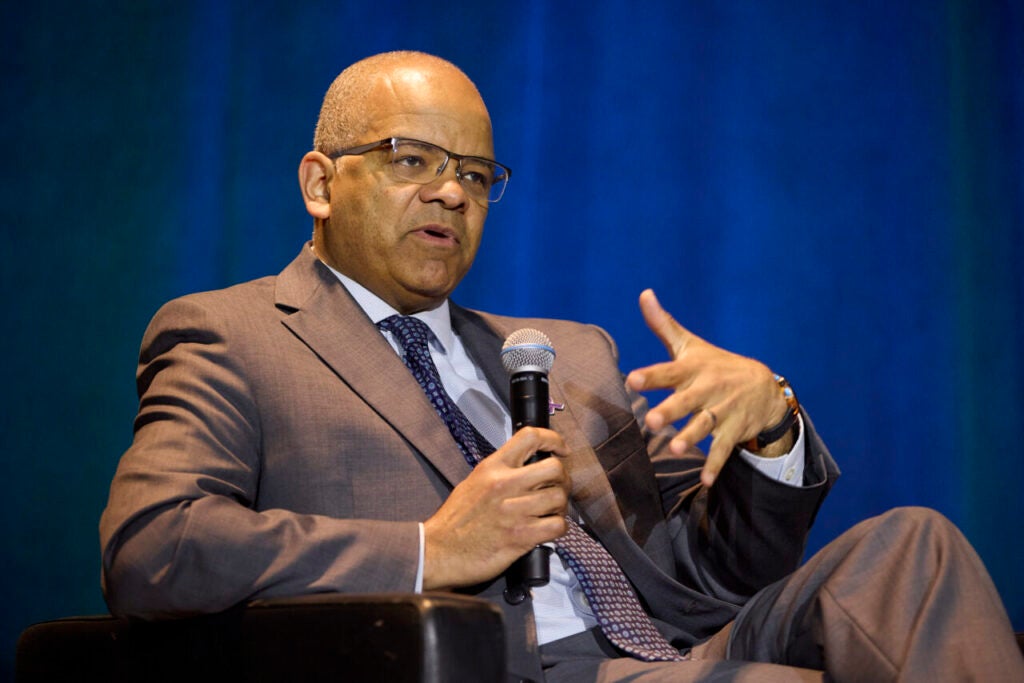
Mahaniah’s sharpest warning is also the most personal. “You remember from like 25 years ago when you didn’t dare tell people that you were in recovery, right? You had to hide it,” he said. “And people just don’t want to go back to that time, but I think we are back in that time.”
The evidence bears him out. Over the past five years, the public conversation around addiction has become somewhat less overtly stigmatizing, particularly in mainstream media and healthcare language. But research suggests deeper attitudes have changed more slowly. People with substance use disorders still face substantial social and medical stigma, especially around illicit drug use, and many researchers say stigma remains a major barrier to treatment.
Stigma happens during care, not just before it — at the pharmacy counter, in the triage bay, in the split-second choice a corrections officer makes about whether to refer someone to treatment. It is localized, interpersonal, and largely invisible to the policy instruments designed to combat it.
Consistency as the route to trust
Clinicians running outreach vans have watched as the people they serve pull back — more worried about being seen, more alert to the shifting climate. The response: show up anyway, and keep showing up, until the van is a fixture. Jessie Gaeta, MD, of Boston Health Care for the Homeless Program spoke on a Together for Hope panel about mobile units providing SUD care. Gaeta talked about building trust not just with patients but with the entire community the van operates in — the businesses whose parking lots she needs, the residents whose comfort determines whether she’s welcome back. Mobile units shift the power dynamic to the community’s ground, reaching people who may have decided institutions are not safe or are stigmatizing.

Jeffrey Bratberg, PharmD, in his Together for Hope presentation made the case for the neighborhood pharmacist as frontline resource — not a passive dispenser, but a trusted presence for people who will never seek out a specialty clinic. Given that pharmacy stigma actively drives people away from treatment, his approach works from the supply side: change the pharmacist, change the encounter. “We could build out another stream of medication access that could build trust on a local level,” he said — in the neighborhood where someone has lived for twenty years.
The Boston Public Health Commission has taken another approach: remove the human barrier entirely. In a panel about naloxone access in Boston at Together for Hope the audience learned that five public health vending machines across the city dispense naloxone, socks, hygiene supplies, winter gear, and fentanyl test strips. Self-access gives people privacy and autonomy, shows dignity and humanity. As social worker Desiree Millett, LICSW, put it: “People don’t understand why you need things like this until it hits them close to home, and not just close, but very close to home.”
Evolving places steeped in stigma
Nowhere is the collision between localized stigma and deliberate counter-practice more stark than inside a county jail. Project Evolve — a partnership between BMC Health System and the Suffolk County Sheriff’s Department — provides trauma-centered substance use care to men detained pre-trial at Suffolk County Jail. Superintendent Matt Decastro has been candid about internal resistance: “There are people, even close to me, who are philosophically opposed to what I’m trying to do.” Panelists agreed, saying that the culture of jails is one of us versus them. In jails, treatment is treated as a privilege.
Recovery coach Demetrius Dunston, incarcerated for 14 years beginning at age 16, described Project Evolve as “a place where people treat me as a human.” That sentence — devastating precisely because it should be unremarkable — captures both the depth of what stigma does and what it takes to begin undoing it.
Person by person support for people with substance use disorders
The social circle Mahaniah described in his keynote panel starts somewhere. Often, it starts at home.
Stephen Murray and his sister Meg were close when his substance use was at its worst. The two spoke candidly in a Together for Hope breakout session about the deeply personal times in their lives through addiction and recovery and their relationship. Meg was close enough to her brother that she was the one who saw what was happening, who helped get him treatment, and stood in his corner as his advocate.
Their story surfaces something the field too often overlooks: the sibling relationship is uniquely important and uniquely neglected. Siblings are frequently the first to notice substance use — closer in age, sharing more of daily life, attuned to small shifts. But as peers, they may lack tools to name what they’re witnessing, and going to a parent can feel like a betrayal. Facilitating support like the sibling-to-sibling support they are evidence of and advocates for can be a pathway for reducing stigma and offering pathways to care.
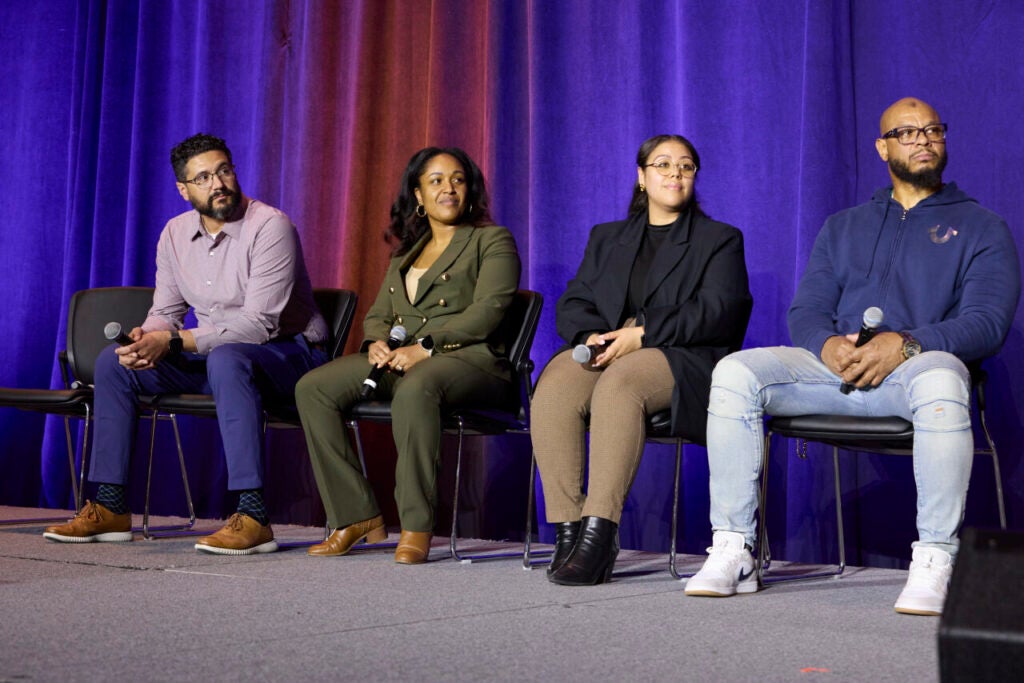
Today Stephen is Program Director of the SafeSpot Overdose Hotline. Meg is Executive Director of CMC: Foundation for Change. That both built careers out of what they lived is not a footnote. It is what the person-by-person approach looks like when it takes root.
“We are back at a time where we have to go one by one, person by person, relationship by relationship,” Mahaniah said. “I think we are back in the day of fighting stigma, of really educating people at that one-on-one level.”
Policy is scaffolding. What it holds up is a culture. The field knows how to fight federal policy. What the current moment demands is harder to organize: showing up to neighborhoods, engaging pharmacists who have never thought of themselves as allied health workers, helping siblings find the language for what they are witnessing before it is too late.

Together for Hope, in its third year is one place where people doing this work find each other and discover that someone across the table has been fighting the same battle in the next neighborhood over. Joining these voices and actions together is what can help facilitate change on the person to person level.
About the Author
Caitlin White
Caitlin White is the Director of Content Strategy at Boston Medical Center Health System.
Share on Social

Health equity news from Boston Medical Center
HealthCity is dedicated to sharing the most cutting-edge ideas for advancing health justice through inspiring stories, in-depth Q&As with equity pioneers, research news that could change the medical landscape, and more.