Innovation Born from Necessity: How Essential Hospitals Are Leading Healthcare Forward
January 22, 2026
David Markey, Boston Medical Center
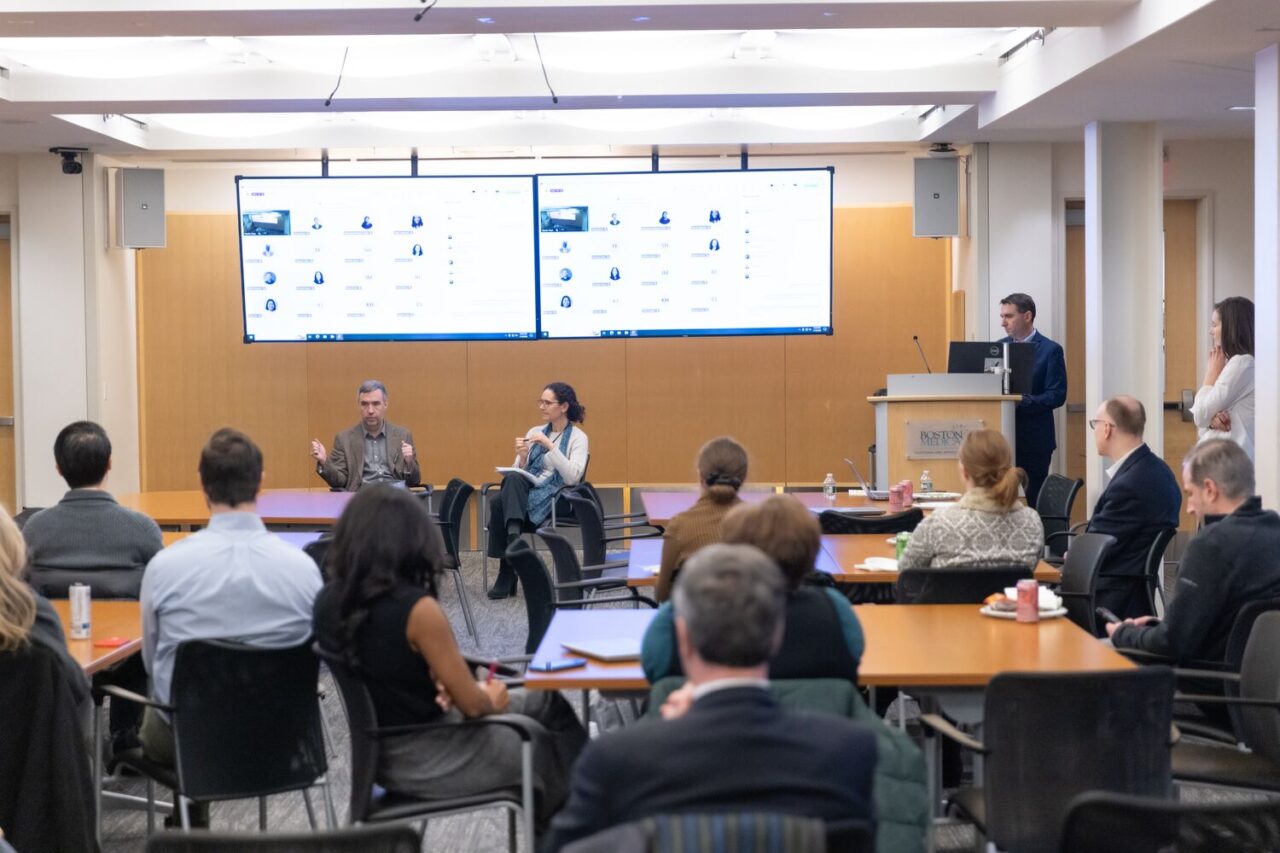
BMC Health System's Innovation Office hosted a fireside chat to conclude its inaugural Innovation Week.
“We have to survive and thrive in an environment that would actually crush most places. And so, we're forced to innovate,” says BMC Health System’s SVP and Chief Innovation Officer David Twitchell.
Necessity is the mother of invention. It’s a phrase used so often it has become cliché—but when you look at how David Twitchell, PharmD, MBA, and team have run BMC Health System’s Innovation Office, it couldn’t be more true. BMC is the largest essential hospital in New England, serving a high percentage of Medicaid patients and patients who live in underserved communities. The need or necessity, Twitchell explains, is high.
“Why people innovate is because they face a problem. That problem could have or requires a better solution. The difference in an essential hospital is that we experience those problems sooner and with a greater degree of urgency,” says Twitchell, the Senior Vice President and Chief Innovation Officer of BMC Health System. “We have to survive and thrive in an environment that would actually crush most places. And so, we’re forced to innovate.”
This month, BMC Health System’s Innovation Office hosted its inaugural Innovation Week, which aimed to engage, educate, and excite individuals from across the hospital to find solutions to obstacles both big and small—ultimately to inspire creative problem solving that can help their own teams and patients thrive. It’s part of creating a culture of innovation across the system, where employees are encouraged to generate their problem statements, share their ideas for solutions, set metrics for outcomes, and ultimately, follow through on change. The innovations have ranged from designing a macro tool in Excel that allows Finance teams to sort data in one-tenth of the time to launching new companies that advise other hospitals on real estate and sustainability. When these innovations are commercialized and spun out into their own companies, they also have the opportunity to bring financial sustainably to the system’s core mission of serving all patients.
“Why people innovate is because they face a problem. That problem could have or requires a better solution. The difference in an essential hospital is that we experience those problems sooner and with a greater degree of urgency. We have to survive and thrive in an environment that would actually crush most places. And so, we’re forced to innovate.”
David Twitchell, PharmD, MBA, Senior Vice President and Chief Innovation Officer of BMC Health System
“To find inventive solutions, you need a group of innovative people or tenacious people—or a combination of both. All of my colleagues here exist in that same pressure environment and have come up with ways to survive and thrive,” Twitchell says.
From problem to creative solution
The key to effective innovation, Twitchell emphasizes, is starting with the problem itself—not the solution. It’s a mistake he sees frequently when companies approach BMC Health System with new technologies or platforms.
“Companies often develop a solution and then only later ask “what problem does this solve?” Twitchell explains: “Instead, you need to spend the time necessary to have a thesis of what the problem is, then design your solution to solve that problem, and then be able to measure the outcome of that solution.”
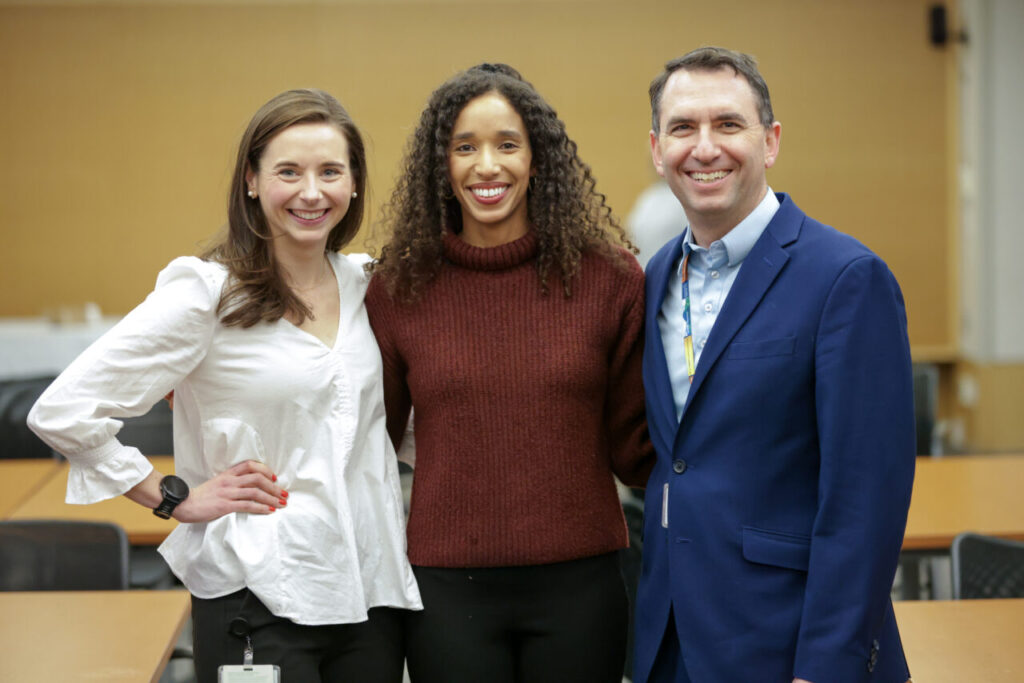
This problem-first approach has led to tangible results at BMC. The Innovation Office has helped launch several ventures, including 340 Bridge, which helps other health systems optimize their 340B drug pricing program; a specialty pharmacy solution called Clearway Health; and Oakwell, which focuses on sustainability and real estate consulting for other hospitals. Each emerged from a clearly defined need within its own health system, and now, each contribute meaningfully to BMC Health System’s financial ability to better weather hardship and continue serving its communities.
The process requires more than just identifying a problem. It demands what Twitchell calls a “call to action”—framing the issue in a way that inherently includes a measurable metric: “You’ve identified a problem, which resonates with me and probably resonates with others. And if it’s a problem that others have and your solution changed the outcome on that—that’s innovation.”
Learning from the venture capital perspective
On the final day of Innovation Week, the Innovation Office hosted a fireside chat between BMC Health System Senior Vice President and Chief Transformation Officer Jesse Souweine and Google Ventures General Partner Anthony Philippakis, where they spoke about personal advice for creating new solutions, trends in the healthcare industry, and the areas most ripe for innovation.
Philippakis, who transitioned from medicine to venture capital, offered insights that resonated with the healthcare innovators in the room. The skills required to innovate toward a potential new business strategy, he noted, aren’t far removed from those needed in academic medicine. Both require envisioning a future state, managing limited resources, and achieving milestones that demonstrate progress.
And he sees significant opportunity for healthcare professionals with ideas for entrepreneurial paths. Clinicians’ unique, experienced perspectives bring authenticity and expertise that pure business minds cannot replicate.
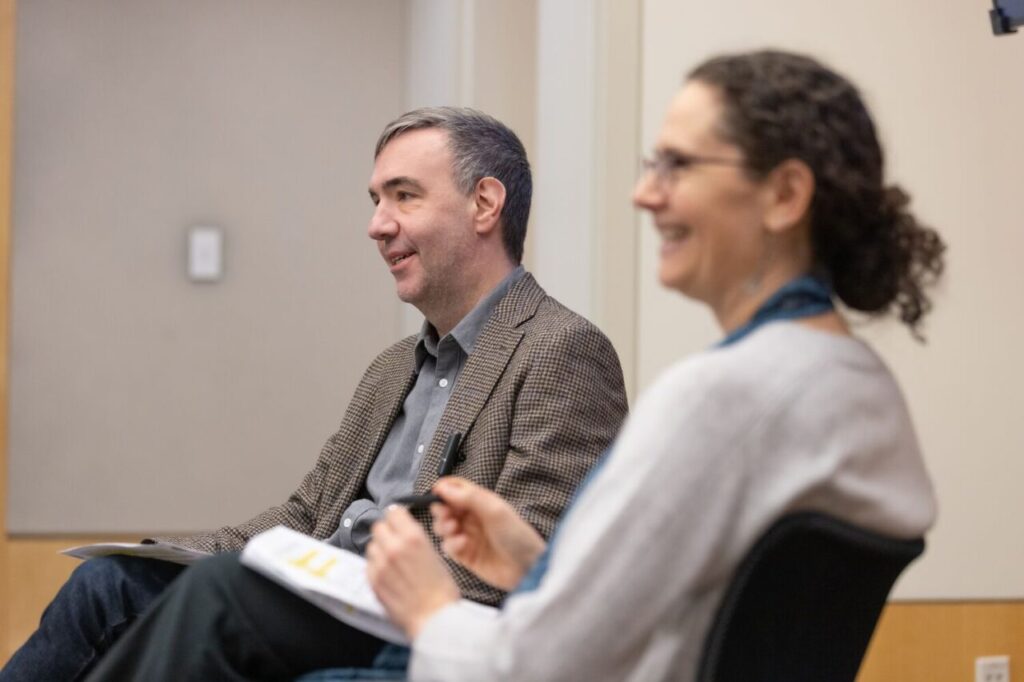
“Medicine is one of the most complicated human endeavors,” Philippakis said. Yet, with their busy schedules and often concrete career paths—from medical student to intern to resident to fellow, and to practicing physician—it often feels risky to step outside the traditional path, he noted.
“I think in a path like medicine where there’s a very clear-cut path, it can be really scary to jump off and do something that’s more winding,” he added, “but often there’s a tremendous amount of opportunity in the kind of off-the-beaten path because a lot of people don’t want to do it because it’s scary and different.”
It’s something the Innovation Office seems keenly aware of, not just for doctors but for careers across the health system. Which is why Twitchell and his team have fostered not just a culture of innovation, but actionable pathways for all employees, across all departments. The office works as a partner to support employees with ideas, fund their time, backfill their positions if needed, and create pathways for promising innovations to grow, whether as internal improvements or external ventures.
The ever-present AI question
No conversation about healthcare innovation in 2026 would be complete without addressing artificial intelligence. But Twitchell and Philippakis both have cautioned against treating AI as a strategy unto itself.
Twitchell references a colleague who said that having an AI strategy is like having a strategy for the English language. The real question isn’t whether to use AI, but rather what problems need solving and whether AI can make those solutions more effective or efficient. Call centers, he notes for instance, present a use case: they’re expensive, patients don’t always answer, and staff can’t spend enough time on each call. Multiple reasons to reach out to patients could potentially be consolidated. In that context, AI becomes a tool that supports a broader strategy around community engagement.
“I think in a path like medicine where there’s a very clear-cut path, it can be really scary to jump off and do something that’s more winding but often there’s a tremendous amount of opportunity in the kind of off-the-beaten path because a lot of people don’t want to do it because it’s scary and different.”
Anthony Philippakis, Google Ventures General Partner
In the fireside chat, Philippakis observed that the investment landscape reflects this practical approach. The horizontal AI space will likely be dominated by major cloud vendors and their partners. The real opportunity lies in vertical AI companies—those that apply AI to specific industry problems, like Open Evidence in healthcare or Harvey in law.
“There are no end of opportunities for automation in healthcare,” Philippakis noted. “And a lot of what we do every day can actually be mundane, so the opportunity for AI to help is significant. I don’t think anybody in healthcare is actually worried about losing their jobs. I think we all welcome the automation, which is very different than a lot of other professions.”
But it’s crucial, both leaders reiterate, that you can’t build a solution in search of a problem—something some AI companies and tools are currently trying to do. AI won’t solve everything. Finding a problem and seeing if AI can be a tool to help solve it is the more helpful way to think about the AI boom.
Essential hospitals’ innovation advantage
What excites Twitchell most as an area of innovation in healthcare is the work BMC’s Population Health team is doing.
The model involves reaching people in the communities where they live, providing care in lower-cost settings, connecting them with food, housing, and social networks, and ultimately helping them thrive rather than cycling through emergency departments. Twitchell has seen organizations attempt and even achieve good work in this space, but it’s hard to compare with the direct experience that BMC teams have on a daily basis and over decades.
His vision extends beyond Boston. He imagines deploying BMC’s population health model to communities across the country, fundamentally changing outcomes for the most underserved populations.
“There are no end of opportunities for automation in healthcare. And a lot of what we do every day can actually be mundane, so the opportunity for AI to help is significant. I don’t think anybody in healthcare is actually worried about losing their jobs. I think we all welcome the automation, which is very different than a lot of other professions.”
Anthony Philippakis, Google Ventures General Partner
“We could say we’ve touched tens of thousands, hundreds of thousands of lives and made them better, and that maybe there’s a generational impact—healthy, employed, housed families who will then have children who are healthy and employed. I want to help create an upward spiral,” Twitchell says. “The core driver there would be that impact.”
And its impact would benefit not just essential hospitals, but all types of health systems.
Many health systems face the challenges that BMC confronts, just in smaller doses. At BMC, the plurality of our patients are covered by Medicaid, compared to other hospitals where the percentage is much lower.
This intensity creates what Twitchell calls a forced innovation cycle. Essential hospitals must solve problems faster, sooner, and more comprehensively than their better-resourced peers. They face tomorrow’s healthcare challenges today, simply because they serve the populations most affected by systemic gaps in the healthcare system.
The Innovation Office’s role is to harness that pressure productively. It’s a recognition that innovation doesn’t require a complete overhaul of hospital culture. The people are already innovative by necessity. Twitchell and the Innovation Office’s job is simply to extract and foster what’s already there.
“As much as you can see us having a deficit, I see it as our advantage,” Twitchell says. “Both out of necessity and our drive to be a leader in healthcare. To thrive, we have to be innovative.”
About the Author

Caitlin White
Caitlin White is the Senior Manager of Content Strategy at Boston Medical Center Health System.
Share on Social

Health equity news from Boston Medical Center
HealthCity is dedicated to sharing the most cutting-edge ideas for advancing health justice through inspiring stories, in-depth Q&As with equity pioneers, research news that could change the medical landscape, and more.