How Medical Students Are Reviving the Arts to Promote Empathy in the Exam Room
April 9, 2026
BU Publications
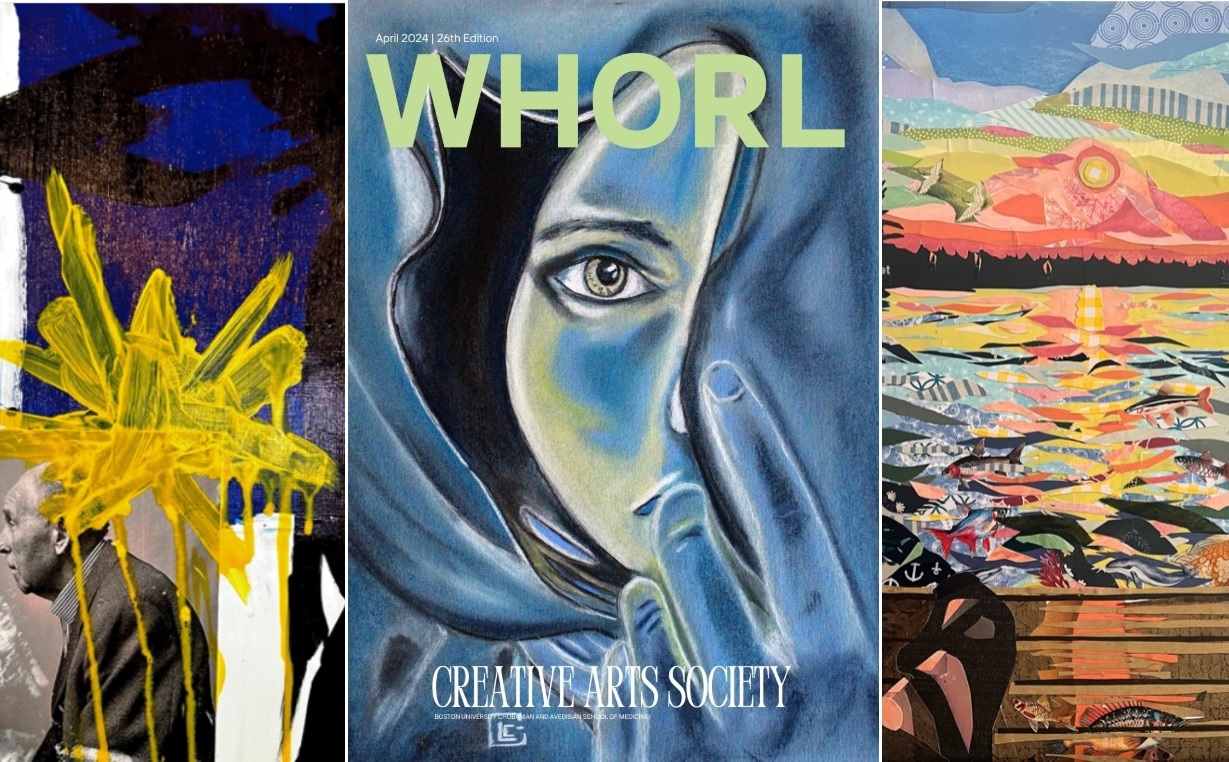
Three pieces of artwork in the 2024 and 2025 issues of Whorl. From L to R: untitled multimedia art by Daniel Tourevski; cover of Whorl 2024; "Main Dock at Sunset" by Kitt Shaffer
Creative arts—whether it’s poetry, painting, or sculpture—has shown first-hand how it can benefit doctors in training as well as their future patients. Learn more about how Boston University Chobanian & Avedisian School of Medicine and Boston Medical Center are intentionally integrating artistry into training.
It’s like an exhale in the coldest winter weather, the ghostly white cloud curls and wisps into the air. “It’s the magic cloud!” Margaret Lee, MD, PhD, says to her pediatric patients, performing a sort of theater, “a cloud in a cup.” Dr. Lee, a dermatologist at Boston Medical Center (BMC), is preparing to use cryotherapy on a child’s benign wart using her “cloud,” or liquid nitrogen.
The procedure, she explains to HealthCity, can be painful. She wants to make the procedure more palatable to kids—hence the theater, the magic.
“I’ve had parents even say that their kid doesn’t so much remember the painful procedure; they’re looking forward to seeing the magic cloud again,” Dr. Lee says.
Dr. Lee, like many other medical professionals, is using creativity in her practice. She’s the co-founder of the Creative Arts Society (CAS) at Boston University Chobanian & Avedisian School of Medicine and a proponent of the intersection between arts and medicine. It’s a concept that isn’t new to healthcare but is increasingly being brought more formally into training.
The origins of the Creative Arts Society
Dr. Lee co-founded the student-run CAS as a first-year medical student at BU Chobanian and Avedisian School of Medicine in 1994. Now, a dermatologist at BMC, she serves as the group’s co-faculty advisor with Keith Tornheim, PhD, associate professor of biochemistry. The Creative Arts society fosters a culture of creative expression, health, and wellbeing through the arts among medical students and throughout the medical center through many endeavors, notably Art Days, which is 36 years running under the support of Dr. Tornheim and medical school provosts. On Art Days, students, faculty, and staff of all of the schools on BU’s medical campus, as well as anyone working at BMC, can submit their art to be displayed in a two-day showcase event on campus, including painting, poetry, sculpture, drawing, and much more.
Since the beginning, CAS has also sponsored the Kick Back Kafe, an annual open mic featuring live performances ranging from music, poetry reading, dance, martial arts, and even standup comedy.
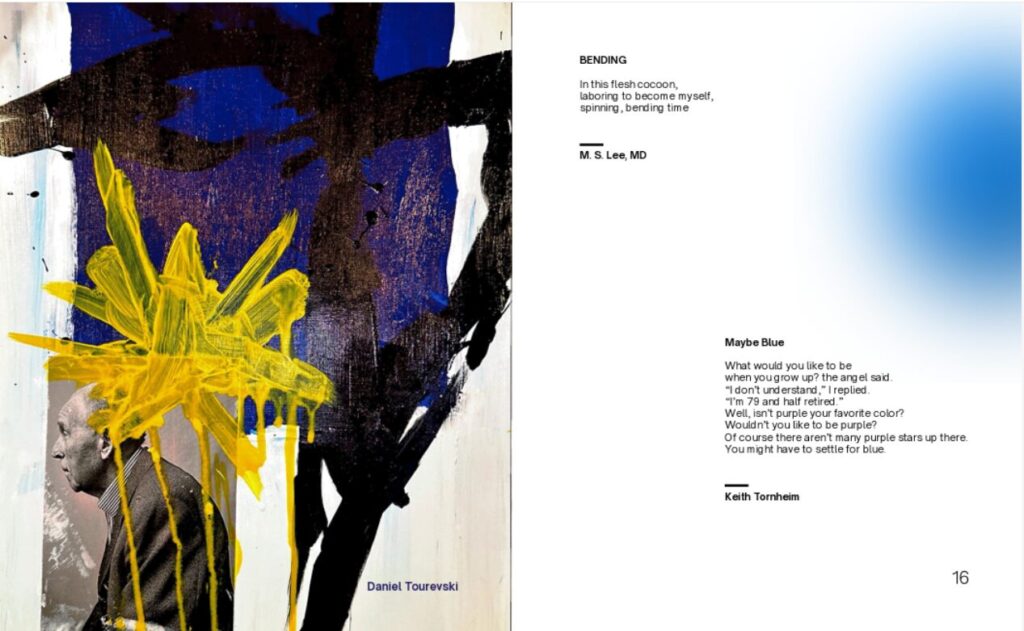
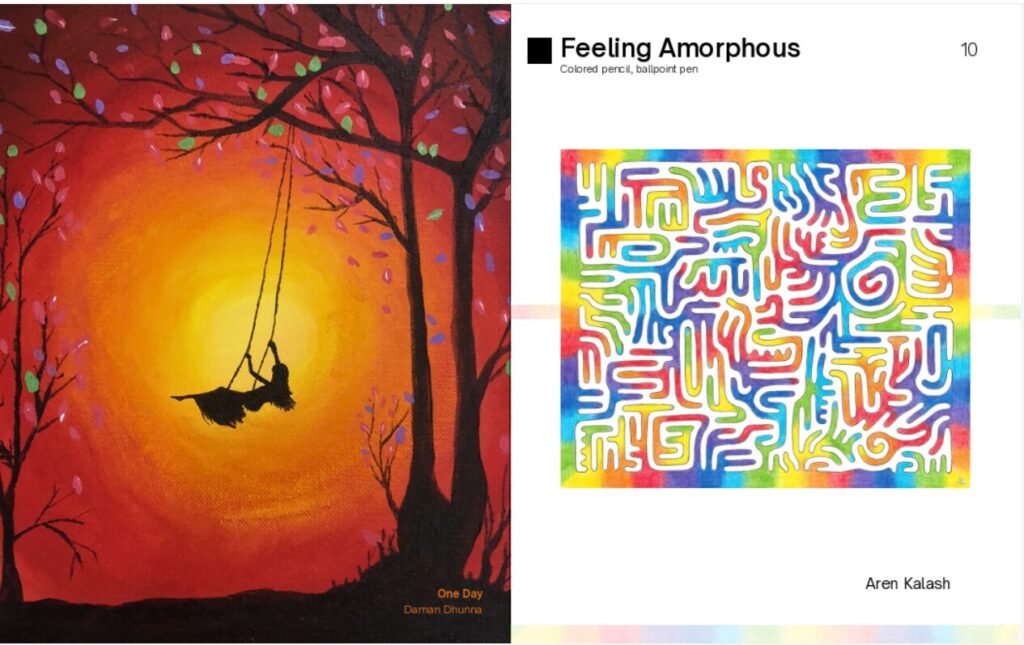
Creative Arts Society also oversees its literary and arts journal Whorl, also co-founded by Dr. Lee when she was a first-year medical student. Whorl is also open for submissions to any staff, student, or faculty at BU Chobanian & Avedisian School of Medicine and BMC.
Aurore Zhang, a third-year medical student at BU, was looking forward to participating in Whorl when she arrived on campus as a first-year. She’s a visual artist who had written and illustrated a graphic novel as an undergrad. But the literary and arts magazine had shuttered partially due to the COVID-19 pandemic.
“I wanted to revamp it,” Zhang tells HealthCity. “Which was a lot, because I just started med school, but I wanted to do it so bad cause I love the arts—the arts keep me going.”
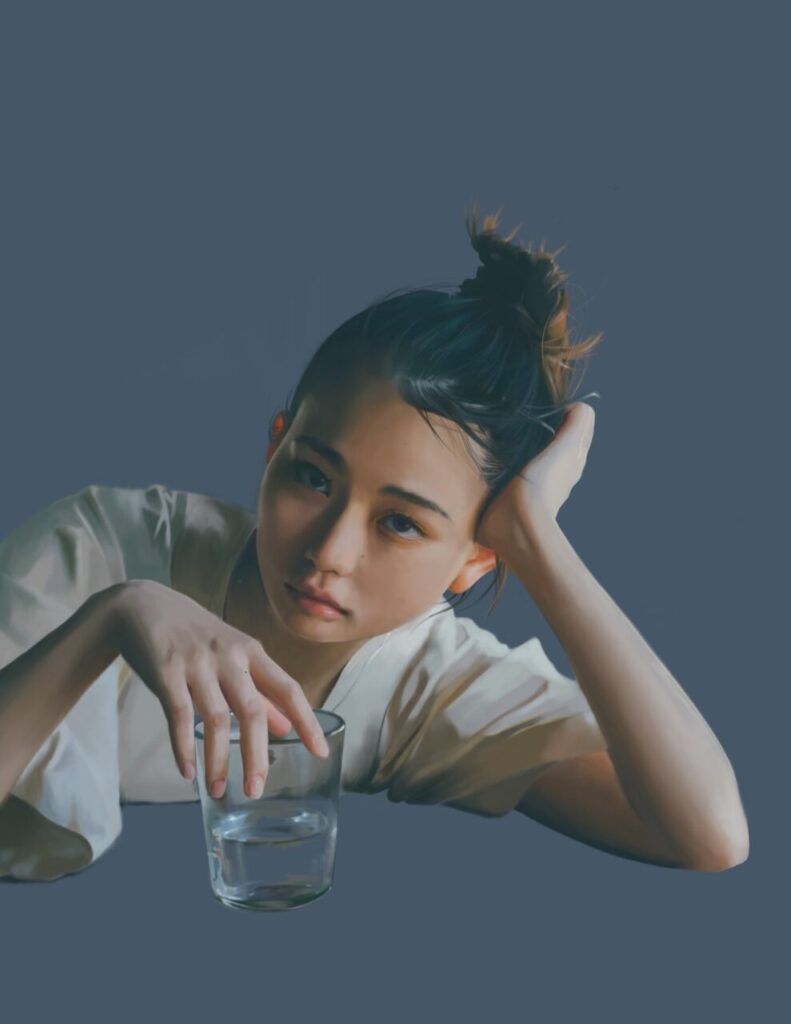
Zhang approached Dr. Lee at an event mixer supporting Asian Americans in healthcare and told her of her mission. Dr. Lee connected her to students leading the Creative Arts Society and, before long, Zhang pulled in a co-editor-in-chief and fellow first-year medical student Sai Nikitha “Nikki” Prattipati, and Whorl was back.
But Zhang’s work wasn’t done. She and the rest of the editorial team expanded Whorl to include many other types of creative expression: fashion, dance, and music performances. To Zhang, forget the right-brain, left-brain stereotypes; arts and medicine are inextricably intertwined.
“I wanted people to recognize that so many people in healthcare are very creative, and they have all these other talents,” says Zhang. “I wanted people who don’t get to engage with their art as much to have their creative outlet.”
The value of arts and creativity in healthcare
In the last eight years, the World Health Organization (WHO); the National Academy of Science, Engineering, and Medicine; and the Association of American Medical Colleges have all explicitly recognized the arts and humanities as fundamental, not extracurricular, for students in the medical field.
The impact of art-based interventions for patients has long been studied and put into practice through integrative medicine. Patients who have access to creative arts therapies can improve both their physical and mental health, and have helped to reduce pain levels. Arts are also important for social health, combatting loneliness, particularly among older adults. In these examples, arts can include visual arts, such as painting, drawing or crafting; music concerts or playing music; and writing, such as journaling or oral storytelling.
Now, the focus has turned to the clinicians themselves, and the power of art is being more intentionally embedded in medical education. This growing base of evidence has shown that this integration of arts and medicine has improved many clinically relevant skills, including critical thinking, observation, tolerance of ambiguity, professional identity formation, and—critically—empathy.
Zhang and Prattipati see this artistic, creative impact on healthcare in their daily lives as medical students at BMC.
“I think one of my favorite things about medicine is when you see someone who is such a good communicator. It’s almost beautiful the way they communicate with a patient, the way they’re able to listen to a story, the way they’re able to assuage someone’s fears, to help them understand,” Prattipati says. “Medicine is trying to make the science work for people.”
The CAS is just one way arts are being incorporated into medical education at BU Chobanian & Avedisian School of Medicine and BMC. The new Visual Thinking & Art in Learning Medicine (VITAL) program has BMC residents participate in hands-on learning experiences to help foster creative visual thinking strategies. For example, the residents have visited the Fay G., Jo, and James Stone Gallery at the College of Fine Arts on BU’s Charles River Campus. They observe and interpret sculpture, paintings, and other visual art and communicate to their peers and faculty advisors. Similarly, the MANET (Museum Art in Neurology Education Training) Project, overseen by BMC neurologist Pria Aanand, MD, is the first of its kind art-based neurology program in the country.
This integration is key to Zhang. When asked why she, as an artist since she was a child, pursued medicine, she balked at the idea that the two are distinct: “I think people assume medicine must be cut and dry. You get the labs, you collect the data, you do the physical exam and then—ding, ding, ding—it’s this disease and you treat it. There is so much more creativity involved with how to treat patients; it can be a puzzle. I love talking to people. I love human connection.”
Building an identity beyond “medical student”
Medical training can be an all-encompassing journey for students, interns, and residents. As Zhang tells HealthCity, people warned her it would take over her life, and it does. Often, too, these students have spent their student lives as high-achievers and have high expectations thrust upon them—by outside forces and often by themselves.
Just as art therapies can work for patients, they play a key role in the mental health and wellbeing of trainees.
“A lot of us high achievers really identify as like the ‘Super Student.’ But what happens if you don’t do so well on a big exam?” explains Dr. Lee. “Having more than one identity, that’s important. For me, also having the arts was important as a student, and I can honestly say some of my favorite poems were written under the pressure of studying for a medical school exam.”
It’s something that current medical students Zhang and Prattipati echoed. The former said her time creating relaxes her. Prattipati, who writes poetry and short stories, called her creative work “grounding.” Zhang, for her part, hasn’t decided on a specialty but is leaning toward dermatology. No matter what, however, she has always imagined herself in her future role as a doctor building arts and creativity into her life for her patients, but also for herself, as part of her identity. Much like Dr. Lee has, with her storytelling and magic for her pediatric dermatology patients, her “cloud in a cup.”
Zhang pictures herself doing a series on the length of the white doctor coats, which grow the more educated you are. She sees herself painting her medical mentors. She sees herself painting pathology slides—which both she and Dr. Lee independently called “beautiful”—and hanging them up as a series in her hypothetical waiting room.
“I like drawing slimy things, bubbly things—that has a lot to do with pathology and bright colors. I think it would be really fun to do something huge. It would be very cathartic,” she says.
Dr. Lee has seen the healthy influence of the arts across her decades of medical experience.
“I absolutely believe in the healing power of the arts,” she says. “It is very important to my mental health and resilience to write, to sing, to listen to music. It’s such an important part of what I do and what keeps me healthy.”
Becoming a healer
Above all, the three women in medicine described how arts and creativity have helped mold them into healers, and even into more complete humans.
“There is a healing power of creative arts,” says Dr. Lee. “They allow us all to be healers, whether we have medical training or not.”
So much about healthcare isn’t just diagnoses and test and treatments, agree the students and Dr. Lee. It’s human interaction, listening, and empathy.
For Prattipati, who says the arts ground her as a medical student, she sees how that brings value to patients and their families: “It helps to be a grounded person so that you can hold other people’s stories. You’re able to listen deeply and connect with them.”
Empathy in medicine is a measurable competency, leading to significantly improved patient outcomes, adherence, patient satisfaction, and trust. For people who are often underserved by healthcare and for our time of medical misinformation and disinformation, trust is paramount. And in a time where we hear of burnout and the cynicism and jadedness that can infiltrate medicine, the integration of arts feels like a lifeline.
“Healthcare forces you to confront your emotions about things that most people don’t confront daily: death, sickness, relationships, mortality. You’re on the precipice of that constantly. It takes a lot of emotional intelligence to confront that every day and still be effective and efficient as a doctor,” says Zhang. “My journey to becoming a doctor, being able to engage with these deep, difficult emotions meaningfully and not to shy away from them makes me of course a better doctor, but also I think makes me a better person.”
About the Author
Caitlin White
Caitlin White is the Senior Manager of Content Strategy at Boston Medical Center Health System.
Share on Social

Health equity news from Boston Medical Center
HealthCity is dedicated to sharing the most cutting-edge ideas for advancing health justice through inspiring stories, in-depth Q&As with equity pioneers, research news that could change the medical landscape, and more.