"Our Elders Have Modeled Suffering”: Candid Panel Pushes Back on Health Myths, Shame for Black Women
August 8, 2025
By Caitlin White, By Markeisha Marshall
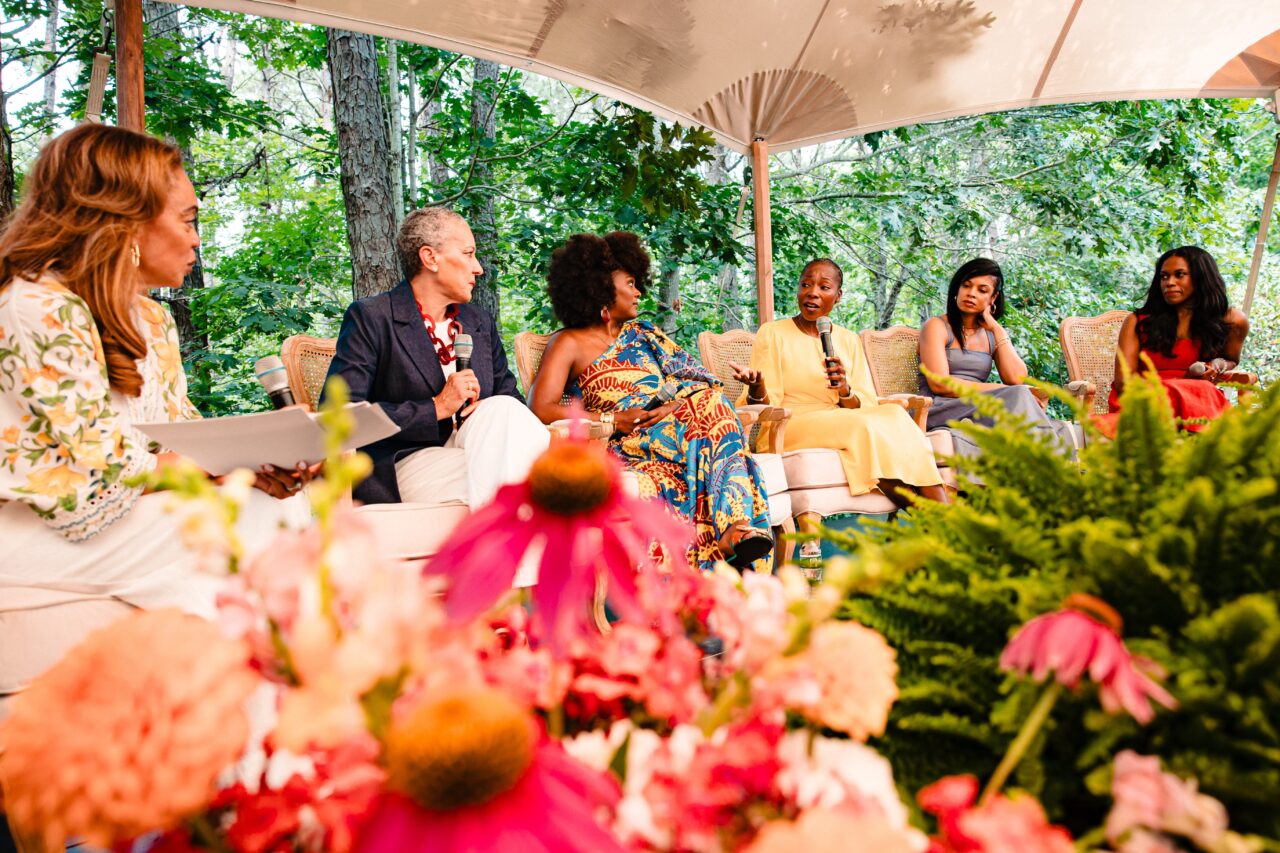
Piper Brown Photography
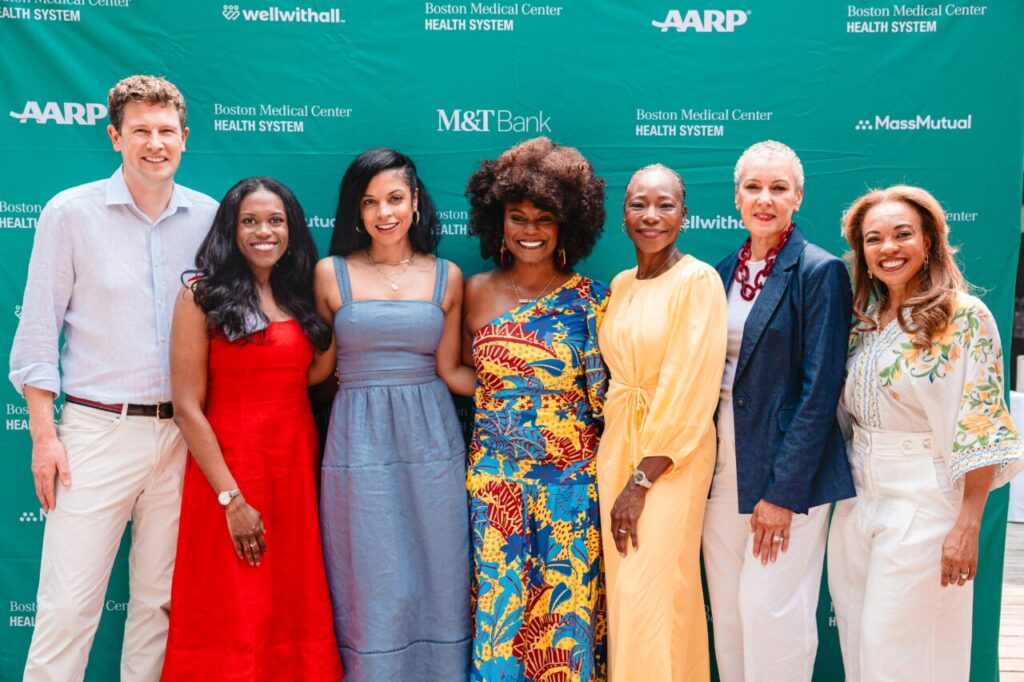
(L to R) Petrina Martin Cherry, Dr. Sharon Malone, Tabitha Brown, Dr. Myechia Minter-Jordan, Susan Kelechi Watson, and Dr. Christine M Crawford at BMC Health System's luncheon conversation on Black women's health in Vineyard Haven, Martha's Vineyard.
On Martha's Vineyard, actresses, advocates, and physicians have come together to have a taboo-breaking discussion about their personal and professional experiences with menopause, parenting, and advocating for your health and wellness.
On Martha’s Vineyard, the front porch has always been sacred ground. On the island, where Black homeownership flourished when it was rare elsewhere, porches became symbols of belonging, endurance, and the radical act of taking up space. The porch is a place for conversation, to gather and share stories across generations, to keep traditions alive, to pass along knowledge and understanding, and to find joy and laughter.
It’s in this spirit, respectful of this legacy, that Boston Medical Center (BMC) Health System hosted their luncheon conversation on Black women’s health and wellness. The event—hosted by Ron and Shawnda Walker in their Vineyard Haven home—brought together women across industries, ages, and experiences to break taboos and speak freely about everything from menopause, to parenting, caregiving, and more.
The luncheon event, “A Candid Conversation on Women’s Health: Getting Real About Health, Happiness, and Hot Flashes,” featured moderator Petrina Martin Cherry, Vice President of Community Engagement and External Affairs at BMC Health System, and five panelists: Tabitha Brown, Emmy-winning actress, author, and entrepreneur; Dr. Myechia Minter-Jordan, CEO of AARP; Susan Kelechi Watson, award-winning actress of This Is Us and The Residence; Dr. Sharon Malone, Chief Medical Officer of Alloy Women’s Health; and Dr. Christine Crawford, psychiatrist at BMC and Associate Medical Director of NAMI.
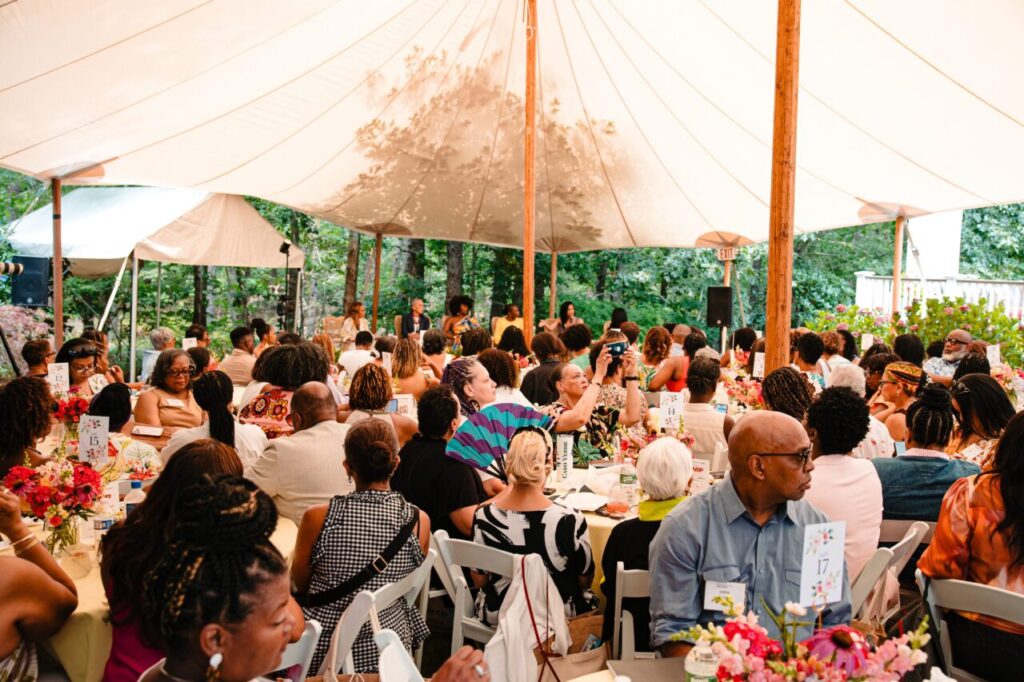
As the guests mingled, sipping drinks and eating lunch from Roxbury’s Nubian Markets, there was a clear air of anticipation to hear from the esteemed and diverse perspectives of a group that included “America’s Mom,” one of the few Black women CEOs in the country and Randall’s rock. When the panelists were welcomed to the stage, the refreshingly candid tone was set almost immediately. Moderator Martin Cherry asked the panelists to name a song that describes their health journey.
“As a menopausal person, it’s gotta be ‘[It’s Getting] Hot in Herre,’” quipped Dr. Malone, and the audience at their tables immediately burst into laughter, claps, and calls of acknowledgement.
Confronting misinformation around menopause symptoms
Menopause proved to be a topic that ignited the conversation, as panelists shared facts and personal stories about their experiences—both from themselves and from the women who came before them.
Watson, who recently appeared in the 2025 Shondaland show The Residence on Netflix, spoke about witnessing her mother’s journey with menopause, of how she would blast the A/C in the car and talk about how hot it was. Neither Watson nor her mother, as she came to learn, knew what was happening. When Watson asked her mom about menopause and about what to expect for herself, she said, “I just remember those periods, but I never associated it all together.”
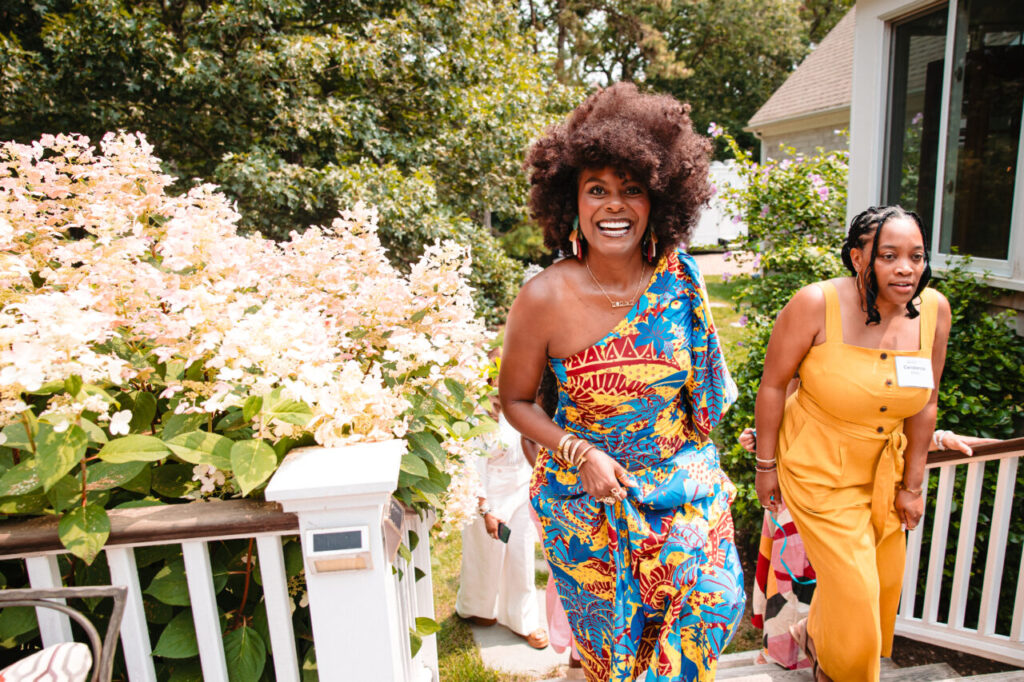
“There wasn’t a lot of conversation up around menopause because there is this whole constellation of things that we experienced that we couldn’t give a name to,” said Dr. Minter-Jordan of AARP, who sponsored the event. “It’s because we didn’t have those conversations growing up, which is why it’s so important to have the kind of conversation we are having today.”
Dr. Malone, author of the bestselling book Grown Woman Talk, explained that there are 34 known symptoms of menopause, but they don’t come in any particular order, and everyone experiences the symptoms to different degrees and in different ways, or sometimes they don’t experience some of them at all. The panelists chimed in on symptoms from their personal or professional experiences, far beyond just the widely known hot flashes: itching, low sex drive, anxiety, brain fog, weight gain and bloating, joint pain, insomnia, skin thinning… and the list goes on.
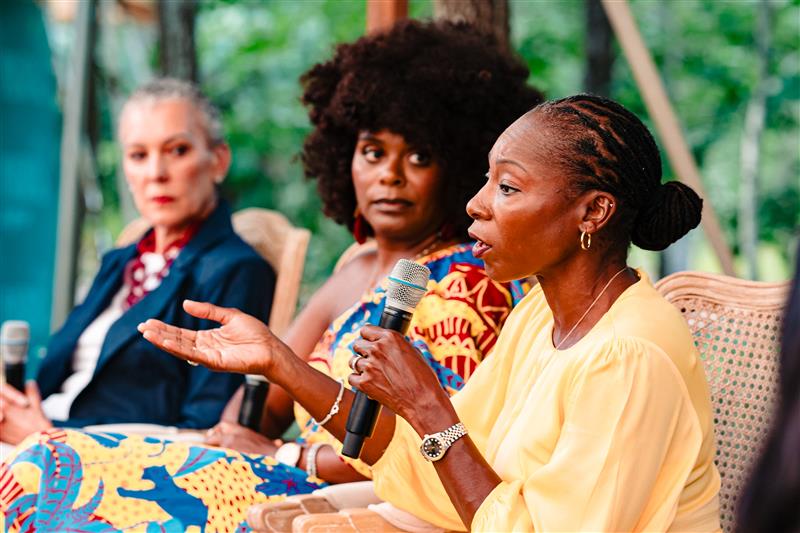
“As women, we have been taught to be stigmatized, to be ashamed of everything that our bodies do normally from our periods to pregnancy, to sex, everything in between. So, by the time we get to perimenopause and menopause, you just think, well, that’s just the way it is. Our elders have modeled suffering to us. And what I want to say to women, is, no, you need to know how to advocate for yourself and how to say, ‘I deserve to feel better.’ No to feeling fatigued, feeling unwell. That’s not normal. And just because you’re 50 years old, don’t accept that.”
Dr. sharon malone
“I remember as I was entering perimenopause, I felt like some alien had taken over my body,” shared Martin Cherry.
As the moderator started talking about perimenopause and the symptoms, Brown chimed in to joke, “Why would you bring that up?” Brown is an Emmy-winning actress, author, and social media personality. She continued, telling her story about all perimenopause—which she has been known to call “Peri”—and the whirlwind the symptoms have caused for her.
“From insomnia to waking up at night and my hip hurts—why does my hip hurt? And it’s hot, why is it hot? All of these things, what is going on? And I gotta pee,” Brown said, as the crowd burst into laughter and applause. “All the things, girl. You’re a different weight in the morning, baby, in the evening you don’t even know who you are.”
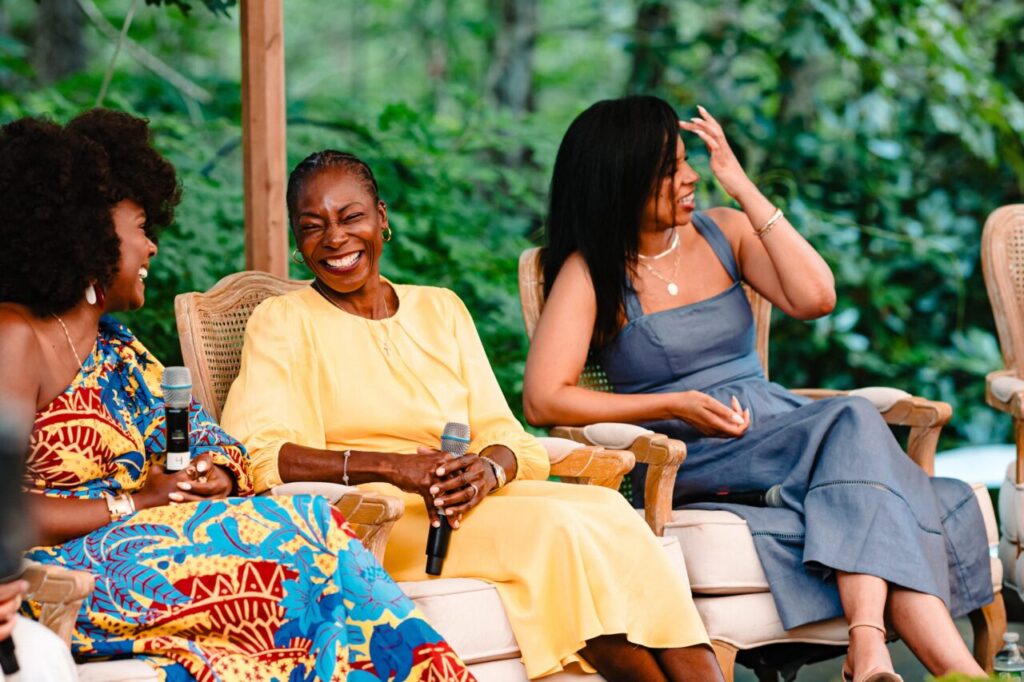
It was a funny, resonant moment for women in the audience, but it’s also rooted in history around how healthcare treated menopause, dismissing symptoms and women’s individual experiences. And for Black women, the misinformation, confusion, stigma, and disparities are even more pronounced.
“There was a notion that Black women didn’t experience menopausal symptoms as much as white women did—and these were things we were actually taught in medical school,” Dr. Malone said. “That myth was just patently untrue…Anything that white women get, Black women do to, but the reality is we get it earlier, we get it more severely, and it lasts longer.”
When the panelists’ conversation turned toward the mental health symptoms around perimenopause and menopause, BMC psychiatrist Dr. Crawford opened up on her personal stress and how it becomes almost inextricably wrapped into symptoms.
“What’s really difficult, especially when it comes to perimenopausal symptoms, is that this is a very busy time in a woman’s life. I’m in my 40s. I’m a single mom with a 4- and 5-year-old, and so I’m stressed out all the time. All of these symptoms you all are describing, I experience that baseline,” Dr. Crawford says, looking around at her fellow panelists. “So, it’s hard for me to know, am I not into sex right now because of stress or because of these symptoms? Am I having insomnia because I’m worried about my kids starting kindergarten or are these symptoms?”
“As Black women, we have so much that we carry on our two shoulders that we don’t even have the time to differentiate between stress or perimenopausal symptoms,” she adds.
Tearing down the “superwoman” trope
What Dr. Crawford described, feeling like you have the world on your shoulders kickstarted a deeper conversation on another myth about Black women: the “superwoman” trope.
Dr. Minter-Jordan of AARP shared a sobering fact: There are 63 million family caregivers in the country, three out of five are women. And nearly one-third often have the burden of caring not only for their kids but for their parents, part of what is called “the sandwich generation.”
The sandwich generation, research shows, not only is financially caring for the generation above and below them, but also emotionally supporting them. The stress on these women, specifically, means that 51% of sandwich moms have left jobs at least in part because of caregiving demands.
“As women we know how to put on a good face. We know how to get through a day, we know how to take care of the kids and cook, do all the house stuff, work and have a relationship. We can do all those things and make it look good, but nobody knows what’s really going on in the inside,” says Watson, emphasizing how much labor is put onto women.
It’s something moderator Martin Cherry wants to push back against: “You know what? The best way that I can fight is to sometimes say, ‘This superwoman thing? That’s fake. That’s not real.’ So yes, I’m equipped to do all these things, but I have to give myself some space to recover and recuperate.”
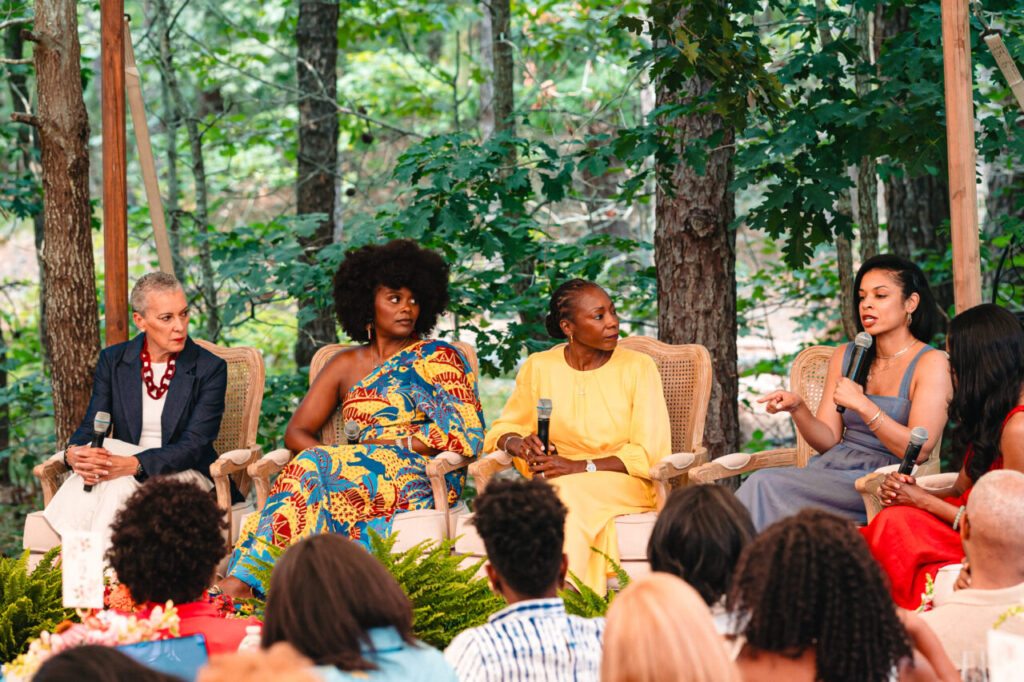
It’s a sentiment that Tabitha Brown agrees with: “It’s so easy as a woman, as a wife, as a mother, as a daughter, as a sister, to help other people navigate their life. And then sometime by the time you get you, baby, you tired,” she said, as the audience let out an understanding laughter. “But I encourage you to be intentional with loving you more than you love others, so that you can’t show up with them later. But no one, and I mean no one, it’s more important than you.”
“Lives are at stake”: Advocating for your health
Advocating for yourself was a major theme among panelists, who all banded together to push for their fellow speakers and audience members to make their voices heard.
Dr. Malone looked to all of the women who have come before her, whose suffering she bore witness to, and made it clear to her peers sitting on stage with her and the faces in the audience that no one must accept the status quo.
“As women, we have been taught to be stigmatized, to be ashamed of everything that our bodies do normally from our periods to pregnancy, to sex, everything in between. So, by the time we get to perimenopause and menopause, you just think, well, that’s just the way it is. Our elders have modeled suffering to us,” she said. “And what I want to say to women, is, no, you need to know how to advocate for yourself and how to say, ‘I deserve to feel better.’ No to feeling fatigued, feeling unwell. That’s not normal. And just because you’re 50 years old, don’t accept that.”
Brown echoed her advice from outside of the healthcare space, encouraging the audience to take up space: “I think there is shame. There is, ‘I don’t can’t take up this space.’ But yes, we can. We don’t have to be ashamed. We can also be very vocal, and maybe we don’t know what to ask for, but we know our own body.”
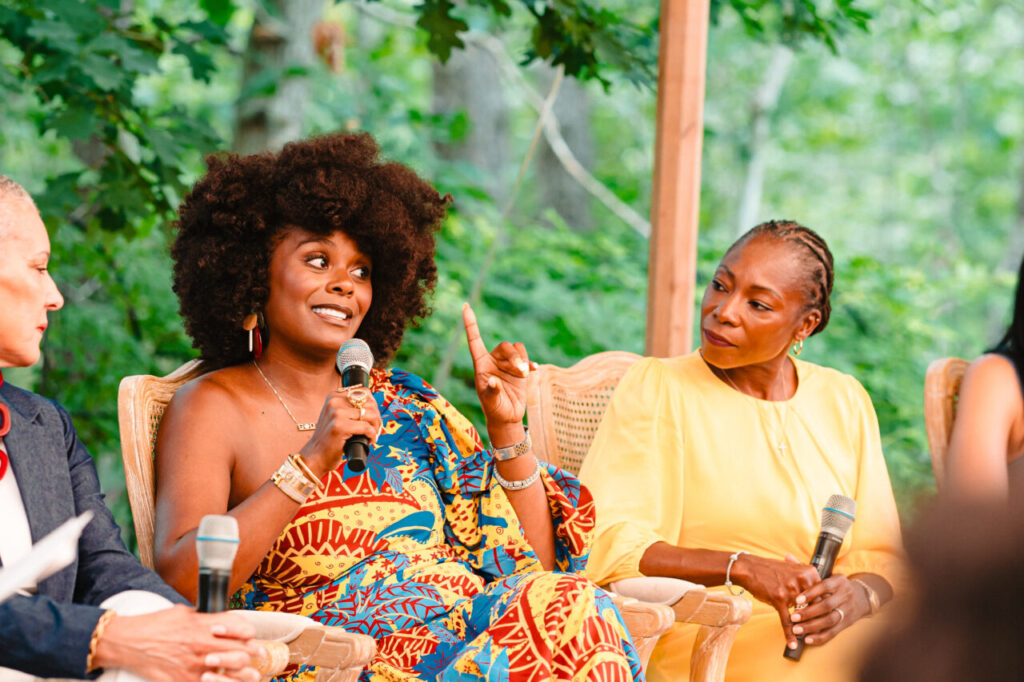
Dr. Crawford shared a harrowing story of getting sick during pregnancy. After not being taken seriously by her doctors, the physician learned that she was in a diabetic crisis.
“Lives are at stake here. Even though they might label you as the angry Black woman being loud, who cares? Your life is at stake. So, I just encourage you to be as loud as possible,” she said.
Like any true porch conversation at the Vineyard, the panelists encouraged one another and their audience members push for change and to champion each other’s voices as women. Dr. Minter-Jordan closed out the panel with a reminder about the power of women banding together to make the case for their health and wellbeing.
“Health disparities cost our country 1.6 trillion. So, this is not just the moral thing; there is a business case for investing in Black women. I want us to remember that,” says Minter-Jordan. “I want us to remember that we are worthy of investment. We are worthy of the conversation. We can’t forget that.”
To continue the conversation, join Sisters from AARP, a community that offers events, a newsletter, music, puzzles, quizzes, and more. It celebrates Black women as they live bold, heart-centered, and authentic lives at 40, 50, 60 and beyond.
About the Author
Caitlin White
Caitlin White is the Senior Manager of Content Strategy at Boston Medical Center Health System.
Markeisha Marshall
Markeisha Marshall, VP, Communications, oversees communication strategies and functions to promote BMCHS' commitment to clinical excellence and health equity.
Share on Social

Health equity news from Boston Medical Center
HealthCity is dedicated to sharing the most cutting-edge ideas for advancing health justice through inspiring stories, in-depth Q&As with equity pioneers, research news that could change the medical landscape, and more.