BMC Researcher Aims to Use Regenerative Medicine to Change the Future of Liver Disease Treatment
June 26, 2026
By Gina Mantica
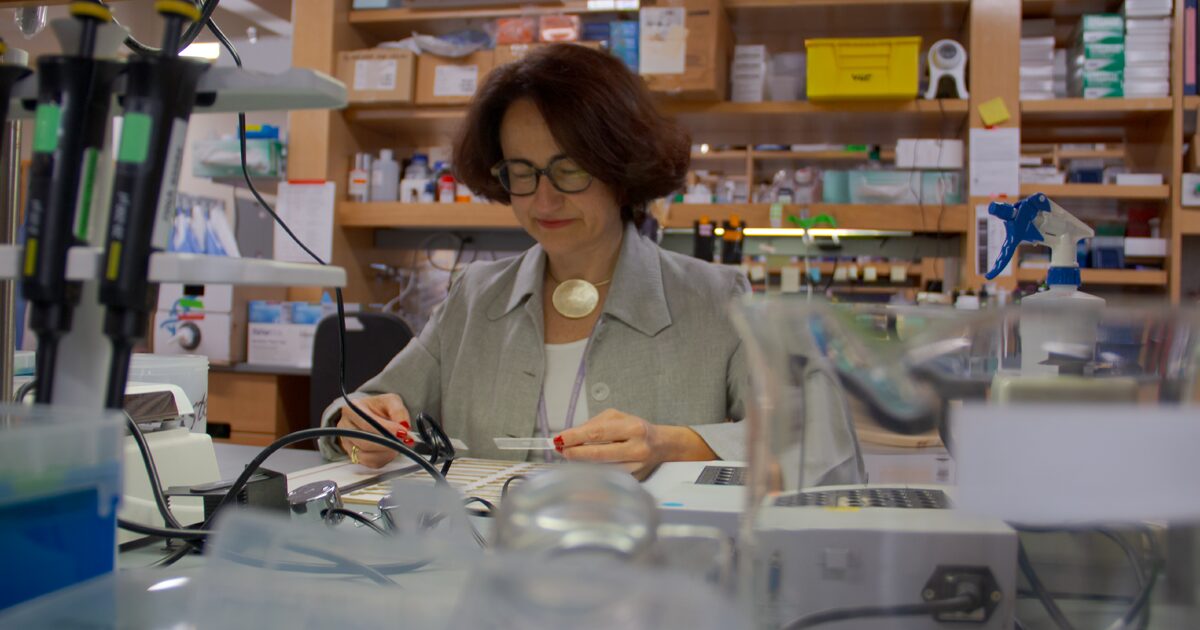
Isabella Bachman, Boston Medical Center
Valerie Gouon-Evans, PhD, PharmD, conducts liver disease research to provide more treatment options for patients with advanced disease at Center for Regenerative Medicine (CReM) at Boston Medical Center and Boston University. Thursday, June 6, 2026.
Dr. Valerie Gouon-Evans is using mRNA and cell-based therapies to restore liver function and promote healing, offering new hope for the millions of people living with liver disease.
Liver disease affects millions of people worldwide and is a leading cause of serious illness and death, yet treatment options remain limited, especially for patients with advanced disease. While liver transplantation can be lifesaving, donor shortages and the complexity of the procedure highlight the need for new therapies that can help the liver repair itself before failure even occurs.
Valerie Gouon-Evans, PhD, PharmD, a researcher at the Center for Regenerative Medicine (CReM) at Boston Medical Center and Boston University, is working to meet that need through innovative research using messenger ribonucleic acid (mRNA) technology and cell-based therapies designed to restore liver function and support healing. In this Q&A with HealthCity, Evans discusses what inspired her to pursue liver disease research and shares her hopes for how these emerging therapies could benefit patients and families in the future.
HealthCity: What is the broader goal of your liver disease research?
Valerie Gouon-Evans, PhD, PharmD: I aim to develop regenerative therapies that can help the liver heal itself and restore function in people with either acute or chronic liver disease. The liver has an incredible ability to regenerate, but in many diseases that repair process is broken. Our research focuses on finding ways to boost the body’s natural repair mechanisms before patients progress to liver failure.
We have developed a platform that uses tiny fat-based particles, called lipid nanoparticles, to deliver genetic instructions directly to liver cells. These instructions, known as messenger RNA or mRNA, tell cells to temporarily produce proteins that support healing and regeneration. This approach allows us to test different factors that may help healthy liver cells grow, reduce scar tissue, and activate immature “backup” cells in the liver, called progenitor cells, that can develop into fully functioning liver cells when needed. We’re now exploring how combinations of factors may work together to treat more advanced stages of liver disease.
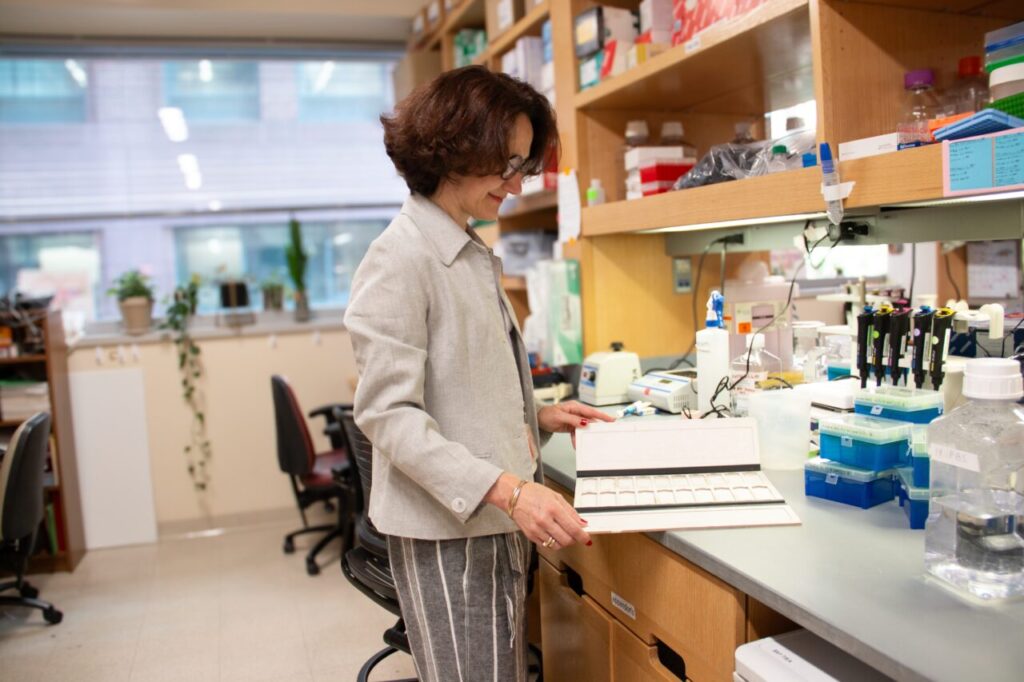
Another important part of our work is improving cell transplantation therapies for liver disease. One of the biggest challenges is helping transplanted cells survive and engraft. We’ve found that certain naturally occurring proteins, including hepatocyte growth factor (HGF) and epidermal growth factor (EGF), can improve the survival and growth of transplanted liver cells by 15-fold. Another protein, vascular endothelial growth factor A (VEGFA), may help support blood vessel cells that create a healthier environment for liver repair.
What excites me most is the translational potential of this work. Our technology has already led to a licensed patent, and future studies will help move these therapies closer to clinical trials. Ultimately, the goal is to create less invasive treatments that could repair damaged livers, improve quality of life, and potentially reduce the need for liver transplantation.
HC: What first inspired you to pursue research on liver disease treatment?
VGE: I always knew I wanted to work in the medical field, but early on, I thought I preferred being behind the scenes rather than working closely with patients. I started my studies doing a doctorate in pharmacy and worked in a pharmacy, but I quickly realized that path wasn’t the right fit for me. That experience led me to pursue a PhD, and that’s when I discovered how much I loved science and the process of asking questions and developing new ideas.
A major turning point came when I worked with Dr. Gordon Keller, a pioneer in stem cell research, who encouraged me to study the liver because of its unique ability to regenerate. I became fascinated by the question of why the liver can repair itself so effectively in some situations, but loses that ability in severe or chronic disease. Understanding how to restore or support that regenerative process became the foundation of my research career.
My hope is that our work could eventually provide an additional therapy that helps repair the liver, slows disease progression, and offers patients and families hope at a time when options are otherwise very limited.
Valerie Gouon-Evans, PhD, PharmD, Principal Investigator, Center for Regenerative Medicine (CReM) at Boston Medical Center & Boston University
Over time, my perspective on patient care also changed. Now, I work to stay connected to the people ultimately affected by the diseases I study. Working alongside clinicians and thinking about how discoveries in the lab could become real treatments for patients creates an incredible sense of purpose and motivation for me.
HC: How do you hope your liver disease treatment research impacts patients and families?
VGE: For acute liver disease there is only one approved treatment, and sometimes it is not effective if given too late or if the damage is too extensive. I hope our research gives patients and families more options. In our research, we found that a single injection of two regenerative growth factors was able to rescue the liver even after significant injury.
For chronic liver disease, the treatment landscape is also very limited. Only two FDA-approved drugs are currently available. One works for only a subset of patients, and the other is a GLP-1 agonist that has been repurposed for liver disease. For people with very advanced disease, liver transplantation is often the only option. My hope is that our work could eventually provide an additional therapy that helps repair the liver, slows disease progression, and offers patients and families hope at a time when options are otherwise very limited.
This interview has been edited and condensed for length and clarity.
About the Author
Gina Mantica
Gina Mantica is the Senior Research Communications Manager at BMC.
Share on Social

Health equity news from Boston Medical Center
HealthCity is dedicated to sharing the most cutting-edge ideas for advancing health justice through inspiring stories, in-depth Q&As with equity pioneers, research news that could change the medical landscape, and more.