Seasonal Warming Centers' Value Goes Beyond Physical Warmth
March 26, 2026
Dana Brown, Malden Warming Center
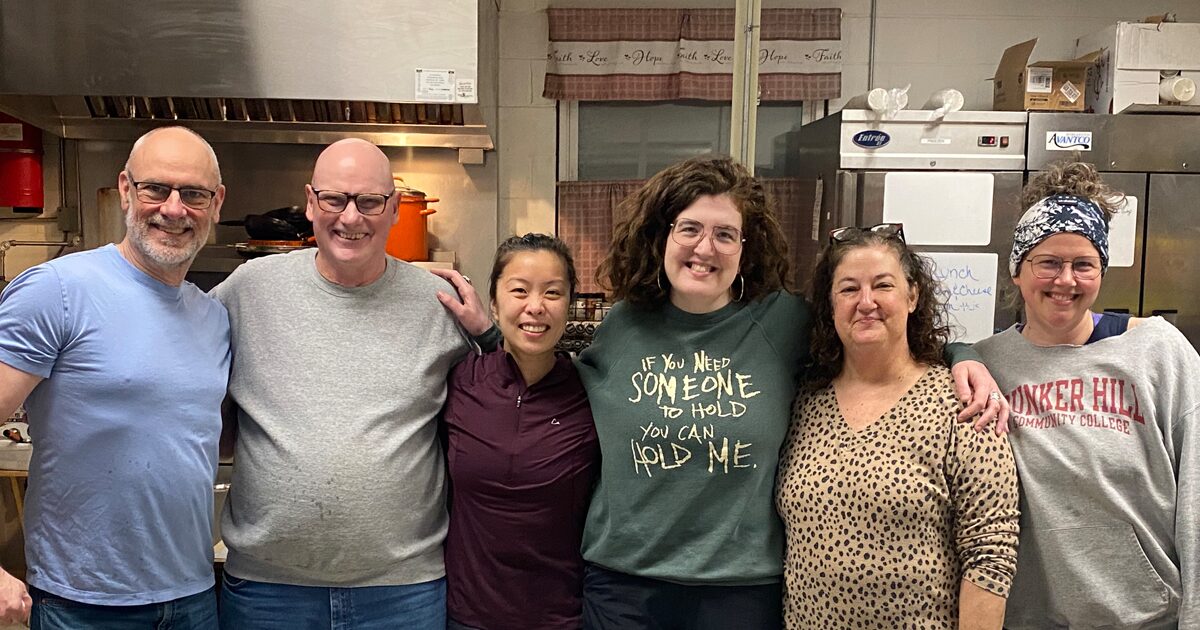
Team members at the Malden Warming Center pose in the kitchen after being open for over 24 hours straight due to blizzard conditions in Massachusetts in February. (From L to R: volunteer chef Bob FitzPatrick, executive director Gerry Whetstone, volunteer Mindy Tam, assistant director Katie Dillon, volunteer Lisa Sorrento, and volunteer Kimberly Gillette)
It’s a common sight at the Malden Warming Center to see a volunteer cooking up a hearty meal for their unhoused neighbors while guests chat and share their experiences. During one of the coldest winters in decades, warming centers have offered comfort and community in many different ways.
On a December night in Malden, Massachusetts, five miles north of Boston, guests arriving at the door of the Malden Warming Center (MWC) are greeted by name by Katie Dillon and other volunteers. All are welcomed in for a warm dinner, hot drinks, and a comfortable place to rest for the night. The dinner on this particular Thursday evening, cooked by volunteer chef Bob FitzPatrick, is hot and sweet Italian and chicken sausages with peppers and onions, served with roasted potatoes.
“This winter has been so cold. People were freezing, and they were so grateful to come inside and have a hot, home-cooked dinner,” says Dillon the center’s volunteer assistant director, who works at the center three or four nights per week. “The focus is on hospitality. How can we serve? How can we be not just a warm place, but an empathic place for people to feel cared for?”
A respite for unhoused people in the winter cold
Boston has experienced one of its coldest winters in decades, and a fierce February blizzard added 17 inches of snow to piles still lingering from heavy snowfall in January. For people experiencing homelessness, exposure to cold brings significantly higher risks than for the general population. People living outside are more susceptible to deaths from hypothermia and to frostbite, which can lead to disability from amputation. Even when frostbite is treated, homelessness can mean that patients are more likely to lack proper post-treatment supportive care.
Operating seven nights a week from December through March, MWC is an example of a seasonal drop-in warming center that provides unhoused people overnight respite from the cold. Other seasonal warming centers in the Boston area include the Cambridge Winter Warming Center, the Somerville Winter Warming Center, Chelsea Warming Center, and Waltham’s Winter Overnight Warming Station. The Boston Night Center has a similar drop-in model but is open year-round.
Such centers differ from the area’s year-round emergency shelters that provide sleeping accommodations and other amenities, such as showers and laundry. Larger permanent shelters, such as Pine Street Inn and Boston Public Health Commission’s Woods Mullen Shelter, may serve only men or only women and often have a larger mission and capacity to connect people to permanent housing and job training. Other larger permanent shelters may have sobriety requirements as well. Seasonal overnight warming centers are also distinct from the daytime warming centers that open temporarily in libraries or youth and family centers when a cold emergency is declared.
MWC, a volunteer-run 501(c)(3) nonprofit, which started eight years ago as a collaboration between Malden’s faith communities and the City of Malden, describes itself as providing “healthy meals, drinks, personal care facilities, camaraderie, warm clothing, and toiletries to comfort our guests,” as well as helping to connect guests to other information and resources they may seek about housing, substance use treatment, and physical and mental health services. The center, located in Pastor Gerry Whetstone’s Malden Church of the Nazarene, is low-barrier; it does not impose sobriety restrictions and serves couples of all genders visiting together.
More than just a warm room
While seasonal warming centers’ primary purpose is to provide a safe alternative to sleeping outdoors during the coldest months, they also serve as valuable community health and social hubs.
At MWC, for example, recovery coaches from Malden Cares, a city of Malden-run recovery coach program, are on site every night, providing information about addiction recovery resources to any guest seeking it, as well as leading group meetings and arts-and-crafts activities. Somerville’s warming center offers case management to assist with health insurance applications, housing searches, and other needs. The Cambridge center connects people to first responders for any serious health concerns. Altogether these services meet guests at various points in their respective health journeys, creating touchpoints for further health engagement.
These services can also help reduce the burden on area emergency departments. At Boston Medical Center, Claire Davies, LICSW, leads the hospital’s Multi-Visit Patient Program, a social work-led emergency department (ED) program that provides intensive case management to the most frequent ED users. Many of these repeat patients are experiencing unsheltered homelessness, and some come to the ED simply to be inside and warm. By offering spaces of warmth and safety, warming centers can allow ED resources to focus on acute medical care.

“These are folks that have fallen through multiple system cracks,” Davies says. “And we believe in the inherent dignity and worth of the person.”
The literature shows that emergency departments, however, are not equipped for the needs of long-term unhoused and unsheltered people, Davies says. And sometimes people cannot stay at larger emergency shelters, for a variety of reasons. That’s where seasonal warming centers come in, especially when they offer some health and social support along with food and physical warmth.
“Warming centers are also a safety net,” Davies says. “There aren’t enough shelter beds, and warming centers fill a gap for a safe and warm space to be.”
The positive ripple effect of community-building
Offering a warm respite and food in the winter months not only saves lives, but it also can generate positive ripple effect in the local community. Beyond reducing emergency room burdens, these centers create new connections among unhoused people and among neighbors and volunteers.
Dillon says MWC’s model of using trained volunteers to run the center has helped embed it in the community and foster a particularly rich mutual aid system.
“What I think is so special about the Malden Warming Center is that it is a community-run operation. There is no one star of the show,” she says. “We’re fortunate that we can put out a call for juice boxes or put out a call for just about any other kind of need that our guests are having, and the community responds. People are happy to help, people are happy to volunteer. It’s a really good example of how communities can come together.”
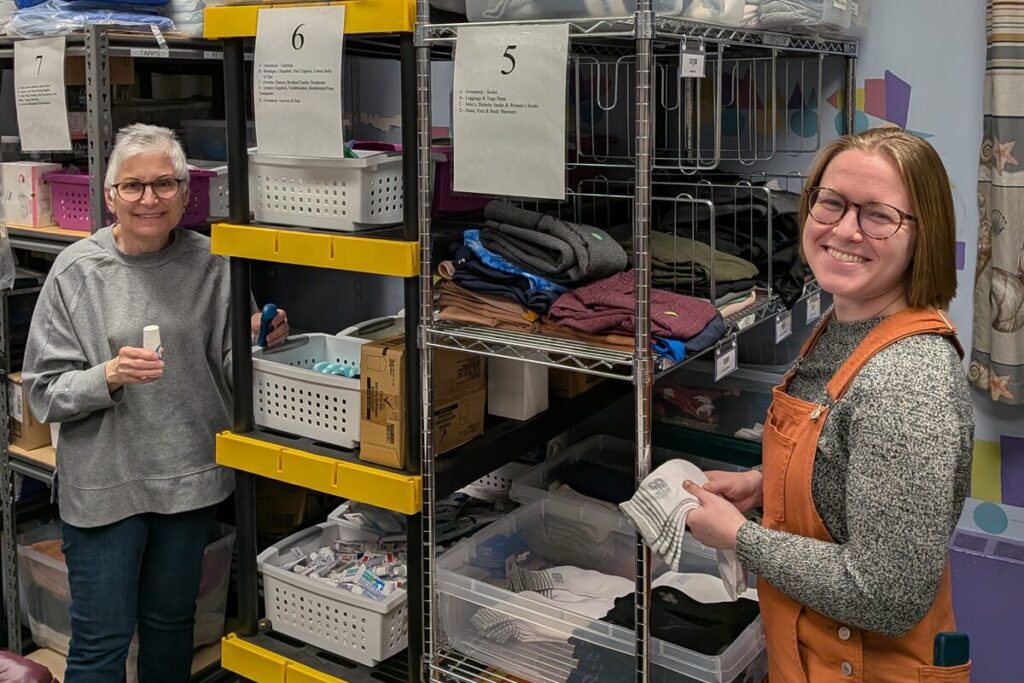
She adds, “Everybody takes care of each other. Everybody knows each other by name. It’s a special thing to be able to offer and create community. We all get to know our guests, they get to know us, and they get to know one another. And the community extends to our volunteers too —we’re all people who genuinely care about this work and choose to be here.”
Noting the increasingly sharp polarization in our society today, Dillon suggests that small, local efforts like this could serve as a model, a starting point toward greater harmony.
“Mutual aid is so important, especially now where we’re seeing such big divisions. That such collaboration can happen on this local community level is special, and I think more communities can learn from that.”
About the Author
Sandra Larson
Sandra Larson is a Boston-based freelance journalist covering urban and social issues and policy. Besides HealthCity, her work has appeared in Bay State Banner, Next City, The New York Times, and The Guardian. She holds a master’s degree in Urban and Regional Policy from Northeastern University.
Share on Social

Health equity news from Boston Medical Center
HealthCity is dedicated to sharing the most cutting-edge ideas for advancing health justice through inspiring stories, in-depth Q&As with equity pioneers, research news that could change the medical landscape, and more.