Virtual Colonoscopies Expand Colorectal Cancer Screening Possibilities
May 21, 2026
Getty Images
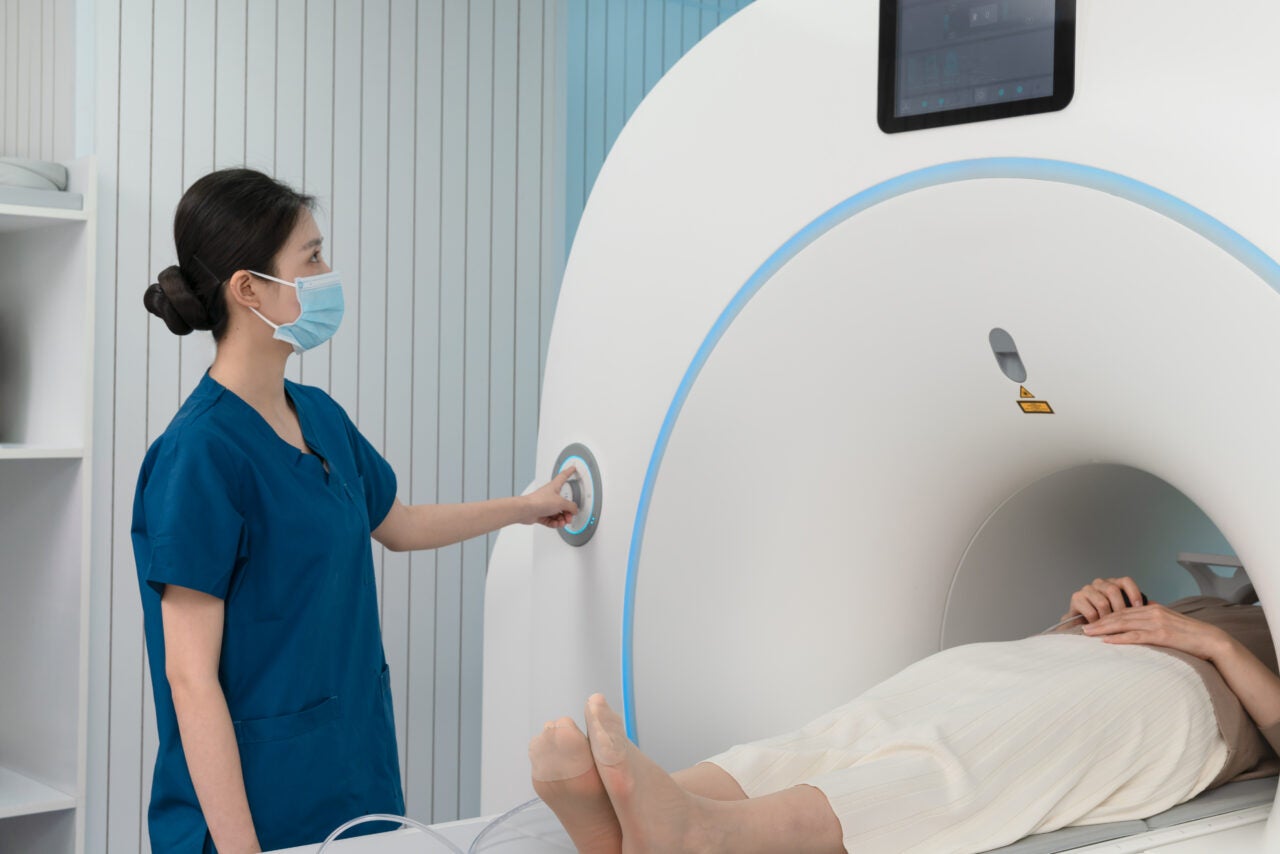
A nurse prepares a patient for a computed tomography (CT) imaging scan, a noninvasive test that combines X-rays with computer technology to produce images like a detailed view of the colon.
Virtual colonoscopies are highly effective tools for detecting colorectal cancer, though traditional colonoscopy remains the gold standard. A Boston Medical Center radiologist highlights how expanding their use could increase screening rates, save lives, and broaden access to care.
Colon cancer is one of the most preventable cancers. With early detection, the survival rate of colon cancer is 90%. That means the role of early detection, chiefly achieved by screening through colonoscopies, is vital to saving lives.
When you think of a colonoscopy, what most likely comes to mind is what is called an optical colonoscopy. Regarded as the “gold standard” for colon cancer screening, it is a procedure that screens the large intestine (including the colon, rectum, and anus) for abnormalities, such as precancerous polyps or inflammation. During this procedure, a physician may also conduct a biopsy and remove polyps. It is an involved process, requiring a few days of preparation, dietary changes, sedation, and post-procedure travel arrangements. For many patients, these steps can feel overwhelming and may delay or prevent screening.
That is why Kevin Chang, MD, a radiologist at Boston Medical Center (BMC), has spent the last few decades advocating for a more patient-friendly method: the virtual colonoscopy (also known as CT colonography). Introduced in 1994, virtual colonoscopies are diagnostic tests, not procedures, that use computed tomography (CT) imaging for a detailed view of the colon. He first came across the technique during his residency at BMC in 2001. At the time, BMC was one of the first hospitals to embrace virtual colonoscopies.
“This is not a new technology,” says Dr. Chang. “It is an underutilized one.”
He is such an advocate for virtual colonoscopies, he spread the word on the diagnostic option by performing the test on himself and sharing his experience with others.

Why the virtual colonoscopy is more patient-friendly
A 2025 study found that about half of the patients that received a traditional colonoscopy report having procedure-related anxiety and emotional distress. Virtual colonoscopies reduce the aspects that induce stress and anxiety: it’s minimally invasive, does not involve sedation, requires minimal preparation, and carries less risk to the patient.
Virtual colonoscopies also demand less time than traditional colonoscopies. Because there is no sedation, it takes about 10 to 20 minutes to complete the test, and patients are immediately permitted to return to their daily routines.
“With the virtual colonoscopy you can go right back to work without having to acquire a driver, which is huge for younger patients and working age patients,” he says. “It’s a big advantage to not have to take a day off from work.”
For patients who work long hours, need childcare, or don’t have access to reliable transportation, these differentiators are key—expanding access to crucial diagnostic screenings for many people and families, especially those who have been historically underserved by health systems.
An underutilized pathway to care
Research has shown that virtual colonoscopies are highly effective at diagnosing colorectal cancer. The test is designed to detect clinically relevant polyps or polyps that have a high chance of being precancerous or cancerous. The issue, Dr. Chang stresses, is not efficacy, it’s utilization.
A 2024 study found that in the U.S., the traditional option was the preferred test among 80% of adults ages 50 to 75 who were up to date on screening. The same study affirmed that the virtual colonoscopy is the least commonly used colorectal cancer screening method with the highest utilization rate sitting at 2.2%.
“The science is there. Now it’s about making sure patients and providers use it.”
Kevin Chang, MD, radiologist at Boston Medical Center
Here, the efficacy of the virtual colonoscopy is not reflected in the utilization rates. Dr. Chang explains why this might be: “On the patient side, people are just not aware of the option. And those that are aware may not see it as a clinically sound method. On the provider side, despite the science, they are not offering it as a first-in-line option.” Chang has found in his practice that when an abnormality is detected in a virtual colonoscopy, it motivates patients to schedule a traditional colonoscopy and remove the precancerous or cancerous polyps.
“All of a sudden the hesitation for getting a traditional colonoscopy becomes nearly zero,” he says.
One trial found that 98% of people who had a positive virtual colonoscopy result went through with scheduling and receiving care. For patients who are at higher risk of colon cancer, getting a virtual colonoscopy could be a lifesaving step toward getting treatment and increasing their chances of survival. In this way, the virtual colonoscopy is not just a screening tool; it is a meaningful way to move people deeper into care.
Advocating for expanded screening options
As Chair of the American College of Radiology Colon Cancer Committee, Dr. Chang spearheads the organization’s efforts to improve colorectal cancer detection, prevention, and care, often advocating for virtual colonoscopies. At the Society of Abdominal Radiology’s annual meeting, he helps lead a hands-on workshop, teaching other radiologists how to perform them. Just last month he authored an article on the American College of Radiology Blog, Voice of Radiology, calling on other radiologists to be leaders in promoting this avenue of care.
Through his advocacy efforts, Dr. Chang is changing the narrative around the virtual colonoscopy from available to invaluable.
His goal is simple: Expand access to effective screening and help more patients take the first step toward care.
“The science is there,” Dr. Chang says. “Now it’s about making sure patients and providers use it.”
About the Author

Isabella Bachman
Isabella Bachman is the Content Manager at Boston Medical Center.
Share on Social

Health equity news from Boston Medical Center
HealthCity is dedicated to sharing the most cutting-edge ideas for advancing health justice through inspiring stories, in-depth Q&As with equity pioneers, research news that could change the medical landscape, and more.