What Is Kratom? The Fast-Growing Product Faces a Regulatory Reckoning
September 28, 2026
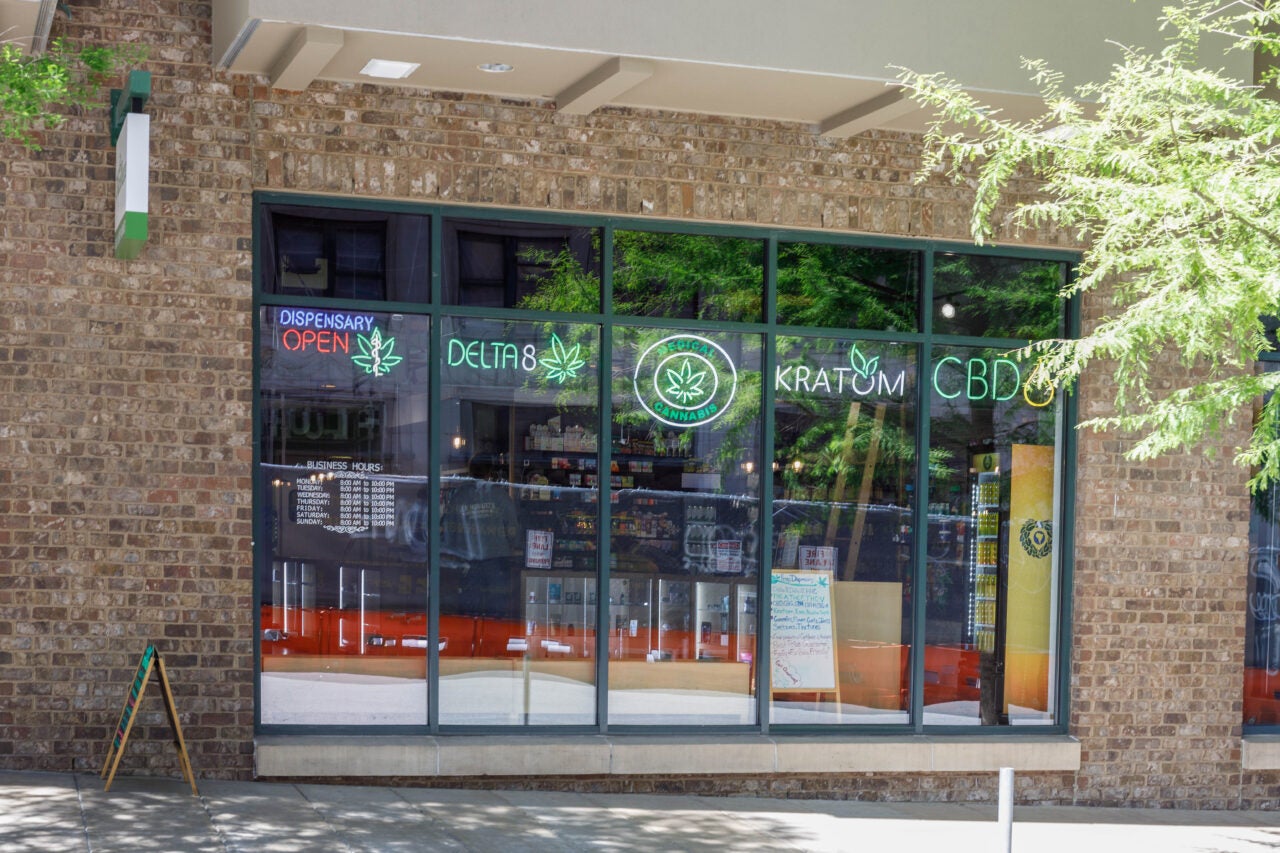
Getty Images
A cannabis dispensary in Asheville, North Carolina, displaying a neon sign for kratom in 2023.
A loosely regulated product with unpredictable potency is now facing federal scheduling and state restrictions — and hospitals like Boston Medical Center are preparing for patients who may not know what they've been taking.
When they walked into Boston Medical Center’s Faster Paths to Treatment, they were carrying a gallon bag of kratom pills.
They had never heard of kratom before. They had been in remission from opioid use disorder and were doing well. But they had a new baby in the house; they were exhausted and struggling to sleep, and someone suggested they try kratom.
It worked. But over time, they needed more and more. When they stopped taking it, they felt “dope sick”—the same withdrawal they had worked to escape from opioids.
“They were totally heartbroken when they found out what had happened,” says Karri Weisenthal, MD, MHS, an emergency medicine physician and addiction medicine specialist at BMC, the associate medical director of Faster Paths, and the medical director for the ED-Addiction Consult Service team.
The patient did not know that kratom acts on some of the same brain receptors as opioids. They did not know they had become dependent. They did not know they had relapsed.
That patient’s story illustrates one of the challenges clinicians are confronting as kratom becomes more widely used: Many people who take it do not know exactly what it is, how it works, or what can happen when they stop.
Now, Massachusetts is changing the rules around kratom. On August 13, the Massachusetts Department of Public Health issued an emergency order temporarily placing all forms of kratom into Schedule I, the most restrictive category of controlled substances. The order took effect August 28 and can remain in place for up to a year.
The state action follows federal action in July involving 7-hydroxymitragynine, or 7-OH, a concentrated compound derived from kratom, and three related synthetic substances. Massachusetts’ order applies to all kratom products, both natural and synthetic.
For people who use kratom and the clinicians who treat them, the change raises practical questions about what comes next—particularly for people who may not have realized what they were taking in the first place.
The rise of kratom and 7-hydroxymitragynine
More than a year ago, Weisenthal started noticing signs for kratom popping up all down Massachusetts Avenue in Boston. Bodegas, corner stores, vape shops and smoke shops were suddenly advertising it. “We have kratom,” the signs read.
For Weisenthal, the signs were an early, visible signal of a growing market. The rise of kratom was harder to track in the data: it does not show up on standard drug tests, and there is no formal clinical diagnosis for kratom use disorder. But what Weisenthal was seeing on the streets suggested that more people were encountering—and buying—the products.
Reports to U.S. poison centers involving kratom exposure increased roughly 1,200% from 2015 to 2025, from 258 to more than 3,400, according to the Centers for Disease Control and Prevention. A national study using federal survey data found that the share of Americans ages 12 and older who had ever used kratom rose from 1.6% in 2021 to 1.9% in 2024, including more than 100,000 adolescents ages 12 to 17.
What is kratom, and what does 7-OH mean?
Kratom comes from a tree native to Southeast Asia, where its leaves have traditionally been chewed or brewed as tea to fight fatigue or ease pain. In the U.S., however, products sold as kratom now range from preparations made from the natural leaf to concentrated and synthetic products.
The natural leaf contains two primary compounds, mitragynine and 7-hydroxymitragynine, or 7-OH. 7-OH occurs naturally only in trace amounts, but manufacturers have learned to concentrate it and produce it synthetically, putting it into shots, tablets and extracts that can be far more potent than traditional kratom leaf.
“It is a partial opioid agonist,” Weisenthal says. “It has stimulant-like effects at low doses, opioid-like at high doses. The leaf itself can have milder effects as the main psychoactive alkaloids, mitragynine and 7-hydorxymitragynine (7-OH) comprise <2% of the dry leaf mass. But the products that people are getting are much more potent.”
And those products do not necessarily look like what people expect a drug to look like. They come in flavors such as blue raspberry and strawberry lemonade and can be packaged to resemble Celsius energy drinks, 5-hour Energy shots and caffeine gummies. Some carry names such as “hydroxy.” Someone buying one from the same shelf as an ordinary energy drink may have no way of telling the difference.
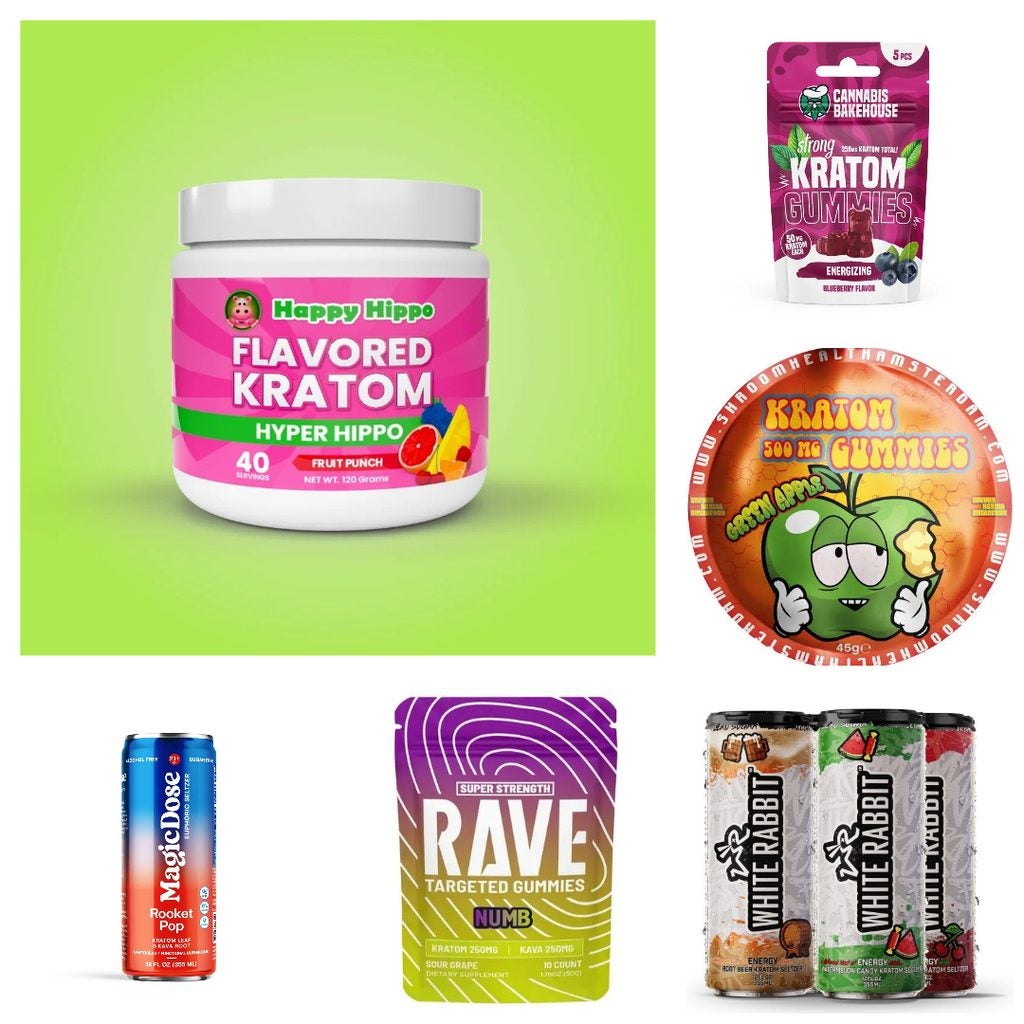
“We have these young patients coming into clinic reporting, ‘I had no idea what it was,'” says Weisenthal.
That is part of what makes kratom difficult for clinicians to track—and why some people may not realize what they have been taking until they try to stop.
Kratom withdrawal, and why clinicians are paying attention
The experience of stopping kratom depends in part on what a person has been taking.
For people using natural kratom leaf, withdrawal can resemble hydrocodone withdrawal—uncomfortable but relatively manageable. For people using concentrated 7-OH products, Weisenthal says, withdrawal can be considerably more severe.
“The withdrawal that we’re seeing with 7-OH products, it’s much more like fentanyl,” she says. “It’s severe. Some patients require high-dose buprenorphine, 24mg daily, to really maintain them. And it is really hard for folks.” Some patients, the Grayken Center for Addiction notes, aren’t able to maintained by buprenorphine even at high doses.
There isn’t a formal diagnosis called “kratom use disorder,” leaving clinicians without a consistent way to document or track it. Some may document kratom use, while others may document opioid use disorder based on a patient’s symptoms and history. This all means that there is also no medication approved by the FDA specifically for kratom use disorder or kratom withdrawal, and research remains limited. Clinicians have reported success treating kratom dependence similarly to opioid withdrawal, including with buprenorphine, counseling, and peer support.
The complicated questions of kratom use and scheduling
For some people, kratom may have been an attempt to manage pain, fatigue, or opioid withdrawal without a prescription or formal treatment program. As access changes, those people may need other options.
There is also the question of what happens when a substance is scheduled without a ready alternative. Weisenthal points to a recent parallel: when Pennsylvania scheduled xylazine, a sedative that had been appearing in the fentanyl supply, medetomidine—a more potent veterinary sedative not approved for humans—emerged in its place, sending people to the ICU with hypertensive emergencies. It is the kind of unintended consequence, she says, worth watching for as kratom scheduling takes effect.
For clinicians, that means being prepared to recognize kratom use and withdrawal and to ask about it directly.
At BMC, Faster Paths to Treatment offers rapid, low-barrier access to medications for substance use disorders, withdrawal management, overdose prevention, and harm reduction services.
Launched in 2016 in partnership with the Massachusetts Department of Public Health (MDPH) and Boston Public Health Commission, the program sees patients by appointment and on a walk-in basis and connects them with ongoing care after stabilization.
But the need for awareness extends beyond specialty addiction care.
Most emergency department providers have not been specifically trained on kratom, and standard drug screens do not detect mitragynine or 7-OH. The MDPH is encouraging providers to ask patients directly about kratom use.
For now, the message from BMC is straightforward: know that kratom is out there, understand what it can do, ask patients about it, and know where to connect them to care.
Because the next patient may not know what kratom is, they may not know that it can act like an opioid, and they may not know they need help until they try to stop.
The Massachusetts Substance Use Helpline connects people to treatment and recovery services statewide. Call or text “HOPE” to 800-327-5050. BMC’s Addiction Warmline, 617-414-4175, offers rapid access to medications for providers looking to connect a patient quickly.
About the Author
Caitlin White
Caitlin White is the Director of Content Strategy at Boston Medical Center Health System.
Share on Social

Health equity news from Boston Medical Center
HealthCity is dedicated to sharing the most cutting-edge ideas for advancing health justice through inspiring stories, in-depth Q&As with equity pioneers, research news that could change the medical landscape, and more.