Getty Images
A new BMC–led research project asks what happens when machine learning listens to the people most affected alongside their electronic health records.
Black patients in the U.S. are disproportionately affected by preeclampsia, a serious pregnancy complication marked by high blood pressure that can lead to life-threatening outcomes for both mother and baby. Despite advances in prenatal care, these disparities persist and raise questions about how clinicians can intervene more effectively earlier.
A new research project led by Sheree Boulet, DrPH, MPH, vice chair of research in obstetrics and gynecology at Boston Medical Center (BMC), aims to address this challenge and improve health outcomes by combining artificial intelligence with patient experiences to predict preeclampsia risk.
Funded by the Massachusetts Life Sciences Center, Boulet’s project will use electronic health record data from approximately 15,000 pregnant patients who have received care at BMC to develop a tool that helps clinicians identify patients at risk for both early and late onset preeclampsia.
How machine learning can support preeclampsia research and care
At the heart of Boulet’s upcoming study will be the use of machine learning to build predictive models that support clinical decision making. These tools will be designed to give clinicians additional information they can use alongside their own expertise when caring for patients.
The models will draw on a wide range of electronic health record data, including diagnoses, medications, lab results, vital signs, and social factors. They will also be informed by qualitative research capturing the lived experiences of Black women with preeclampsia. Insights from these interviews are expected to help researchers identify early symptoms and contextual factors that may not be fully captured in clinical data alone.
“For example, if patients report food insecurity or difficulty attending appointments, we could work to incorporate those factors into our model as predictors that may help explain why some patients experience more severe outcomes,” says Boulet.
The study will also integrate data from BMC’s remote blood pressure monitoring program, where patients at high risk for hypertensive complications are given a blood pressure cuff to use at home after delivery. Their readings are automatically uploaded to a secure system and monitored by nurses.
“Some populations may have different blood pressure patterns that are more indicative of risk than others. Understanding those differences will be an important step toward improving outcomes,” explains Boulet. By incorporating these patient-reported measurements into the models, researchers will evaluate whether this additional data improves the accuracy and timeliness of predictions.
“By combining advanced analytics with human insight, we hope to translate these findings into practical tools for clinicians that support earlier detection, better outcomes, and a more equitable future for maternal health.”
Dr. Sheree Boulet, vice chair of research in obgyn at bmc
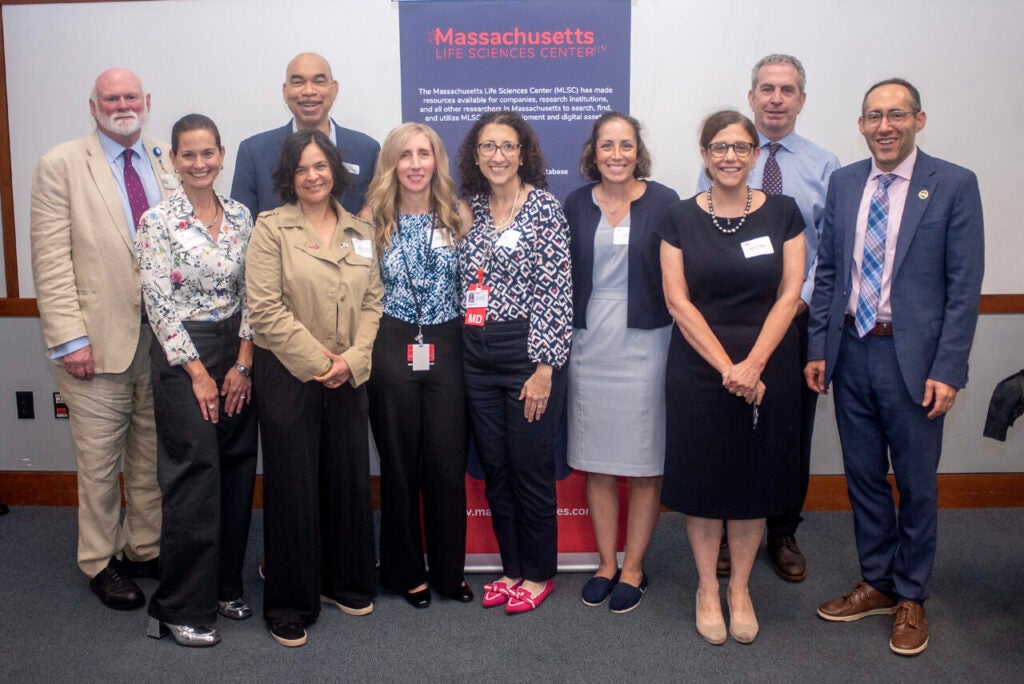
This work will be part of a broader collaborative effort known as the Massachusetts Preeclampsia Research and Equity Consortium, or MAPREC. Led by investigators across multiple institutions, the consortium will focus on improving the detection, diagnosis, and management of hypertensive disorders in pregnancy and will work to ensure that predictive models perform well across diverse patient populations.
Toward more personalized preeclampsia care
Ultimately, Boulet hopes her research will lead to more personalized and equitable care. By identifying which factors are most predictive for different populations, the research may help guide more targeted interventions that reduce health disparities for pregnant people.
As the models are developed and validated across institutions, the team plans to translate their findings into practical tools such as clinical decision support systems and patient education resources that can be used in everyday care.
“By combining advanced analytics with human insight, we hope to translate these findings into practical tools for clinicians that support earlier detection, better outcomes, and a more equitable future for maternal health,” says Boulet.
About the Author
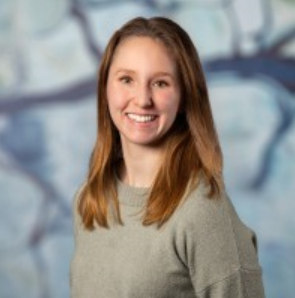
Gina Mantica
Gina Mantica is the Senior Research Communications Manager at BMC.
Share on Social

Health equity news from Boston Medical Center
HealthCity is dedicated to sharing the most cutting-edge ideas for advancing health justice through inspiring stories, in-depth Q&As with equity pioneers, research news that could change the medical landscape, and more.