Dr. Burcu Erdogan, Boston Medical Center Health System
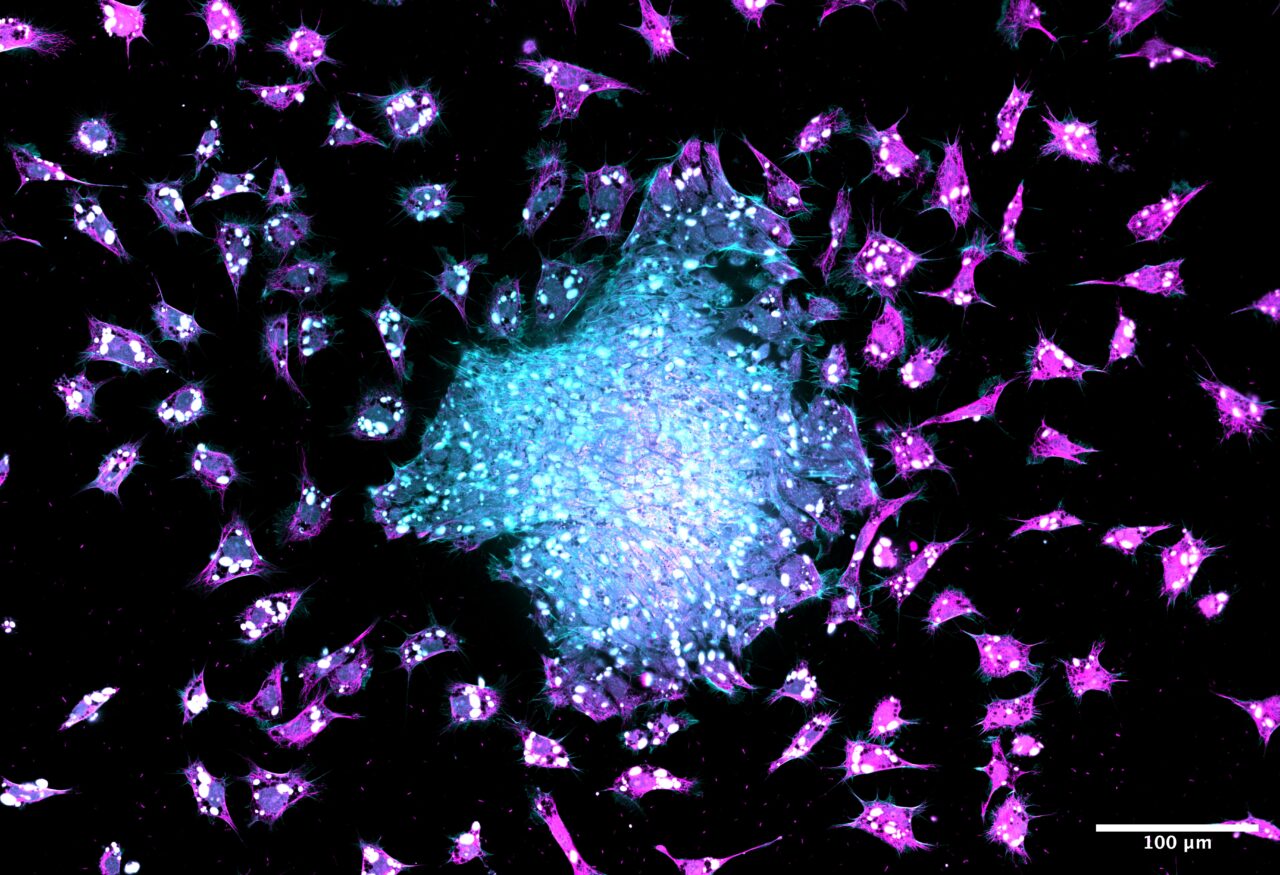
One of the six winning research and science photos from BMC Health System's inaugural contest: “Cells on the Go” submitted by Dr. Burcu Erdogan, PhD, Hematology and Oncology
In the first annual “Lens on Discovery” science image contest, BMC Health System researchers and staff shared and celebrated the work driving healthcare forward.
At Boston Medical Center (BMC) Health System, science is more than discovery—it’s a commitment to improving lives. That spirit was on full display during the health system’s first-ever science imagery contest, which brought together researchers and staff from across BMC, BMC Brighton, and BMC South to celebrate the beauty and impact of scientific work.
The inaugural event drew 28 creative submissions, each offering a unique lens into how science shows up in healthcare. From microscopic discoveries to advanced clinical technology and artistic interpretations of healing, the entries highlighted the depth and diversity of our research community.
These images reflect the complexity, creativity, and purpose behind BMC Health System’s research enterprise. Together, they embody the potential of science to transform lives at BMC Health System and beyond.
1. “Science as Art” winner and “Fan Favorite: Health, Healthcare, or Wellbeing Image”
Monica Ryl and Sara Bashir, MS, DABR, Radiation Oncology
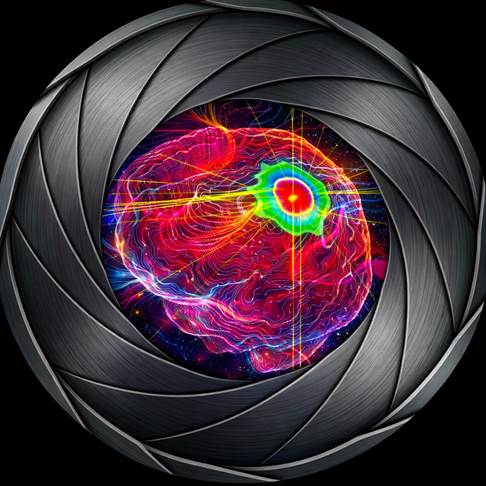
Blending science with visual storytelling, this winning image highlights the precision and collaboration behind modern cancer care. Inspired by the CyberKnife S7 system, the “iris” represents how advanced technology adapts in real time to target tumors with remarkable accuracy.
While the image appears to capture a single moment, it reflects an extensive, behind-the-scenes process. Before treatment begins, teams use advanced imaging to define the tumor, carefully design a personalized radiation plan, and ensure healthy tissue is protected. During treatment, the system continuously adjusts to match the tumor’s size and shape.
“Innovation in healthcare isn’t just about the machine, but how skilled teams use those tools to provide safer, more effective, and more compassionate care for every patient,” says Ryl.
2. “Microscopic Details” winner
Burcu Erdogan, PhD, Hematology & Oncology
This winning image captures cells in motion as they migrate outward from a small piece of embryonic tissue. Known as cell migration, this process is essential for normal development and, when unregulated, can play a role in diseases like cancer.
Using high-resolution confocal microscopy, the research team highlights the cell’s internal framework, or cytoskeleton. Microtubules glow in magenta and actin filaments in cyan, revealing how these structures work together to drive movement. The cells shown here are neural crest cells, which travel throughout the body during development to form different tissues.
By visualizing these movements in detail, researchers can better understand how cells find their way and what happens when that process breaks down.
“If neural crest cells fail to reach the right place, it can cause congenital disorders—such as craniofacial defects and heart problems. Studying how these cells move helps us identify the molecules and mechanisms that guide migration and what goes wrong in disease,” says Erdogan.
3. “Humans of BMC Health System” winner
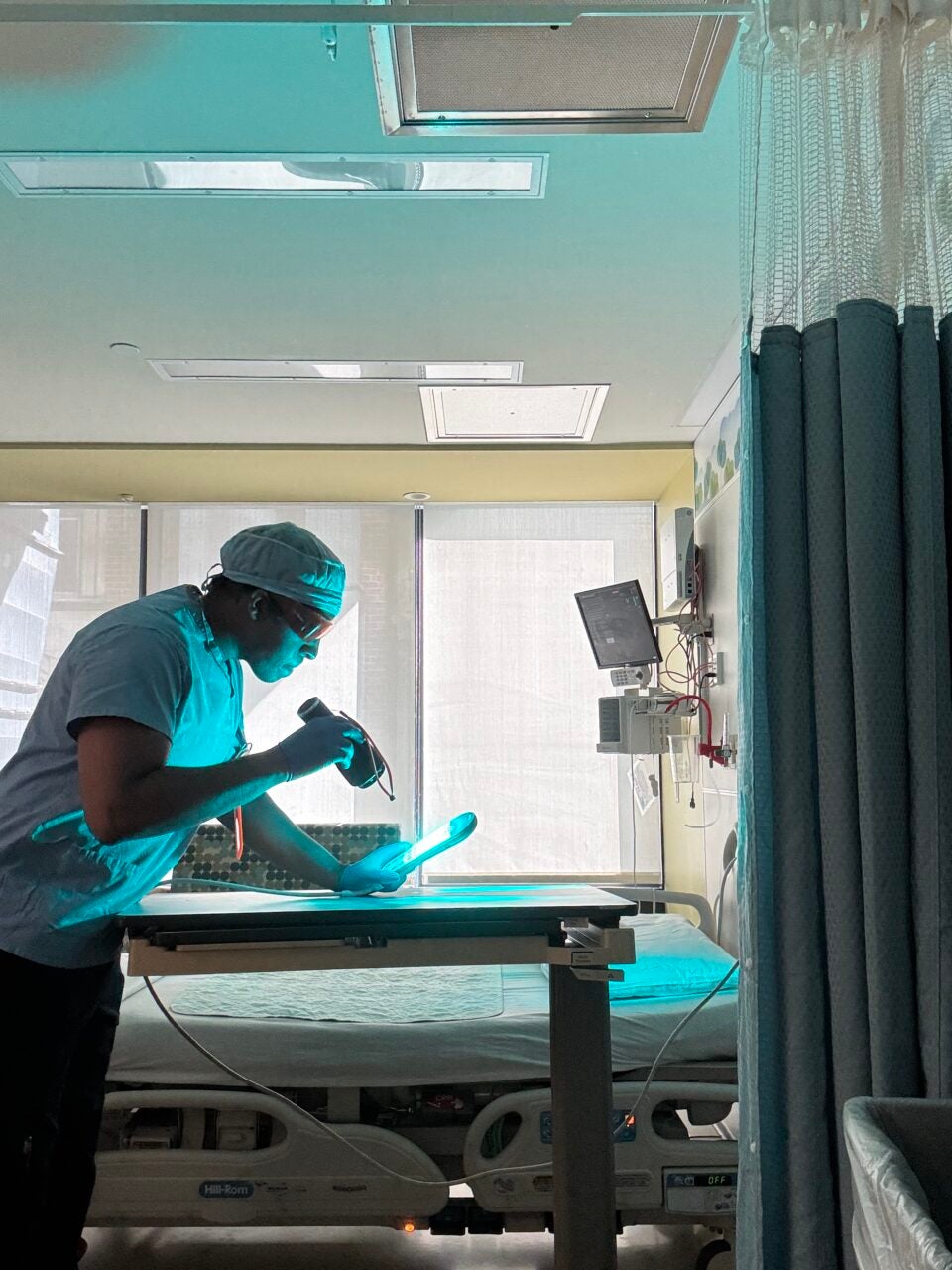
Nicolas Gnaman, EVS / Infection Prevention
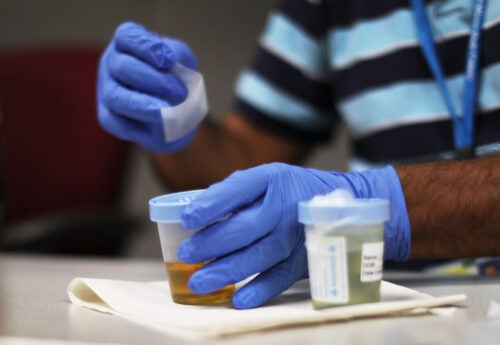
This winning image highlights how research and collaboration at BMC are helping make the invisible visible. Using fluorescence technology, Gnaman inspects a recently cleaned patient room for traces of Clostridioides difficile (C. diff), a bacteria that can cause serious gastrointestinal infections. Under a specialized light, high-touch surfaces like patient call buttons can reveal contamination that would otherwise go undetected by the naked eye.
The image highlights the teamwork behind infection prevention efforts at BMC. Infection prevention teams identify potential transmission risks, environmental services staff work to disinfect and reduce contamination, and frontline clinical teams adapt workflows to strengthen patient safety. Together, these efforts help transform real-time data into smarter, more targeted cleaning and prevention practices.
“This work is part of a larger effort to improve patient safety by better understanding where harmful bacteria persist in hospital environments and how contamination may spread through shared surfaces and equipment,” says Gnaman, “Every room we audit helps us learn more about infection prevention, refine cleaning and clinical workflows, and strengthen how we protect both patients and healthcare workers.”
4. “Mixed Media” winner
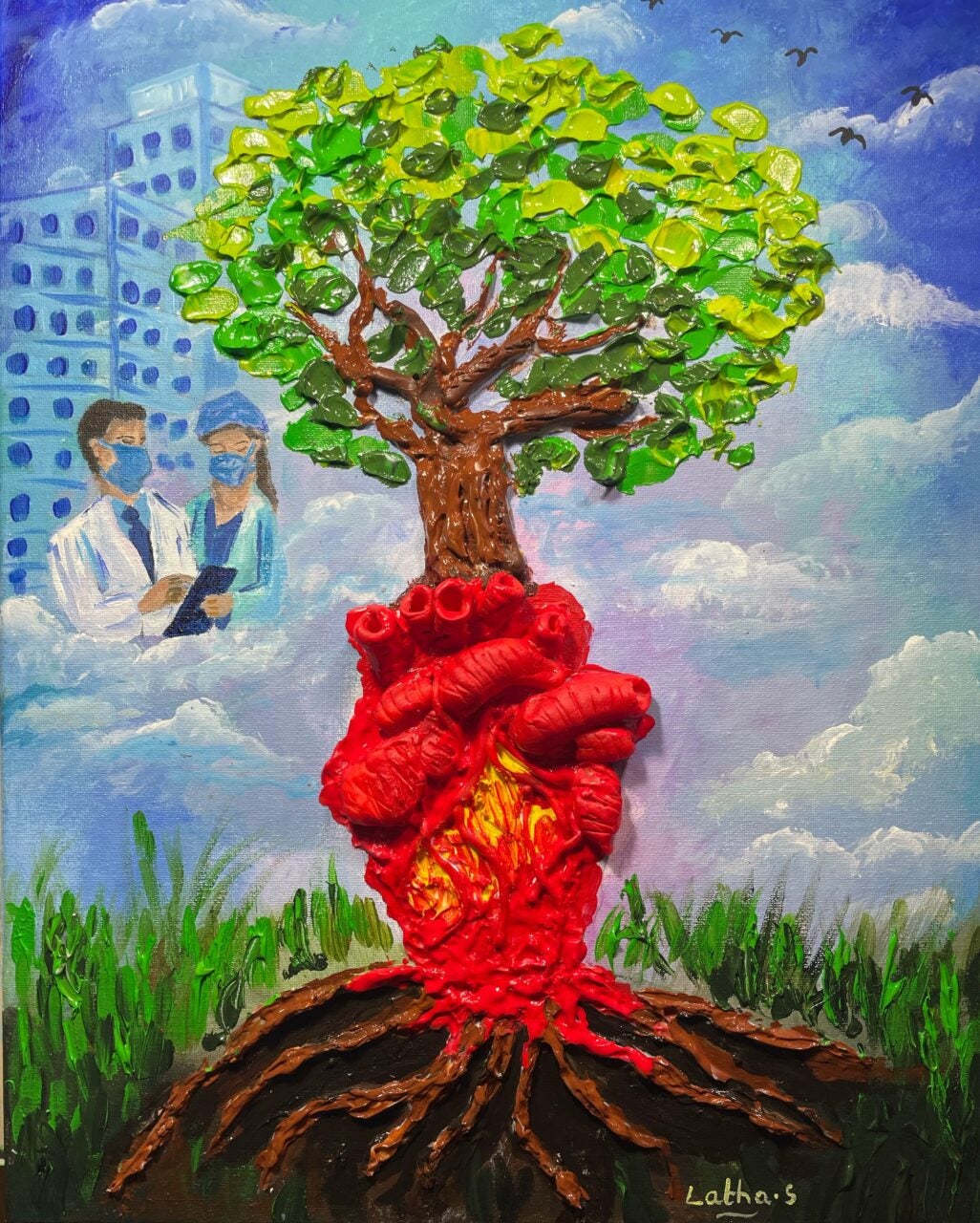
Latha Subramanian, Finance Department, BUMG
In this winning mixed media piece, a glowing heart grows into a tree, which symbolizes life, growth, and healing. Set against a backdrop of a hospital and care teams, the artwork reflects the connection between scientific advancement and compassionate care.
The piece reminds viewers that science at BMC Health System is about people. Advances across disciplines help patients heal and return to their daily lives, but they also represent something deeper: care, purpose, and human connection.
“Science at BMC is not just about machines or data—it’s about saving lives in real, human ways…I wanted people to see that behind every medical breakthrough, there is care, precision, and purpose,” says Subramanian.
5. “Fan Favorite: Research or Science Image”
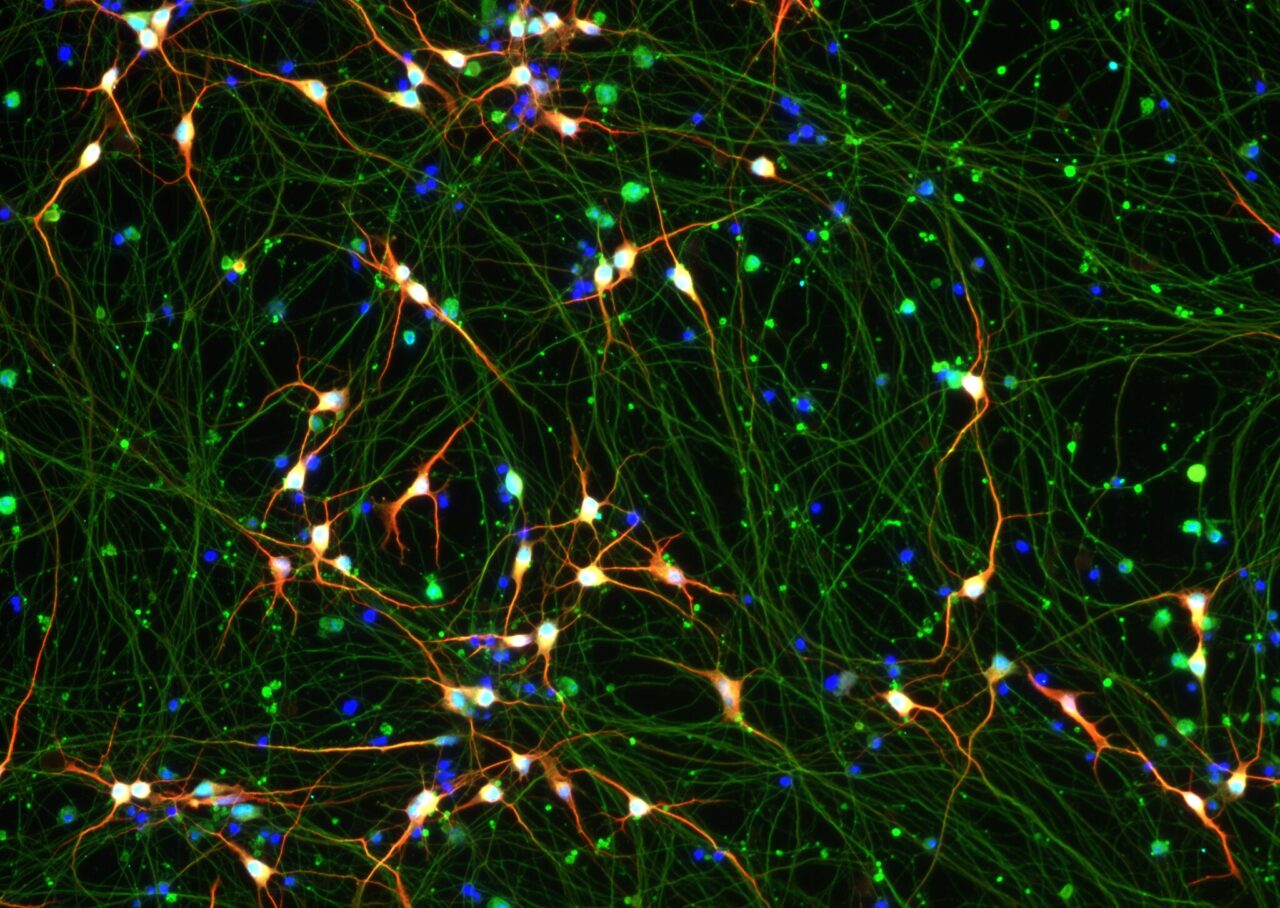
George Murphy, PhD, Center for Regenerative Medicine (CReM); photo by Todd Dowrey, PhD
The top-voted research image offers a glimpse into a groundbreaking approach to understanding healthy aging. Using a specialized laboratory technique, researchers guided stem cells from centenarians, or individuals who have lived to 100 or beyond, to develop into neurons, or nerve cells.
This work supports a shift in how scientists think about aging. Rather than viewing it simply as the accumulation of damage, the research points to the importance of “dynamic resilience,” or the body’s ability to respond to and recover from stress. The image captures these centenarian-derived neurons as they respond to stress in a lab setting, revealing resilience patterns linked to not only healthy aging, but also cancer resistance and protection against conditions like Alzheimer’s disease.
“By linking resilience biology to multiple disease states, this approach has the potential to simultaneously impact a broad spectrum of conditions, rather than targeting them individually,” says Murphy. “This platform enables direct measurement of stress-response capacity in human-derived cells, a key determinant of clinical outcomes, such as recovery from illness, resistance to physiological stress, and maintenance of function.”
6. “Fan Favorite: Academic Clinical or Research Team in Action Image”
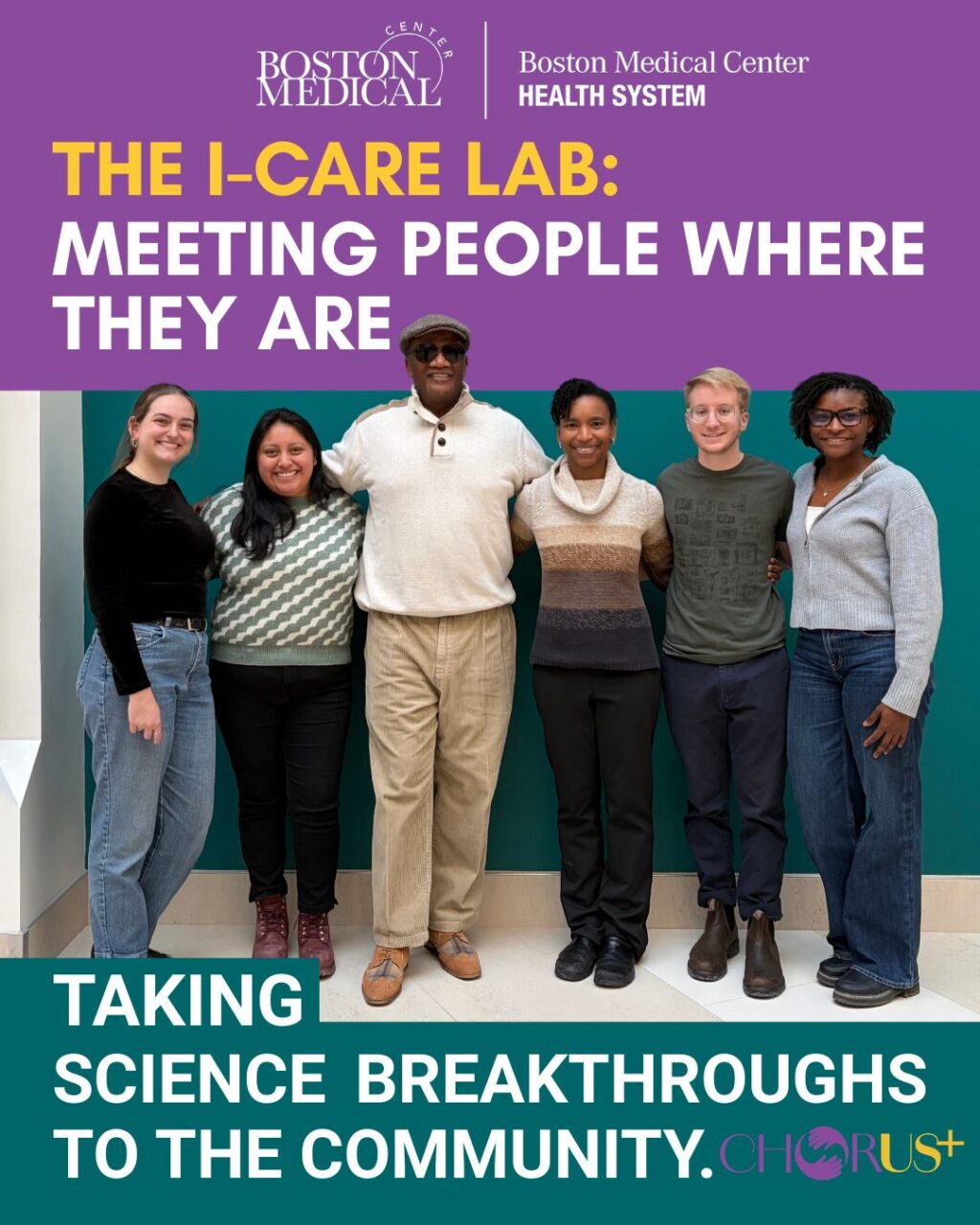
Infectious Complications Assessment and Research (I-CARE) Lab, Infectious Disease
This image captures the collaborative spirit at the heart of the Infectious Complications Assessment and Research (I-CARE) Lab, where researchers, clinicians, and community partners work together to bring scientific breakthroughs to the people who need them most. On average, it takes 17 years for research findings to become part of routine clinical practice. The I-CARE Lab led by Sabrina A. Assoumou, MD, MPH, is focused on narrowing that timeline by meeting people where they are and expanding access to HIV prevention education, initiation, and adherence support in community settings.
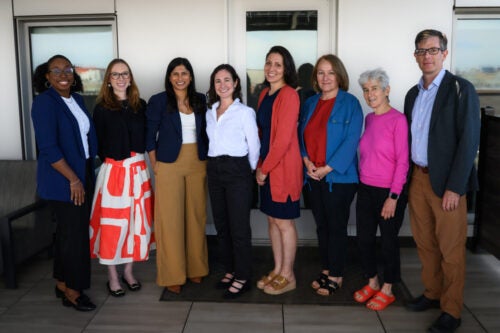
This photo was taken shortly after the team returned to BMC from visiting a potential new community site and features Sarah Miller, Lisette Skiba, Richard Andrews Jr., Dr. Assoumou, Anthony Davis-Pait, and Shelby Goodson. The moment reflects the excitement behind building new relationships that can expand access to HIV prevention services.
“What others might not realize is that moments like this are the result of ongoing relationship-building, coordination, and trust. A lot of work happens behind the scenes, and it is essential to bringing impactful care and research into the community,” shared I-CARE lab team members.
From lab-based discoveries to life-saving technology and creative expression, the inaugural science imagery contest showcased the many ways BMC Health System brings science to life. These winning entries remind us that research is not only about what we learn but how we share it, see it, and connect it to the human experience.
About the Author
Gina Mantica
Gina Mantica is the Senior Research Communications Manager at BMC.
Share on Social

Health equity news from Boston Medical Center
HealthCity is dedicated to sharing the most cutting-edge ideas for advancing health justice through inspiring stories, in-depth Q&As with equity pioneers, research news that could change the medical landscape, and more.