"BMC Has a Soul": How Dr. Ravin Davidoff Helped Shape Four Decades of Care at Boston Medical Center
August 6, 2026
Boston Medical Center
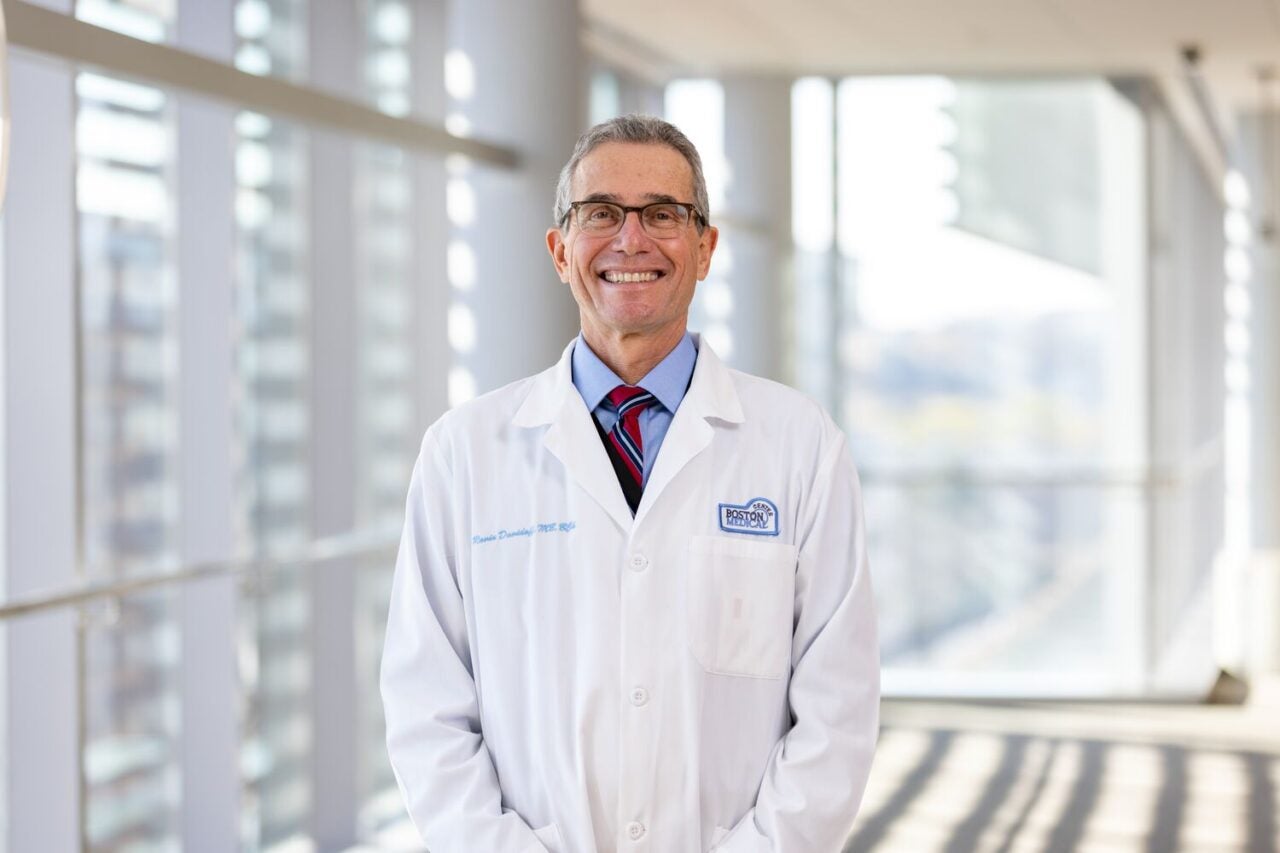
Dr. Ravin Davidoff, cardiologist; Executive Medical Director, Clinical Integration Lead, and Emeritus Chief Medical Officer at Boston Medical Center Health System. Dr. Davidoff is retiring after four decades with the institution, from its legacy as Boston City Hospital to its emergence as an academic medical health system.
He left South Africa during the height of apartheid looking for a different kind of medicine and found it at Boston City Hospital. As a cardiologist who never left the bedside and a chief medical officer who guided BMC through crisis and evolution, Dr. Ravin Davidoff spent four decades working alongside teams to ensure the unique way Boston Medical Center cares for patients was a constant.
During the era of apartheid, in the hospitals in Johannesburg, care was divided by race. White patients went to one hospital, Black patients to another. A young doctor who trained in that system saw the contrast up close: in the hospitals treating Black patients, people often arrived with advanced tumors, tuberculosis, kwashiorkor, and scurvy, conditions not often seen the world over because they are mitigated through early prevention and care.
“Even though the [patient] population was predominantly Black, almost everybody in my class was white,” says Ravin Davidoff, MBBCh, Executive Medical Director, Clinical Integration Lead, and Emeritus Chief Medical Officer at Boston Medical Center (BMC) Health System. “That was already striking.”
Davidoff graduated from medical school at the University of the Witwatersrand in 1977, at the height of apartheid. Half his class left the country in the next few years. He stayed for family reasons, served two years as a military physician, and then traveled the world before landing at Boston City Hospital—one of two legacy hospitals that merged in 1996 to form Boston Medical Center (BMC), now the largest essential hospital in New England.
Soon after joining BMC, it was the height of the HIV and AIDS crisis. Transmission was poorly understood, and the patients were among the most vulnerable in the city, including people experiencing homelessness and living with substance use disorder. The teams did not hesitate.
“Everybody just went in and treated these people, people living on the street, whoever came through, with incredible empathy and commitment to help them in whatever way,” Davidoff says. “That sense of we do everything for everybody that we can, regardless of what they look like or what their social situation is, was strikingly different from what I’d grown up with.”
“I left South Africa because I wanted to leave that environment,” he adds. “I hoped to find that here. And when I got here, I did indeed find what I was hoping to experience.”
Davidoff never left BMC. That commitment would define the next four decades and make Davidoff one of the most consequential clinical leaders in the hospital’s 160-year legacy.
A career rise, never far from the bedside
Davidoff trained in medicine, was chief resident in medicine, went on to cardiology, and rose through the academic ranks to become a professor of medicine at the Boston University Chobanian and Avedisian School of Medicine. His path shifted from the bedside to the boardroom not by design but by invitation—senior leaders noticed his strategic thinking, and a previous chief medical officer told him he would make a great one. Davidoff’s response was blunt: “You’re crazy. It’s the last thing I want to be.”
He became chief medical officer (CMO), serving from 2008 to 2022, and in that role helped guide BMC through some of its most consequential transformations. Under his leadership, the hospital’s academic stature grew, its community partnerships deepened through Boston HealthNet—a network of 13 community health centers across Boston’s neighborhoods and beyond—and the institution emerged in its rightful, unique space as a leading academic medical center equal in stature to the other AMCs in Boston and the country.
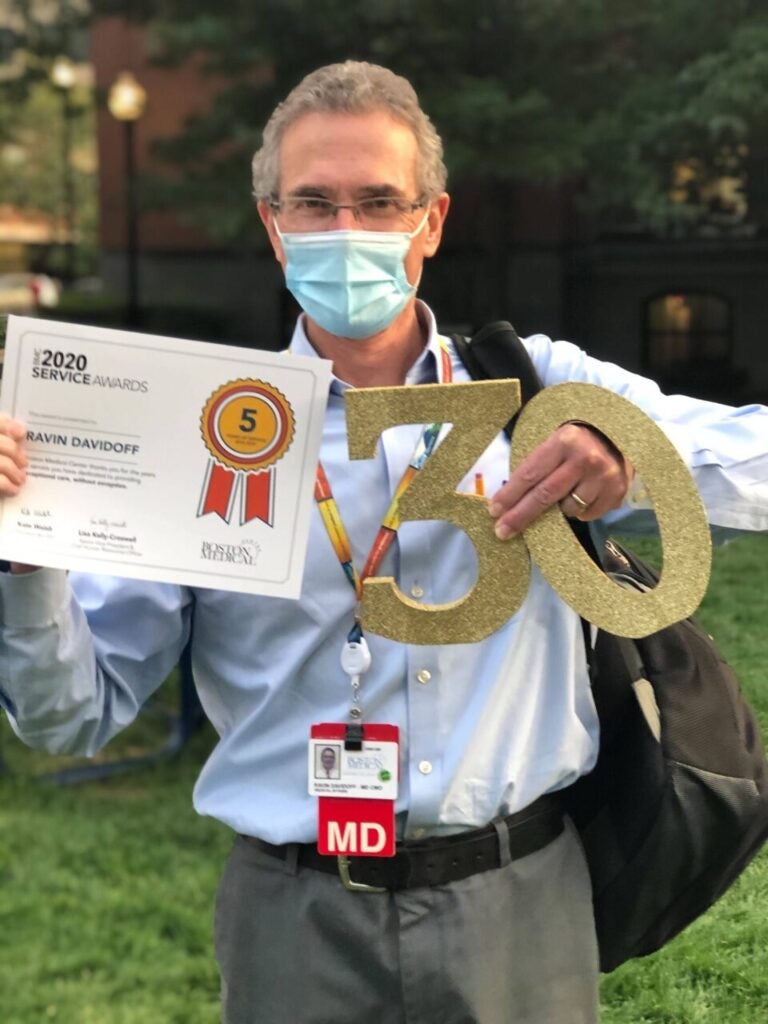
What earned that recognition was not size or wealth but a different way of working. “We are a powerhouse, not because we do everything that some of the others do, but because we do it in a uniquely collaborative way with the community,” Davidoff says. “And everybody understands that we can do that because of the relationships and the trust that the community has in us.”
That trust was built through a consistent pattern of choosing patients over convenience, he says. During the 2008–2010 financial downturn, Davidoff remembers that the question arose of whether to cut pediatric services because “pediatrics loses money.”
“We hunkered down and said, ‘We can’t afford not to do pediatrics. That’s who we are,’” Davidoff says.
Davidoff’s rising titles never replaced the work that brought him to medicine in the first place. Even as CMO, he kept seeing patients—Wednesday mornings, every week, the same slot he has held for years.
“The most joyous and the time I still really love is seeing my patients on Wednesday mornings. And I have these now 30-, 35-year relationships with them,” he says. “I see them and that is an incredible experience and privilege.”
“Our job is to provide healthcare,” Davidoff adds. “The range of opportunities that one can have as a physician, it’s just an amazing opportunity with the most precious one being patient care.”
A hospital the city turns to in a crisis
One moment that crystallized BMC’s emergence in Davidoff’s perspective came on April 15, 2013, when two bombs detonated at the Boston Marathon finish line. BMC received 28 patients in minutes, 15 of them critical. Staff who had trained in military trauma settings recognized the injuries. Tourniquets to stop the bleeding from injuries saved lives. The hospital’s response was immediate, coordinated, and deeply human—wraparound care that extended to families, to enable emotional recovery, to the long road back.
“I think the marathon bombing response was very important for people seeing this is who we are and the incredible work we do,” Davidoff says. “People got brought here. Family may have chosen to take them somewhere else, but they got care here and they said, ‘oh my God, this is unbelievable, the expert care and all the wraparound services that you provide.’”
It’s always felt to me like BMC has a soul. And it’s not a bricks and mortar building. It’s an environment that people feel privileged to work in with all the challenges and with less resources. They come because of this deep commitment that is across the entire system.
Dr. Ravin Davidoff
When COVID-19 arrived seven years later, BMC was again the institution the city turned to. The hospital saw the surge before others in Boston because of who it serves. But the defining story of BMC’s pandemic response was not what happened inside the building but beyond it.
When vaccines became available, BMC did not wait for people to come to the hospital. It brought the vaccine to them—seven community-based clinics in churches and community centers, 99 mobile vaccination events at schools, grocery stores, and apartment complexes, reaching Black and Latino communities that had been historically disinvested.
“There was enough trust in us, we could engage with the community and have them feel they could get care here,” Davidoff says. “And then when the vaccines became available, that they trusted us enough to go into their churches and their schools and their communities and to work with us.”
The teamwork, he says, is what carried the institution and its communities through the extremely difficult time.
“We were the tip of the iceberg because of who we serve,” Davidoff says. “Clinical and administrative leaders would meet every morning at 7 a.m.,” he recalls. “We would talk through it seven days a week.”
Equity as architecture, not aspiration
The pandemic made visible what BMC had been building for years. In November 2021, the hospital launched the Health Equity Accelerator, a system-wide effort to eliminate racial gaps in life expectancy and quality of life across key clinical areas. It brought together research, patient insights, community partnerships, and clinical operations to close the gap between discovering inequities and acting on them.
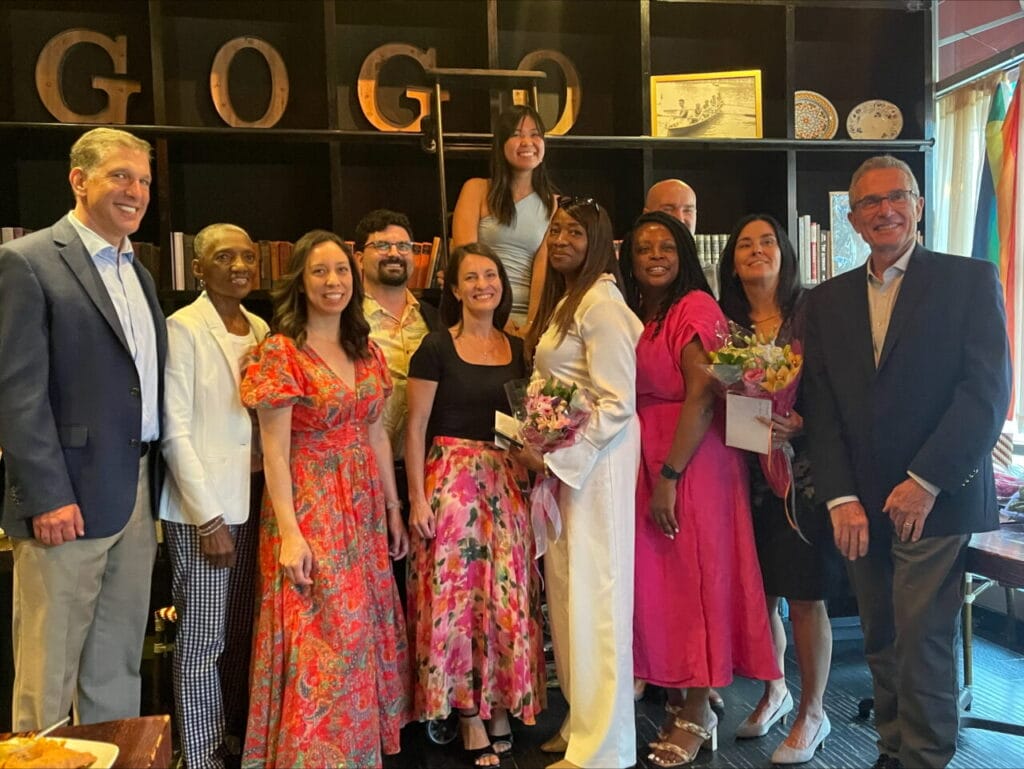
That same year, the BMC Board of Trustees established and endowed the Ravin Davidoff Executive Fellowship in Health Equity, a training program for early-career physicians and nurses to lead systems-level change toward health justice.
Davidoff deflects the honor toward what it represents: “What’s much more important to me is the fellowship exists,” he says. “We want to create people who can then become equity leaders.”
The fellowship and the Accelerator share a common logic: Equity is inextricable from truly expert clinical care, from how it’s designed to how it’s delivered on a daily basis.
“We are not an essential hospital that just provides clinical care to the most vulnerable,” Davidoff says. “We do that plus.”
The same principle guided BMC’s decision to take on the former Steward hospitals, now Boston Medical Center – Brighton and Boston Medical Center – South, in partnership with the state when the Steward system collapsed under its previous owners.
“We did it not because it was financially the right decision for us,” Davidoff says. “We did it because of the things we’ve done for 160, 170 years, which is provide care where it’s needed.”
The soul of the place
Ask Davidoff what distinguishes BMC, and he reaches for a word he admits he cannot fully define. “It’s always felt to me like BMC has a soul,” he says. “And it’s not a bricks and mortar building. It’s an environment that people feel privileged to work in with all the challenges and with less resources. They come because of this deep commitment that is across the entire system.”
When asked what he hopes BMC will carry forward, he says: “That we continue our commitment to be the unique academic essential hospital, and that we become the model of how to do it right for the most vulnerable, which then becomes lessons that people learn – to provide care to everybody,” he says.
It is a fitting idea for a man whose philosophy has always been simple: “My approach to life is take opportunities, move forward, and make tomorrow better than today.” It is the promise he found at Boston City Hospital more than four decades ago. And it is the work he has spent a career working alongside teams to make sure the institution keeps.
About the Author
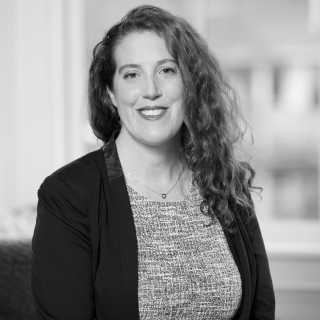
Caitlin White
Caitlin White is the Director of Content Strategy at Boston Medical Center Health System.
Share on Social

Health equity news from Boston Medical Center
HealthCity is dedicated to sharing the most cutting-edge ideas for advancing health justice through inspiring stories, in-depth Q&As with equity pioneers, research news that could change the medical landscape, and more.