Activism Isn’t a Job Title: W. Kamau Bell on the Many Ways to Make Change
November 12, 2026
Jeff Fernandes, Boston Medical Center
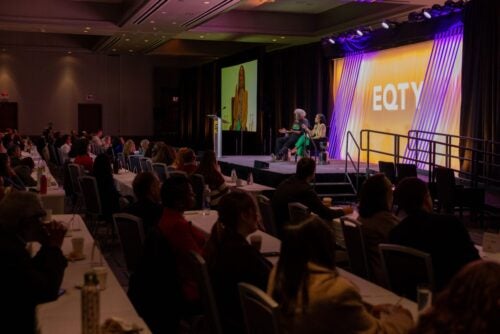
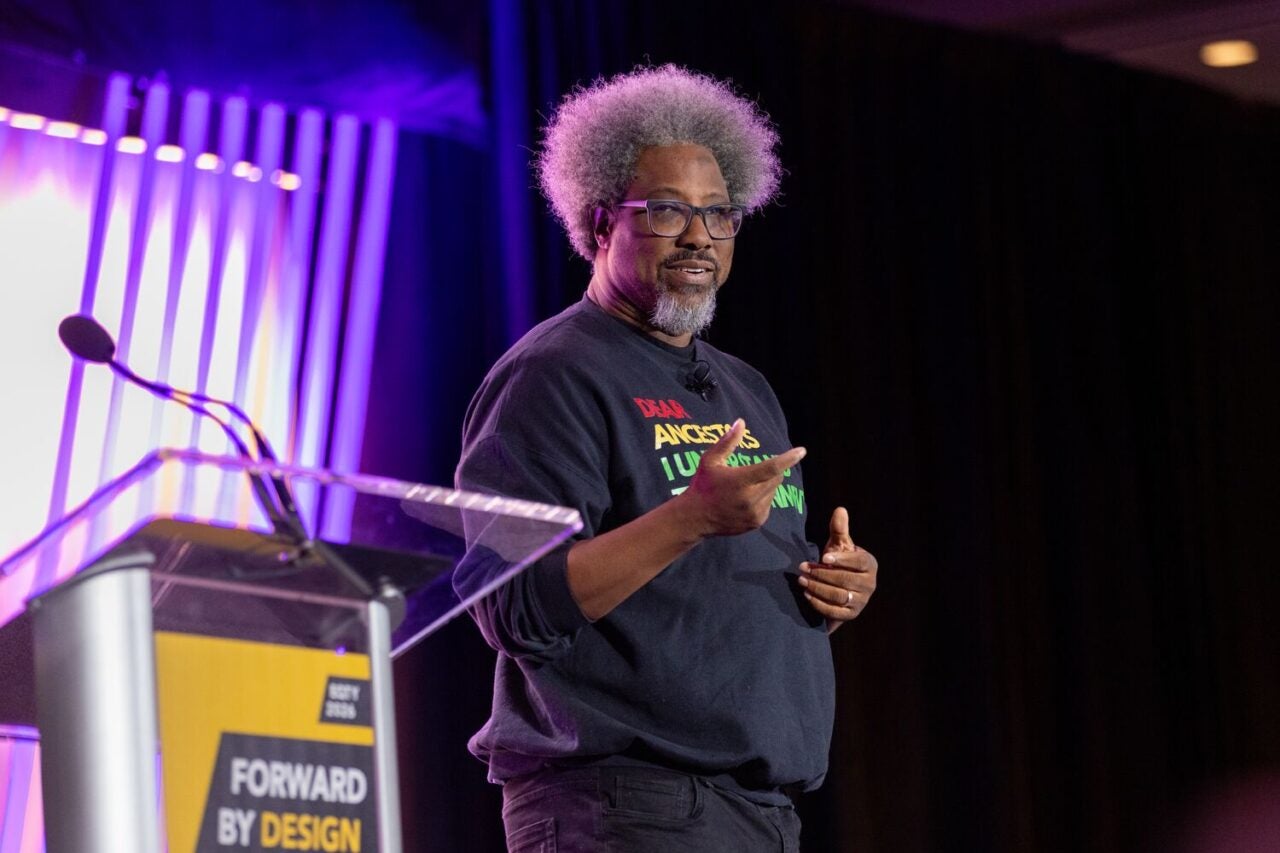
W. Kamau Bell opens EQTY 2026, Boston Medical Center Health System's health equity summit, with a headliner speech.
At EQTY 2026, the comedian and filmmaker wasn’t sure he had earned the word “activist.” His story suggests the word may be bigger than any of us have been treating it.
Two weeks before millions of Americans cast ballots in a midterm election that many have since called a “blue tsunami,” W. Kamau Bell stood on a stage in Boston and wondered whether he counted as an activist.
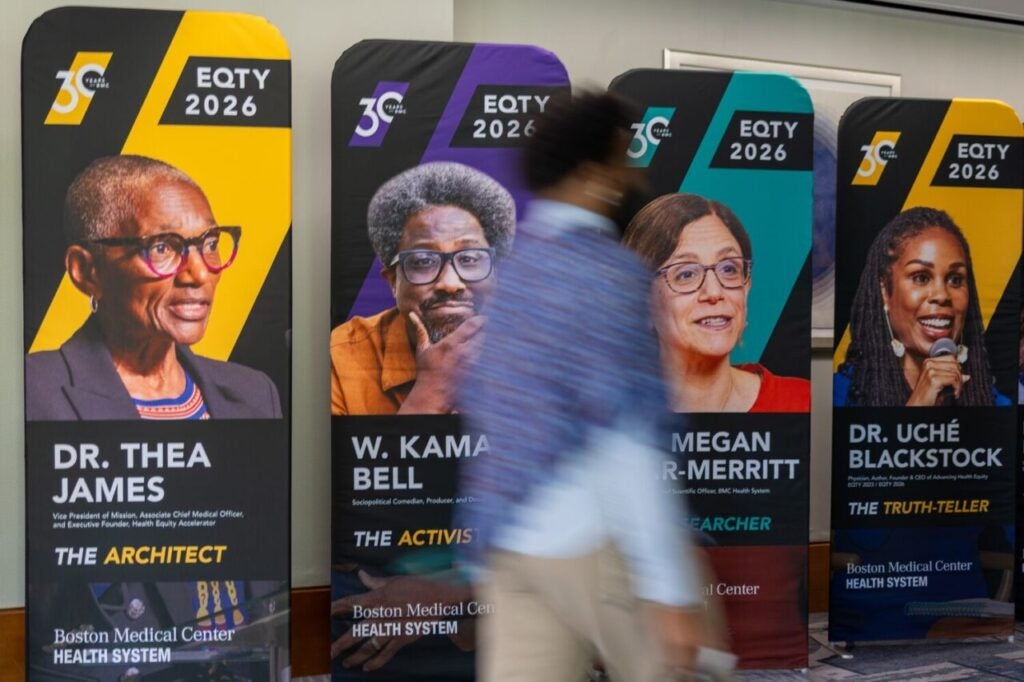
On his way into EQTY 2026, BMC Health’s annual health equity summit, he had walked past a wall of banners, each printed with a word chosen to describe a speaker. His read “activist.”
“And I was like, oh, that’s what I am,” he told the audience. “I do a lot of things. I don’t know how people see me in the world.”
He had opened with a joke about the person who came before him: Dr. Thea James, the emergency medicine physician and health equity pioneer whose three decades at BMC have been defined by a commitment to changing not just how people receive care, but the conditions that shape their health. “People are worried about following me today,” he said, “and I’m worried about following the doctor.”
The joke carried a real question. If activism is what Dr. James has done for three decades, what do the rest of us call what we do?
The full-time activist, and everyone else
Bell grew up around activists, he said, for whom it is a job done every day, boots on the ground, “more than 40 hours a week.”
What he does, he explained, is closer to what his parents and grandparents called “community work.” As a Black person, he said, you have two jobs: providing for your family and making things easier for the Black people around you.
“If I have extra time, extra skills as a mentor, if I can use my platform to advocate for things, I would do that,” he said. “I think it is being a responsible person in 2026 who’s trying to get us to the next level of America.”
It’s a definition that makes room for the people who organize full time and those who contribute in more subtle or episodic ways, while acknowledging that the work is also personal.
“This is all very selfish,” he said. “I want this country to work better for all people, but I specifically know if it works better for Black people that it automatically works better for all people.”
Others saw Bell’s health activism first
Bell may resist the title, but other people have been quicker to claim it for him.
Early in the COVID-19 pandemic, he was recruited to help host Instagram Live events called Masks for the People, which raised more than $1 million for protective equipment for Black communities. Bell later joined Black doctors, nurses, and researchers in The Conversation: Between Us, About Us, a campaign to answer questions about the vaccines. Asked to be part of it, he said, he couldn’t say no. “If I say no, then I’m not the person I claim to be.”
He was prompted, too, by the story of Dr. Susan Moore, a Black physician in Indianapolis who said she had to advocate relentlessly for the pain relief she needed while hospitalized with COVID-19. She died in December 2020. The story, Bell said, helped lead him to yes.
Years later, doctors have told him the videos helped patients who were hesitant about the vaccine.
Asking for what you need
Moore’s story is also a reminder that sometimes the most important form of activism is the smallest: telling a clinician, clearly, what you need.
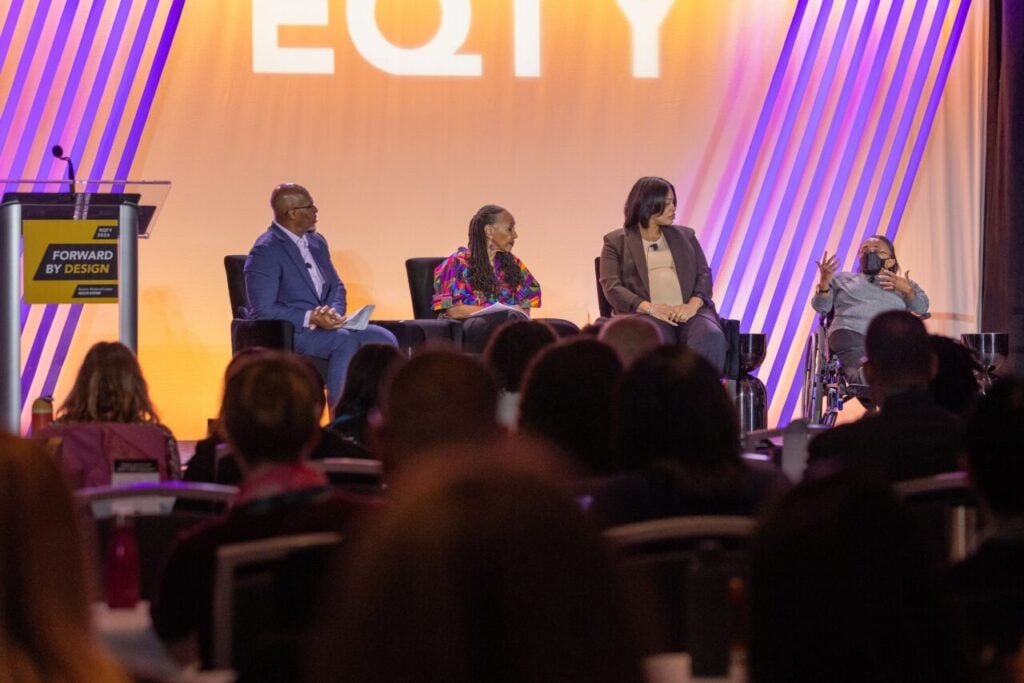
That thread ran through the day. On a panel about race, disability, and economic mobility, disability rights consultant Vilissa Thompson spoke about the importance of being clear on the accommodations you need.
“We’re all interdependent on each other. There’s nothing special about asking for accommodations,” said Thompson, who uses a wheelchair. “It should just be provided. If you want workers to show up as their best selves, learning how to modify, be adaptable is key.”
Naming a need aloud, in a system that often doesn’t listen, is a form of advocacy, and a model for others who are afraid to ask.
But patients should not have to rely on their own persistence to receive the care they need. Moore’s story makes clear why advocacy must also reach the systems responsible for that care.
Bell’s fireside chat with Dr. Uché Blackstock, founder and CEO of Advancing Health Equity, pointed in that direction. When Blackstock asked what happens when harmful stories become embedded in institutions, Bell said they take active, daily effort to unpick. People who work inside systems, he said, “have to actively work inside the system to disrupt those stories at every turn, every angle, and every day in one way or another.”
Understanding the threads that bind us
That framing matters for health equity. Health equity can’t be built from one office or one movement. It needs people at every level, in every role, saying what they need, what they have experienced, what they have changed, and what still must change.
Bell has his own way of adding his voice, usually with humor, sometimes with deep seriousness, and often with a curiosity that has taken him across the country and into conversations many people would rather avoid.
“I travel around this country, and I feel like I have a degree in the United States of America,” he told the EQTY audience.
Seven seasons hosting CNN’s United Shades of America took him from a Ku Klux Klan cross burning in Kentucky to Appalachian coal country and the South Side of Chicago. Along the way, he encountered people and perspectives that challenged his assumptions and taught him to look beyond the differences that divide people to recognize the needs they often share. It is work rooted in listening, asking questions, and challenging the stories we tell about one another.
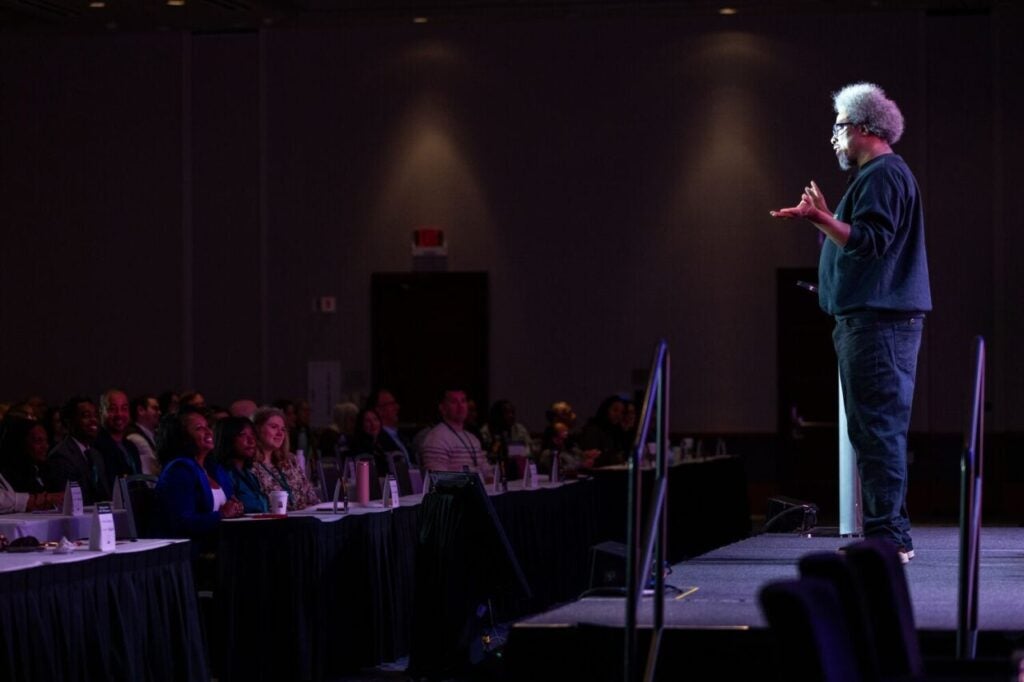
When Blackstock asked for his thoughts on hope and community voice, Bell asked the audience to look around the room.
“You’re it. You’re the people,” he said. “This is the room that changes the world.” Everyone in the room, he said, “has something they need and somebody in this room has something to help them fill that need.”
No one person can do it all, and no single action is enough. Change happens when those actions connect—when people bring their voices, skills, and influence together in pursuit of something better. That collective effort is what makes activism powerful.
Bell may never claim the word on his banner. Maybe more of us should. Because the work belongs to all of us. And what each of us chooses to do with the voice we have matters.
About the Author
Caitlin White
Caitlin White is the Director of Content Strategy at Boston Medical Center Health System.
Share on Social

Health equity news from Boston Medical Center
HealthCity is dedicated to sharing the most cutting-edge ideas for advancing health justice through inspiring stories, in-depth Q&As with equity pioneers, research news that could change the medical landscape, and more.