Changing the Refrain: The Stories That Shape Health Take Center Stage at EQTY 2026
October 29, 2026
Jeff Fernandes, Boston Medical Center
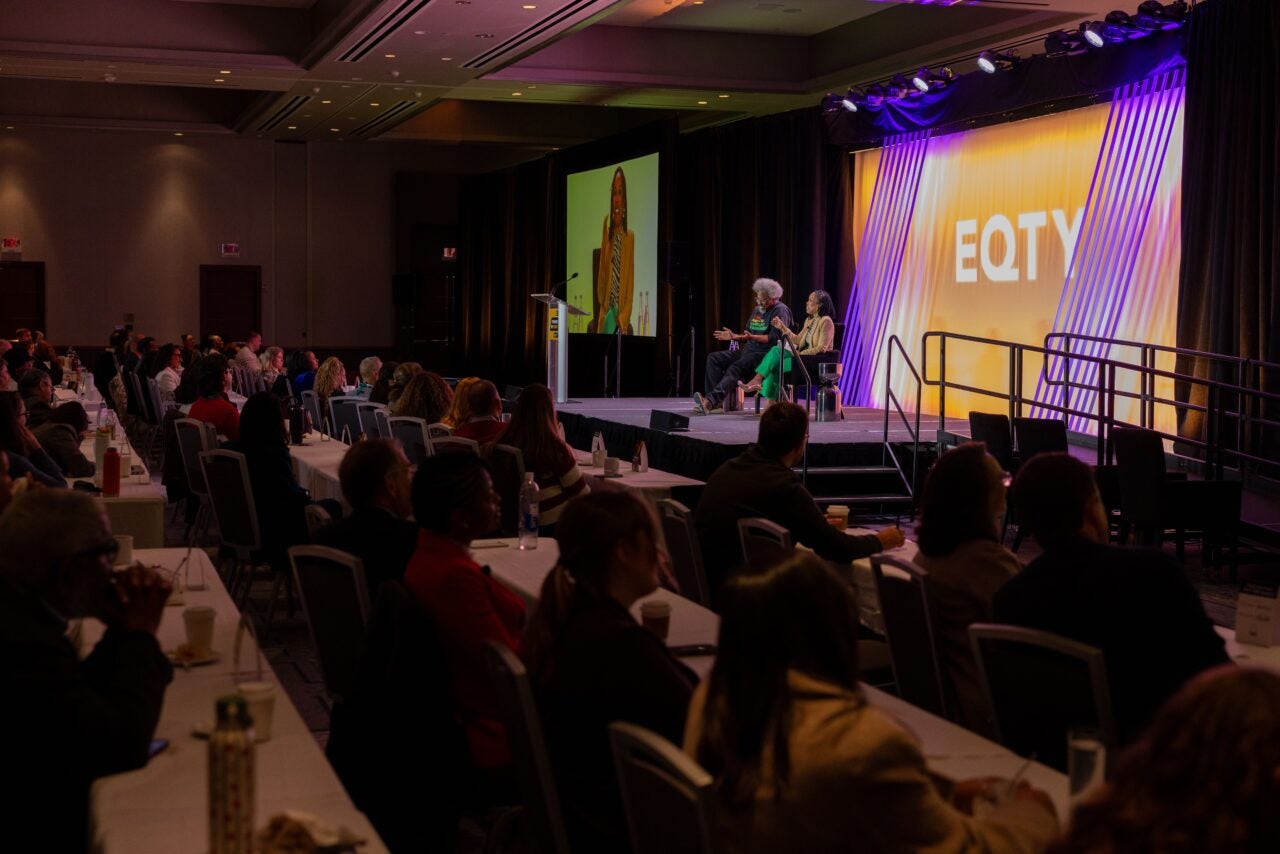
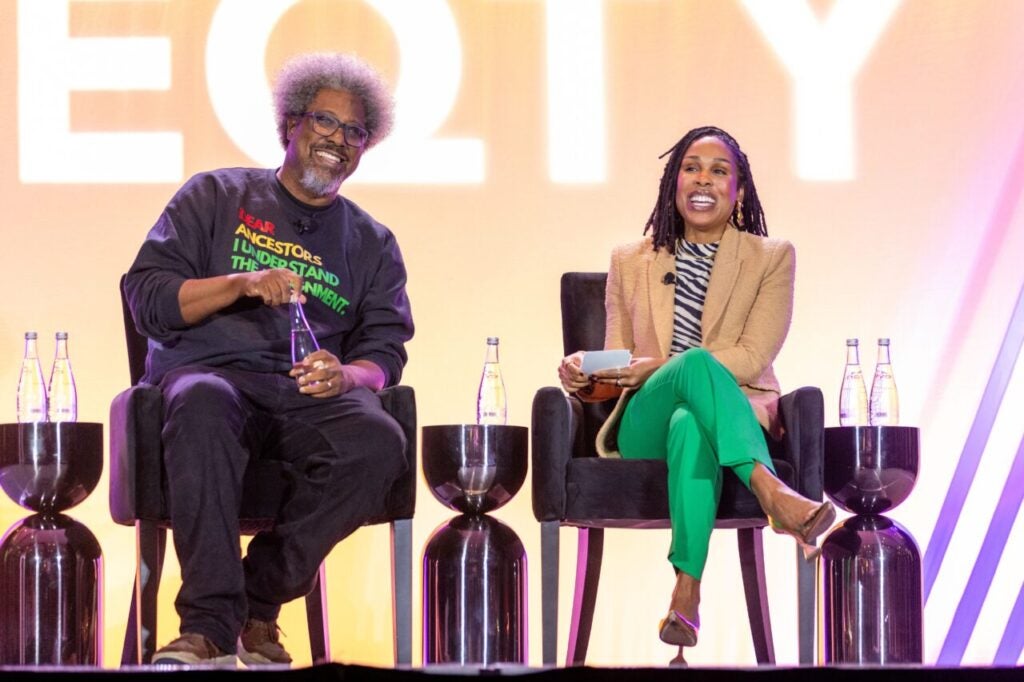
W. Kamau Bell and Dr. Uche Blackstock open EQTY 2026, BMC Health System's annual racial health equity summit, with a headlining fireside chat.
From medical bias and the legacy of discriminatory policies to the power of representation, speakers at BMC Health System’s annual health equity summit challenged the stories that sustain health inequities and called for a future shaped by the people and communities too often left out.
Branden Baptiste missed half of high school to hospital stays. Sickle cell disease kept him in pain, and it kept his family in motion: his mom missing work, his brother missing work to drive her to see him, his dad picking up extra shifts. Somewhere in there, he began to tell himself a story: that he was a burden.
“I was thinking less about my pain and more about how I’m affecting other people around me,” he said.
When doctors offered him base editing for sickle cell disease, he said, he was thinking about the relief his family might finally feel if it worked. In December 2023, he became the first person in the world to receive the curative treatment.
Baptiste told that story at EQTY 2026: Forward by Design, BMC Health System’s annual health equity summit, held at the Renaissance Boston Seaport District on October 20.
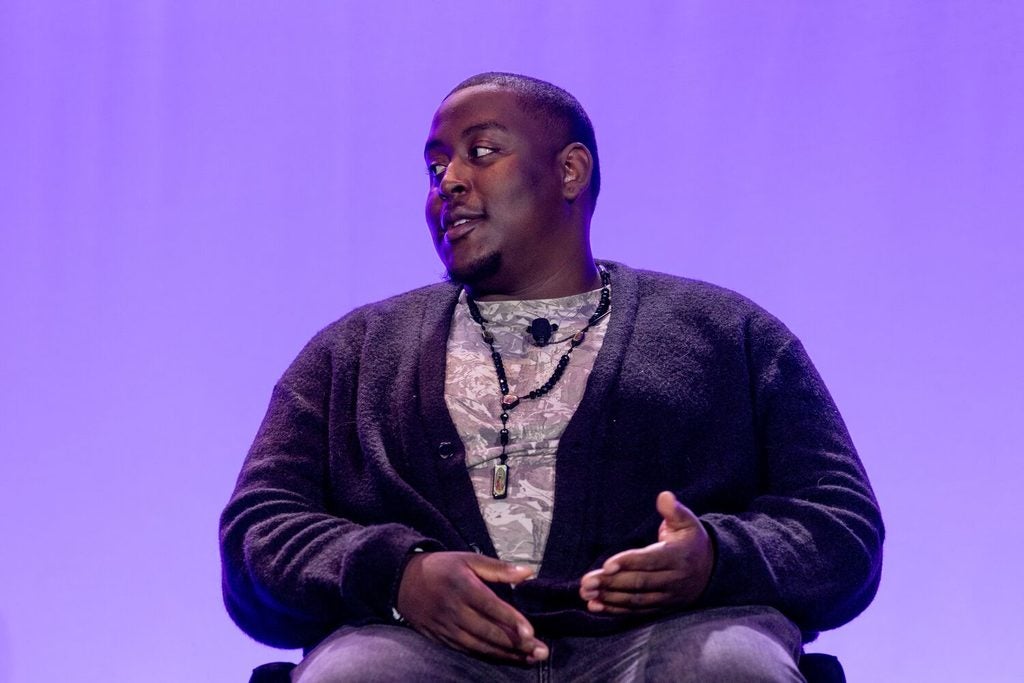
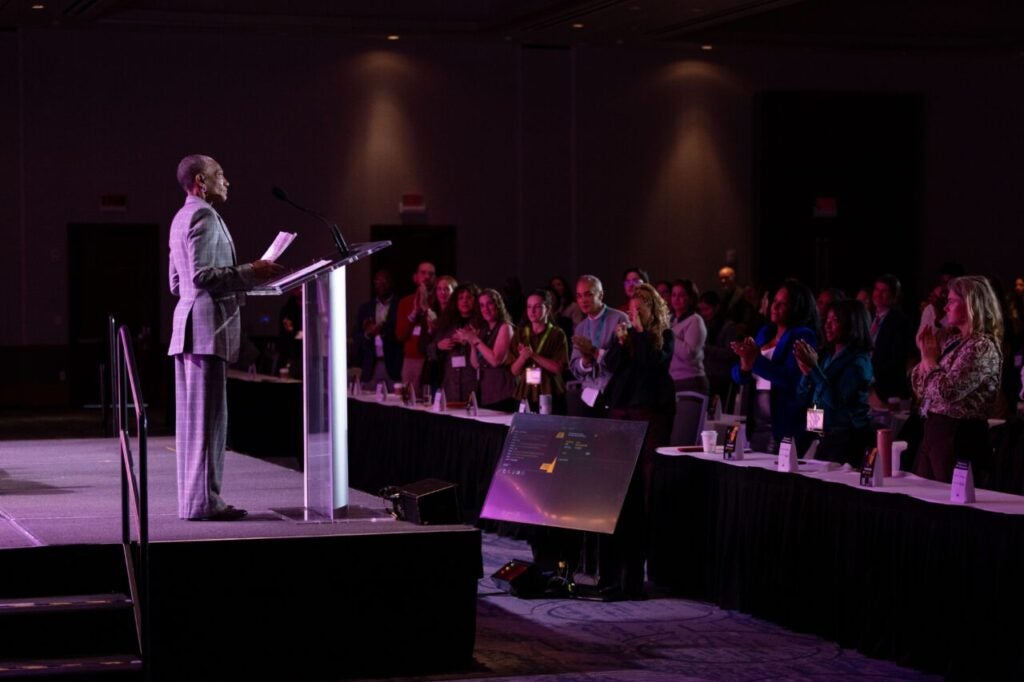
At the event, Dr. Thea James, the emergency medicine physician and health equity pioneer, announced her retirement after 30 years at Boston Medical Center. In her EQTY 2026 opening remarks, James told stories of people who would take the stage that day, then explained why those stories matter.
“The stories we inherit don’t stay stories, they become assumptions,” she said. “They shape how we treat one another, how our institutions operate, and what we believe is possible.”
The rest of the day read like an argument about that sentence — each speaker picking it up where the last one set it down.
The people who lived it, designing what comes next
Dr. Joel Bervell, the physician known online as the Medical Mythbuster, has spent much of his work exposing the assumptions embedded in medical practice.
“Bias in medicine rarely looks like a villain,” Bervell said in video remarks at EQTY 2026. “It looks like a default.”
The people who live with the consequences of those defaults know how much they can shape a life. And increasingly, they are using their experiences to change the systems that failed them.
Victoria Reese Brathwaite was 25 when she began experiencing numbness in her legs. At times, she said, it became so severe that she collapsed and had to crawl. Then, an MRI revealed active lesions on her brain.
“My doctor told me, ‘Black people don’t get MS,’” she said on her panel, “The Cost of Being Unseen: Race, Disability, and the Fight for Economic Mobility.” That doctor printed a WebMD page on MS and sent her home. Today she runs We Are ILL, a nonprofit patient advocacy organization with a mission to redefine what “sick” looks like for Black women living with multiple sclerosis, lupus, and other autoimmune diseases. That community is changing the refrain by telling their own stories.
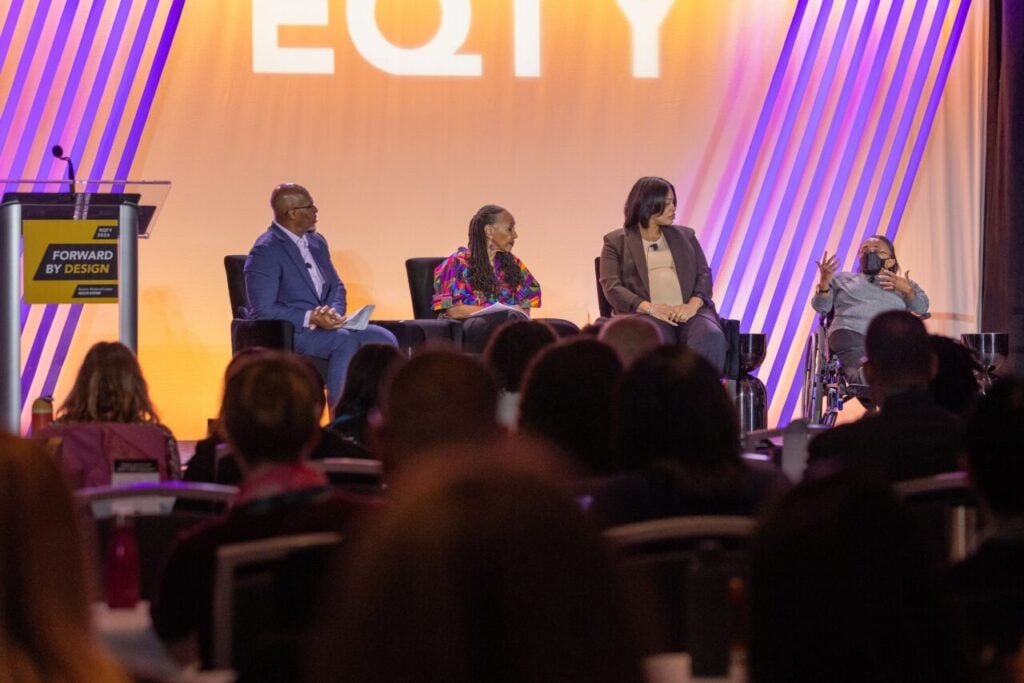
That same connection between lived experience and the systems that determine care surfaced in in the panel conversation “Who Is Medicine For? Representation and the Future of Healthcare” with Michelle Boyer and LaShell Robinson, two cancer survivors who now work in clinical development and clinical-trial equity. Boyer was diagnosed with cancer at 21, while studying molecular oncology for her PhD. She described going from the researcher on the fifth floor to the patient on the fifteenth. Robinson, a breast cancer survivor, came to understand how much access to transformative treatment can depend on clinical-trial participation.
A professor gave Robinson a line that would redirect her career: “You need to be the maker of the medicine.” Both women now carry what they learned as patients into their work, helping shape clinical research so that treatments can reach people who have too often been left out.
The lines are drawn into the map—and into the present
Those defaults do not begin and end in the exam room. They are deeply embedded—drawn and etched into our history and still visible, literally, on our current maps.
During “Lines, Land, and Liturgies: The Geography of Health and Power,” Congresswoman Ayanna Pressley reflected on growing up in Chicago, where she saw people around her facing many of the same struggles: chronic illness, inhumane living conditions, and long waits for buses to get to work, childcare, or a doctor’s appointment. As a child, she said, she began to feel that her family, or the people who looked like them, must be “marked.”
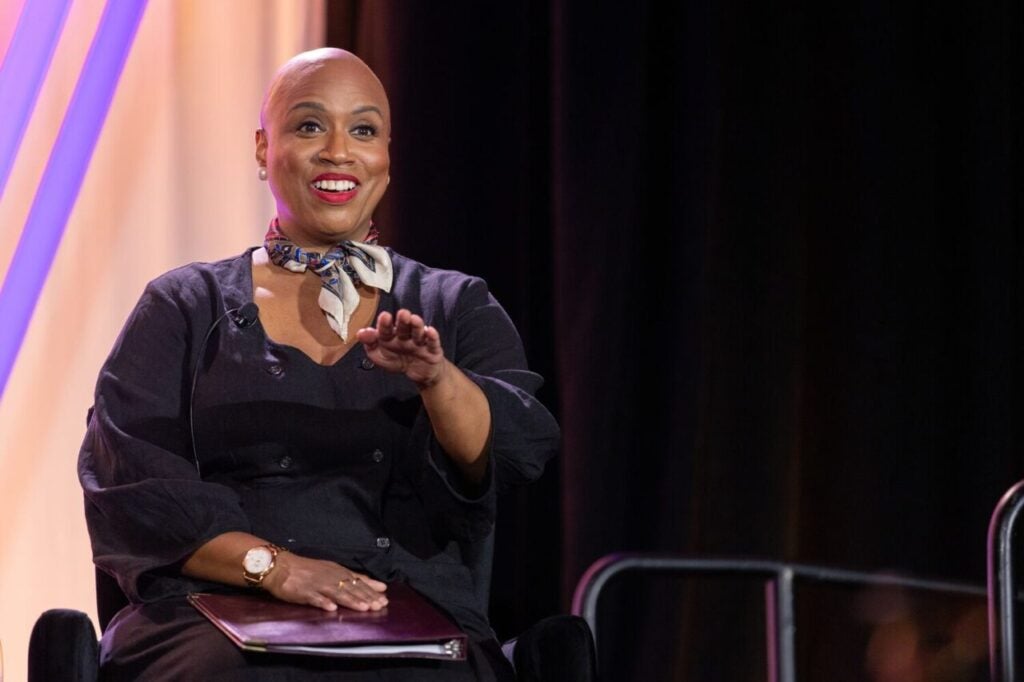
It took time for her to recognize that what she had understood as a personal failing was the result of something larger. “I had to do a lot of learning to realize that we were just ensnared in a system of failed policies, budgetary divestment,” she said.
Dr. Jabraan Pasha, on the same panel, talked about growing up in North Tulsa, and returning to rebuild healthcare infrastructure in Greenwood, the site of Black Wall Street. In his community, he said, a mile in any direction might bring you to a dollar store, but not a grocery store.
“You cannot healthcare our way out of this,” Dr. Pasha said.
Pressley’s work to change policy and Pasha’s work to rebuild health infrastructure address different parts of the same problem: the conditions that shape health are not inevitable. They are the result of decisions made over generations—and they can be changed.
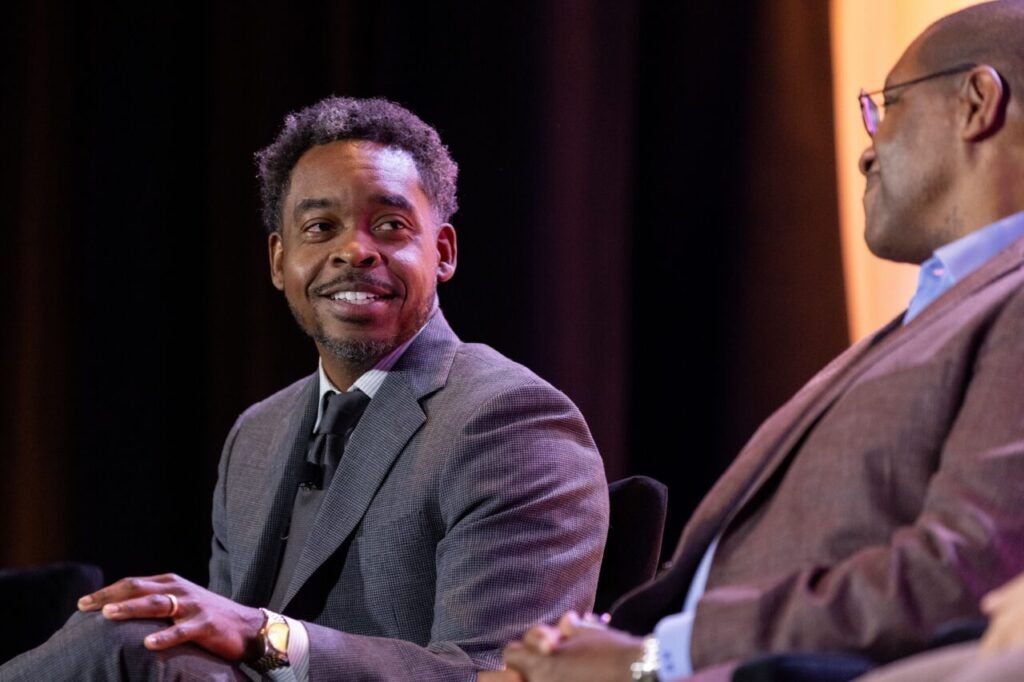
Rev. Dr. Erika Gault of the Smithsonian’s National Museum of African American History and Culture connected that work to a longer history of Black communities building institutions of their own. She recalled how newly freed people fought to secure land and built churches and schools on it. Even when lines were drawn against them, she said, Black communities held on to “the spiritual imagination to draw whole new lines.”
A different story becomes imaginable
The day’s headliners, W. Kamau Bell and Dr. Uché Blackstock, brought the question of stories into the next generation. Bell described watching his young daughter absorb the world of Doc McStuffins, the animated show about a Black girl doctor who cares for her toys. When his daughter went to her first checkup and a white male doctor entered the room, she reportedly asked, “Who is this? I need to see the doctor.” In her mind, the doctor was a young Black girl—because that was the story she had been shown.
Blackstock recognized that power in her own life. “I had my own real-life Doc McStuffins,” she said. “My mom.” Her mother, Dr. Dale Gloria Blackstock, was a pioneering physician who attended Harvard Medical School and practiced in her Brooklyn neighborhood.
Dr. Brandi Freeman, president of the National Medical Association, described a similar childhood. Her parents made sure her doctors were Black, so for years she assumed that was simply what doctors looked like. Representation had made a different future feel ordinary—something she now works to make possible for others. In the NMA, she works to ensure that Black doctors don’t just get in the doors to the medical field, they thrive in the role.
That responsibility—to step forward and change the story—was at the heart of James’s closing challenge of her remarks: “Who are you? What is your story? What are you going to do to change the refrain?”
Baptiste’s story brings the argument back to one person, and to the assumptions he once carried about himself.
He, of course, was never the burden. That was just the story he told himself. The burden was the disease, and the stigma and limited resources surrounding it. Today, Baptiste is part of the path forward: someone whose story can change what researchers imagine, what medicine attempts, and what the next patient is offered. He’s helping the next generation inherit a new story.
About the Author
Caitlin White
Caitlin White is the Director of Content Strategy at Boston Medical Center Health System.
Share on Social

Health equity news from Boston Medical Center
HealthCity is dedicated to sharing the most cutting-edge ideas for advancing health justice through inspiring stories, in-depth Q&As with equity pioneers, research news that could change the medical landscape, and more.